

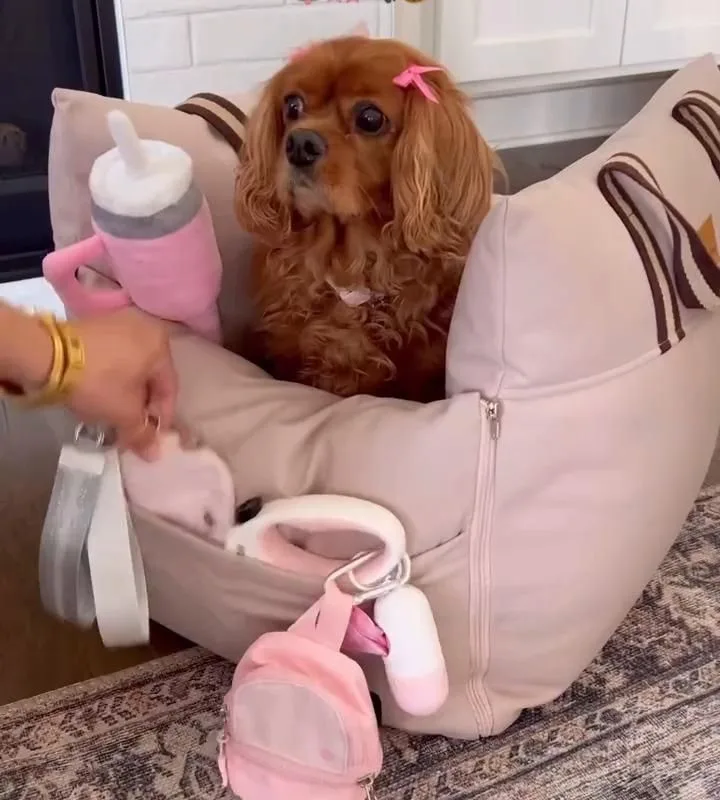
Picture this: you open your front door, and a cardboard tower of Amazon boxes greets you like a slightly judgmental butler. Inside is everything your pet needs — or is it? After seven years of ordering for two cats, a senior rescue beagle, and a rotating foster crew, I've learned which Amazon pet essentials are genuinely worth the click and which are just shiny filler.
Advertisements1
- A pre-organized Amazon list beats algorithmic recommendations for pet essentials — it cut my impulse spending by about 40%.
- Read weight ranges and interior dimensions, not S/M/L labels; a 'medium' harness can be off by 15+ pounds.
- Three-star reviews sorted by 'With Images' reveal real durability issues that five-star day-one reviews miss.
- Subscribe & Save saves 5–15%, but only for staples — set a reminder to skip deliveries you don't need.
- A $30–40 component first-aid kit outperforms most pre-made kits, which skimp on thermometers and wrap.
- Always cross-check food and chew brands against the FDA recall list before adding to cart.
Start With a 'Pet Command Center' Cart, Not a Wish List
The biggest mistake I see new pet parents make on Amazon is shopping in the moment — a cute toy here, a random leash there — and ending up with three half-used bags of treats and no nail clippers. Instead, build one saved list called something like "Pet Command Center" organized into four buckets: daily consumables (food, litter, poop bags), health and grooming (nail clippers, toothbrush, flea comb), safety gear (harness, ID tag, first-aid kit), and enrichment (puzzle feeders, wand toys).
Why this works: Amazon's algorithm rewards you with 'frequently bought together' suggestions that are often redundant or low-quality. Your own organized list keeps you anchored to what your specific pet actually needs. I keep a running note in my phone of what's running low, then do one consolidated order every two to three weeks. It cut my impulse pet spending by roughly 40% last year — I actually tracked it, because I'm that person.
Playful prompt variation: imagine your pet has a tiny budget and is writing you a shopping list. What's on it? Now imagine your pet is a dramatic celebrity with a personal assistant. What's on that list? The second one is usually where the good enrichment ideas live.
Read the Chewy-Style Details on Amazon Listings — Especially Weight Ranges
Here's the thing about Amazon pet essentials: the listing photos are styled within an inch of their lives, but the real gold is in the bullet points and the 'Product information' table. For harnesses, look for a weight range AND a chest-girth measurement in inches, not just 'small/medium/large.' I once ordered a 'medium' harness for my 22-pound beagle that would have fit a small pony, because 'medium' on that listing meant 40–55 pounds.
For food and treats, scroll past the marketing copy to the guaranteed analysis and the calorie content per cup or per treat. A 'training treat' with 12 calories each sounds fine until you realize you're feeding 20 of them during a 15-minute session — that's 240 calories, basically a second dinner. Look for treats under 3 calories each for high-frequency training. And always check the 'Date First Available' and recent reviews sorted by 'Most Recent' — a product that was great in 2021 may have changed manufacturers since.
Metaphor time: buying pet gear online without reading the specs is like ordering a dress based on the model's photo without checking the size chart. The dress is not going to fit, and neither is that harness.
The Subscribe & Save Sweet Spot (and When to Skip It)
Subscribe & Save is genuinely one of the best deals on Amazon for pet essentials — you get 5% off with one subscription and up to 15% off with five or more on the same delivery day. For litter, poop bags, and food your pet eats consistently, it's a no-brainer. I run one subscription delivery a month with litter, dog poop bags, and a case of wet food, and the discount plus the 'no delivery fee' adds up to roughly $18–22 saved monthly.
But skip it for: food your pet is still transitioning onto, anything with a short shelf life (freeze-dried raw toppers), and toys. The trap is that Subscribe & Save auto-delivers whether you need it or not — I once accumulated four months of poop bags because I kept forgetting to skip a delivery. Set a phone reminder two days before each delivery date to review the order, or you'll build a small fortress of supplies you don't need.
Playful prompt variation: if your pet could leave a one-star review of a subscription box, what would it say? Write it in their voice. It's weirdly clarifying about what actually matters to them.
Filter for 'Amazon's Choice' — But Verify With Review Count and Photos
'Amazon's Choice' is not a quality guarantee; it's an algorithmic badge based on search relevance, price, and availability. That said, it's a useful starting filter for commodity items like litter mats, slicker brushes, and poop bag refills, because it usually points to high-volume products with enough reviews to be statistically meaningful. The real move is to click the badge, then sort reviews by 'With Images' and read the three-star reviews first.
Three-star reviews are where the truth lives. Five-star reviews are often written on day one ('arrived fast!'), and one-star reviews are often about shipping damage or a one-off defect. Three-star reviewers have used the product for weeks and will tell you exactly where it falls short — 'the handle is great but the latch pops open when my dog pulls.' That's the sentence that saves you $30.
For anything your pet will chew or ingest, cross-check the brand against the FDA's pet food recall list before you buy. It takes 30 seconds and it's the single most important step in this entire guide.
Size Up on Crates and Carriers, Size Down on Toys
Two sizing rules that have saved me a lot of returns: for crates and carriers, buy based on your pet's measurements plus 2–4 inches of headroom and the ability to stand up and turn around — not the weight chart alone. A crate that's too small is a stress cage; too large and a puppy may eliminate in one corner. Measure your pet standing (length from chest to tail base, height to top of head) and check the crate's interior dimensions, not the exterior ones.
For toys, the opposite: size down for chew toys if your dog is a destroyer, because a toy that's too large can't be properly gripped and gets abandoned, while a toy that's slightly too small gets shredded and becomes a choking hazard. The rule of thumb from veterinary behaviorists is that a chew toy should be large enough that your dog can't fit it entirely in their mouth behind the front teeth. For cats, skip anything with glued-on eyes or feathers that pull off easily — those become ingested foreign bodies more often than you'd think.
Playful prompt variation: describe your pet's ideal toy as if you were a toy designer pitching it to a boardroom. 'It must survive a 40-pound Labrador and a toddler. Go.'
Build a Pet First-Aid Kit From Amazon for Under $40
This is the section I wish someone had handed me before my beagle ate a sock. A solid pet first-aid kit from Amazon doesn't need to be fancy: gauze rolls, self-adhering vet wrap, blunt-tip scissors, a digital thermometer, chlorhexidine wipes, saline solution, a tick remover tool, and a copy of your vet's number and the ASPCA Poison Control line (888-426-4435) taped to the lid. Total cost is usually $30–40 if you buy components rather than a pre-made kit, and the components are better quality.
Skip the pre-assembled kits that include things like styptic powder in tiny amounts and no thermometer — they look complete but leave out the items you'll actually reach for. Store the kit in a labeled container near where you keep your pet's food, and check expiration dates every six months (set a calendar reminder for the same day you change your smoke detector batteries).
Metaphor: a first-aid kit is like a fire extinguisher. You hope you never use it, but the day you need it, you'll be very glad it's not buried in a closet behind the holiday decorations.
Use Amazon's Return Policy Strategically (and Know the Pet Exclusions)
Amazon's standard return window is 30 days for most items, but pet food, treats, and some hygiene products are often non-returnable once opened — check the 'Returns' section on the listing before you commit to a 30-pound bag of food your cat may refuse. For gear like harnesses, crates, and beds, the 30-day window is your friend: order, try it on your pet indoors with tags on, and return if it doesn't fit. I've returned four harnesses in a single month and never paid a restocking fee because I kept the tags and original packaging.
One underrated tip: Amazon Warehouse (now called Amazon Resale) often has open-box crates, carriers, and beds at 20–40% off, and they're returnable like normal items. I've bought two crates this way and both arrived in like-new condition. Just read the condition description carefully — 'Used – Very Good' is usually fine; 'Used – Acceptable' may mean missing hardware.
Playful prompt variation: write a haiku about the moment your pet rejects a $60 bed in favor of the cardboard box it came in. You'll feel seen.
How to Do It, Step by Step
- 1Build your Pet Command Center list
Create one Amazon list divided into consumables, health/grooming, safety, and enrichment. Add items only when you notice a real need, not when the algorithm suggests them. - 2Measure your pet before buying gear
Record chest girth, back length, neck circumference, and standing height in a phone note. Compare against interior dimensions and weight ranges, not just S/M/L labels. - 3Sort reviews by 'Most Recent' and 'With Images'
Read the three-star reviews first — they're the most honest about long-term durability and fit. Skip reviews written within 24 hours of delivery. - 4Check recalls before buying food or chews
Search the brand on the FDA pet food recall page. Thirty seconds now beats an emergency vet visit later. - 5Set up Subscribe & Save for three staples only
Choose litter, poop bags, and one food your pet reliably eats. Set a calendar reminder two days before each delivery to skip or adjust. - 6Assemble a component first-aid kit
Buy gauze, vet wrap, blunt scissors, thermometer, chlorhexidine wipes, saline, and a tick remover separately. Tape your vet's number and the ASPCA Poison Control line inside the lid. - 7Try gear indoors with tags on
Test harnesses, crates, and beds inside for a few days before removing tags. Keep original packaging so returns stay free and easy.
The best Amazon pet purchase you'll ever make is the one you measured for, read the three-star reviews on, and checked against the recall list — not the one the algorithm put at the top of your search.
Frequently Asked Questions
What are the absolute must-have pet essentials to buy on Amazon first?
Start with food your pet already eats, a properly fitted harness or carrier, a litter box or crate, and a first-aid kit. Everything else — toys, beds, grooming gadgets — can wait until you know your pet's actual preferences.
Is Subscribe & Save worth it for pet food and litter?
Yes for staples you'll use every month, since discounts run 5–15% and delivery is free. Skip it for food you're still transitioning onto or anything with a short shelf life, and set a reminder to review each delivery.
How do I know if a harness or crate will fit before ordering?
Measure your pet's chest girth, back length, and standing height, then compare to the listing's interior dimensions and weight range — not the S/M/L label. Read three-star reviews for fit complaints before buying.
Are Amazon's pre-made pet first-aid kits any good?
Most are incomplete — they often lack a thermometer and enough vet wrap. Build your own from components for $30–40 and include the ASPCA Poison Control number (888-426-4435) inside the lid.
Can I return pet food or opened items on Amazon?
Often no — many pet food, treat, and hygiene listings are non-returnable once opened, so check the Returns section first. Gear like harnesses and crates is usually returnable within 30 days if you keep tags and packaging.

Priya explores creative writing prompts and storytelling techniques for aspiring authors. She shares exercises to spark imagination and build narrative confidence, drawn from her own writing practice.


