

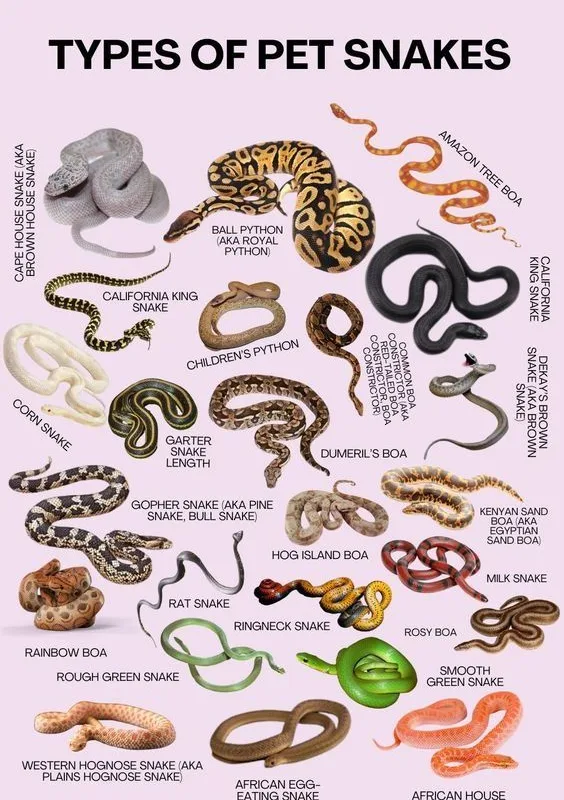
Most first-time snake keepers fail not because snakes are hard to keep, but because they buy the animal before the equipment and then chase the enclosure's temperature and humidity with guesswork. This guide fixes that order of operations, with the exact numbers and habits that separate a thriving snake from a surviving one.
Advertisements1
- Set up and test the enclosure for 72 hours before bringing the snake home — temperature gradients can't be fixed after the fact.
- Every heat source needs a thermostat; analog dials are routinely off by 10°F or more, so use digital infrared and hygrometers.
- Stable humidity comes from deep moisture-retaining substrate and a partly covered lid, not from daily misting.
- Feed frozen-thawed prey sized to 1-1.25x the snake's widest point, and don't handle for 48 hours after a meal.
- A one-minute weekly health check plus monthly weights catches most problems while they're still cheap to fix.
Solve the enclosure before you solve the snake
The single most common mistake I see is a new keeper buying a juvenile ball python and a 20-gallon tank on the same day, then discovering the tank can't hold a heat gradient. A ball python needs a hot spot around 88-90°F (31-32°C) and a cool side near 78-80°F (26-27°C); in a small glass tank with a mesh lid, those two zones collapse into one and the snake spends its life choosing between too hot and too cold.
Do this instead: set up and run the empty enclosure for 72 hours before the animal arrives. Measure with a digital infrared thermometer and a hygrometer, not an analog dial stuck to the glass — those dials are routinely off by 10°F or more. If you can't hold the gradient for three straight days, you don't have a habitat yet; you have a box.
This sequencing also saves money. A 4x2x2-foot PVC enclosure holds heat and humidity far better than glass and costs roughly the same as a glass tank plus the extra heat lamp you'd buy to compensate. Buy once, at adult size, and block off excess space with clutter for a juvenile.
Heat sources: choose the one that can't burn your snake
Overhead heating is the safer default. A halogen flood bulb or a deep heat projector on a thermostat gives you a basking zone and a natural infrared profile; a ceramic heat emitter works for ambient night heat. The critical rule: every heat source gets a thermostat, no exceptions.
– **Under-tank heat mats:** cheap and common, but they concentrate heat on the belly and are a burn risk without a thermostat. If you use one, it goes on a proportional thermostat set to 90°F max.
– **Heat rocks:** skip them entirely. They're unregulated and snakes press into them until tissue is damaged.
– **Halogen + thermostat:** my standard for daytime basking. Pair with a timer so the light cycle stays at 12 hours on, 12 off.
Use a thermostat with a probe placed directly on the basking surface, not dangling in the air. Surface temperature is what the snake's belly actually contacts, and it's usually 10-15°F hotter than the air two inches above it.
Humidity is a substrate problem, not a misting problem
Misting a glass tank three times a day is a treadmill. It spikes humidity to 90% for an hour, then it falls back to 40%, and constant wet-and-dry cycling is a fast track to respiratory infections. Target 60-70% for a ball python and hold it there steadily.
The fix is a moisture-retaining substrate layer: 3-4 inches of coconut coir or cypress mulch, with water poured into the corners rather than sprayed on top. The bottom layer stays damp and releases humidity slowly for days. Covering two-thirds of a mesh lid with foil or a cut PVC sheet locks the moisture in.
Check with a digital hygrometer mounted an inch above the substrate on the cool side. If you're misting more than once a week, your substrate or your lid is the problem — change one of those, not your schedule.
Feeding: frozen-thawed, sized correctly, and never in the enclosure's dirt
Feed frozen-thawed rodents, always. Live feeding carries real risk of injury to the snake, and frozen-thawed is cheaper, safer, and easier to source consistently. Warm the prey to about 100°F by placing it in a sealed bag in hot water for 10-15 minutes — a cold rodent often gets refused.
Size the prey to roughly 1 to 1.25 times the widest part of the snake's body, and feed juveniles every 5-7 days, adults every 10-14. Overfeeding is the quiet killer in this hobby; power-feeding a snake to grow it fast leads to fatty liver disease and a shortened lifespan.
Use feeding tongs and offer the prey at the head end. Don't dangle with your fingers, and don't handle the snake for 48 hours after a meal — regurgitation is a serious setback that costs weeks of recovery.
Handling: short, calm, and on the snake's terms
A new snake needs 5-7 days with zero handling to settle in, and a juvenile that hasn't eaten twice for you shouldn't be handled at all yet. After that, 10-15 minutes two or three times a week is plenty. Longer sessions in a cold room drop the snake's body temperature and stress it.
Support the body with both hands, and never grab behind the head unless you're being bitten. If the snake is in blue — cloudy eyes, dull scales — leave it alone; that's a shed cycle and handling during it is uncomfortable and can cause a bad shed.
Hook-train if you keep a larger species. Tapping the enclosure with a snake hook before opening signals "handling time, not feeding time" and cuts defensive strikes dramatically. It takes about two weeks of consistency to establish.
Health checks you can do in 60 seconds a week
Once a week, run a quick inspection and write down what you see. It takes a minute and catches problems while they're cheap to fix.
– **Eyes and scales:** clear eyes, no retained shed rings around the tail tip or eye caps.
– **Mouth:** no bubbling, no stringy saliva — early signs of respiratory infection.
– **Vent:** clean, no swelling or discharge.
– **Weight:** a kitchen scale in grams, logged monthly. A steady decline over two months means a vet visit.
Find an exotics vet before you need one. Roughly half the keepers I talk to have never located a reptile vet, and the nearest one is often 45 minutes away. Get the number on your phone the day you bring the snake home.
How to Do It, Step by Step
- 1Run the empty enclosure for 72 hours
Set up heat, substrate, and hides, then log hot-side and cool-side temperatures twice a day for three days. Don't buy the snake until both zones hold steady. - 2Put every heat source on a thermostat
Probe on the basking surface, set to your species' target. This single step prevents the most common cause of vet visits: thermal burns. - 3Pour water into substrate corners, don't mist
Use 3-4 inches of coconut coir or cypress mulch and add water at the corners weekly. Cover most of a mesh lid to hold humidity between 60-70%. - 4Feed frozen-thawed, warmed to 100°F
Thaw in a sealed bag in hot water for 10-15 minutes, offer with tongs at the head end, and skip handling for 48 hours afterward. - 5Give the snake 5-7 days of zero handling
No touching, no photos with hands, no rearranging. Let it settle and take two meals before you start short 10-15 minute sessions. - 6Log weight monthly in grams
A kitchen scale and a notes app. A two-month decline is your cue to book an exotics vet, not to wait and see.
A snake that won't eat is usually telling you about its enclosure, not its appetite — fix the temperature gradient before you change the food.
Frequently Asked Questions
Are snakes good pets for beginners?
Yes, certain species are excellent beginner pets — corn snakes, ball pythons, and king snakes are the standard recommendations. They tolerate handling, eat reliably on frozen-thawed prey, and stay at manageable sizes, but only if you set up the enclosure correctly first.
How often should I feed my pet snake?
Juveniles eat every 5-7 days and adults every 10-14 days, with prey about 1 to 1.25 times the widest part of the snake's body. Feeding more often than that risks obesity and fatty liver disease.
Do pet snakes need a heat lamp or a heat mat?
Overhead heating like a halogen bulb or deep heat projector on a thermostat is the safer default because it creates a natural basking zone. Heat mats work but concentrate heat on the belly and must be on a thermostat to avoid burns.
How long can you leave a pet snake alone?
An adult snake can safely be left for 7-10 days with fresh water and correct temperatures, as long as it isn't mid-shed or recently fed. Anything longer needs a caretaker who can check the thermostat.
Why is my snake not eating?
The most common causes are an incorrect temperature gradient, a shed cycle, stress from handling, or prey that's too cold or too large. Check your hot spot first — it's the culprit more often than anything else.

Kenji covers tech productivity and digital minimalism for remote workers. He writes about streamlining workflows and cutting digital clutter with a focus on mental clarity, not just efficiency.


