

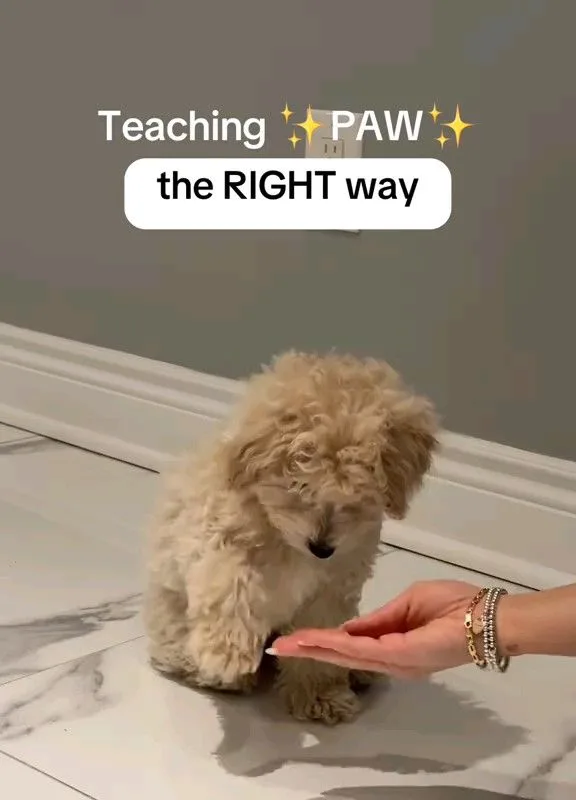
Teaching your dog to give paw is one of the fastest wins you'll ever get in training — most dogs pick it up in just two or three short sessions. Here's the exact method I use, with the small adjustments that make it click instead of stall out.
Advertisements1
- Most dogs learn give paw in two to three short sessions of two to three minutes each.
- Let your dog offer the paw lift — don't grab or lift their foot for them.
- Mark the exact moment the paw lifts with a consistent word like "yes," then reward within half a second.
- Say the cue once and wait three seconds; repeating it teaches your dog to tune it out.
- Thin treats to about three out of four reps once the behavior is solid, and keep rewards unpredictable.
- If your dog flinches at paw touch, spend a week on gentle handling before starting the trick.
Why "Give Paw" Is the Perfect First Trick
Give paw is easy because it builds on something your dog already does: lifting a front foot to ask for things, stretch, or shift weight. You're not teaching a brand-new behavior so much as putting a name to a natural movement and rewarding it.
It's also a low-pressure trick. Your dog is sitting, you're close by, and the reward comes fast. That makes it a great confidence-builder for shy dogs and a good focus exercise for puppies who are still learning how to pay attention for more than a few seconds.
One thing to know up front: some dogs have sensitive paws or a history that makes handling them uncomfortable. If your dog flinches when you touch a paw, spend a week just gently touching and treating before you start the trick. The trick will come faster once the touch feels safe.
Before You Start: Set Up for Two-Minute Wins
Keep sessions to two or three minutes, three times a day. That sounds tiny, but short and frequent beats one long session every time. A dog who does five quick reps before dinner learns faster than one drilled for twenty minutes on a Saturday.
Use tiny, high-value treats — pea-sized bits of chicken or cheese, not big biscuits. You want your dog to swallow and re-engage, not wander off to chew. Count out ten treats and stop when they're gone. This keeps the energy up and prevents your dog from getting full and losing interest.
Pick a quiet spot with no other pets or kids moving around, and train before meals rather than after. A slightly hungry dog works for food. And decide which paw you'll ask for and stick with it — switching sides mid-training confuses most dogs.
The Core Method: Lure, Mark, Reward
The fastest path is a hand lure. Hold a treat in your closed fist right at your dog's nose while they're sitting, then slowly move your fist down and slightly toward their chest. Most dogs will lift a paw to paw at your hand to get the treat. The instant that paw lifts, say "yes" and open your hand.
That "yes" is your marker — it tells your dog exactly which moment earned the reward. If you don't have a marker word yet, use a clicker or just a cheerful "yes!" consistently. Timing matters more than volume: the mark should land within half a second of the paw lift.
After five or six successful reps, stop luring with food and just present your flat, open palm. Wait two seconds. Many dogs will offer the paw lift on their own because they've learned what pays. If they don't, go back to the fist lure for a few more reps. Once your dog is reliably touching your palm, add the word "paw" right before they lift — that's how the cue attaches.
The Mistakes That Slow Most People Down
The number one stall-out is grabbing the paw. If you reach out and lift your dog's foot, you're doing the work and your dog is just tolerating it. Let them offer the movement instead. A dog who chooses to lift their paw learns the trick in half the time.
The second mistake is rewarding too late. If you say "yes" after your dog has already put the paw down, you've marked the wrong thing. Watch for the lift and mark it the moment it happens, even if it's messy or low at first. Clean it up later.
The third is repeating the cue. Saying "paw, paw, paw, paw" teaches your dog that the word is background noise. Say it once, wait three seconds, then help with a lure if needed. And don't train when your dog is wound up from a walk or a doorbell — a calm, fed-but-not-stuffed dog is a learning dog.
Fading the Treats Without Losing the Trick
Dogs don't work for free, and that's fine — but you do need to thin out the treats so your dog doesn't expect one every single time forever. Switch to a variable schedule: reward three out of four reps, then two out of four, then randomly. Keep the reward unpredictable so your dog keeps offering the behavior.
Swap in real-life rewards too. A "paw" before a meal, before a leash goes on, or before a door opens is payment enough for many dogs. My own terrier will give paw for a tennis ball toss faster than for any treat.
Watch for the behavior fading if you stop rewarding entirely. If your dog stops offering the paw after a week, go back to rewarding every rep for two sessions, then thin again. This is normal and not a setback — it's just maintenance.
When to Move On and What to Teach Next
Once your dog gives paw on the first cue, in two different rooms, with mild distractions, you've got it. That usually takes about a week of short daily sessions. Test it in the kitchen, then the living room, then the backyard before you call it solid.
Give paw pairs naturally with other easy tricks: "other paw" (same method, opposite hand), "high five" (palm up instead of flat), and "wave" (paw lift without touching your hand). Each one builds on the same motor skill, so your dog learns them faster than the first.
If your dog is struggling after a week, don't push. Some dogs need the lure held lower or the session shortened. Go back one step, get three easy wins, and end there. Training is a bank account — you want to make deposits, not withdrawals.
How to Do It, Step by Step
- 1Get your dog settled in a sit
Ask for a sit in a quiet room with no distractions. A settled dog is ready to learn, and sitting naturally frees up the front paws for the trick. - 2Hide a treat in your closed fist
Hold a pea-sized treat in a closed fist at your dog's nose. This puts the reward right where they'll notice it and start problem-solving. - 3Lure the paw lift slowly
Move your fist down and slightly toward your dog's chest. Most dogs lift a front paw to paw at your hand within a few seconds — that's the moment you're waiting for. - 4Mark and reward the instant the paw lifts
Say "yes" the second the paw comes off the floor, then open your hand. Fast timing is what teaches your dog which behavior earned the treat. - 5Repeat five to six times, then rest
Do a handful of reps, then stop for a few hours. Short, frequent sessions beat long ones for retention and keep your dog eager. - 6Switch to an open palm
Once your dog is pawing reliably, present a flat open palm with no treat visible. Wait two seconds for the lift, then reward. This is how the hand signal forms. - 7Add the word "paw" just before the lift
Say "paw" once, right before your dog lifts their foot, then mark and reward. Repeat until the word alone gets the behavior. - 8Practice in new rooms and thin the treats
Test the cue in two or three different rooms, then reward three out of four reps instead of every one. This proofing step makes the trick reliable anywhere.
The dogs who learn give paw fastest aren't the smartest ones — they're the ones whose owners waited for the paw lift instead of grabbing it.
Frequently Asked Questions
How long does it take to teach a dog to give paw?
Most dogs learn it in about a week of short daily sessions, often faster. Puppies and food-motivated dogs sometimes get it in two or three sessions of two to three minutes each.
At what age can I teach a puppy to give paw?
You can start as early as eight to ten weeks with very short sessions. Keep it to two minutes and use soft tiny treats, since young puppies have short attention spans and sensitive mouths.
Why won't my dog lift their paw?
Usually the lure is too high or too fast, or your dog isn't food-motivated in that moment. Hold the treat fist lower near the chest, move it slowly, and train before a meal instead of after.
Should I use a clicker or a word to mark the behavior?
Either works — consistency matters more than the tool. A clicker is slightly more precise, but a cheerful "yes" said the same way every time is plenty for a trick like this.
Is giving paw bad for my dog's joints?
No, a normal paw lift is a natural movement and safe for healthy dogs. If your dog has arthritis or a known joint issue, keep reps short and check with your vet first.

Maya writes about sustainable living and zero-waste swaps for busy families. She focuses on small, actionable changes that fit into real life without judgment or guilt.


