

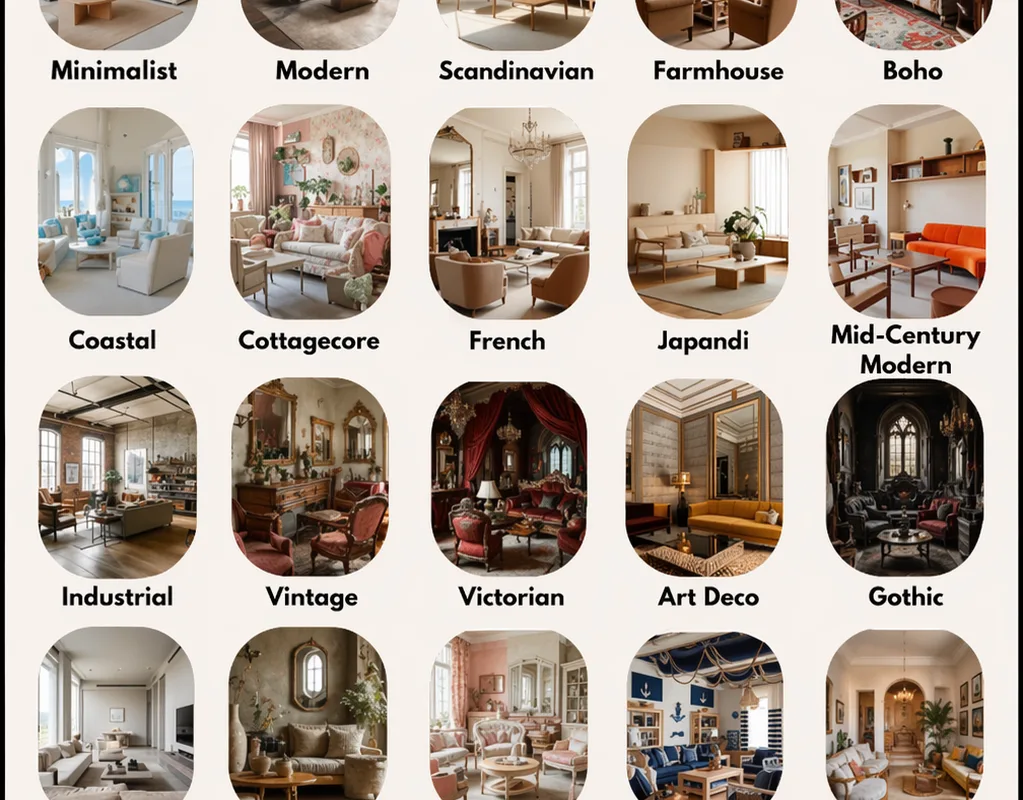
Picture a room as a sentence. Minimalist is a short, clean clause. Boho is a paragraph that keeps adding commas and cushions. Victorian is a nineteenth-century novel with velvet upholstery. The style you choose is the grammar your home speaks in — and the good news is you get to write (and rewrite) it. Ready to find your dialect? Let’s tour the design languages everyone is pinning for 2026, from Scandinavian calm to Wabi Sabi imperfection, and hand you the vocabulary to build the look you love.
Advertisements1
Table of Contents(Click to Toggle)
Why Learning Interior Design Styles Changes How You See a Room
Walk into any living room and ask yourself: what is this space trying to say? A bare white wall and a single oak chair whisper less, but better. A wall of patterned plates and dried flowers hums a folk song. Knowing the names of design styles is like learning a new language — suddenly every lamp, tile, and texture stops being random and starts being a sentence you can read, borrow from, and remix.
Here’s the playful part: you don’t have to pick just one. Most beautiful homes are fluent in two or three — a Scandinavian shell with a boho heartbeat, an Art Deco mirror winking from a minimalist hallway. Use this guide as a palette, not a rulebook. Circle the styles that make your heart do a little flip, then notice what they have in common. That common thread? It’s your taste, hiding in plain sight.
18 Interior Design Styles to Know Before You Redecorate
1. Minimalist : The art of saying more with less
What it is: A pared-back style built on negative space, a tight neutral palette, and only the objects that earn their keep.
Category: Modern / restrained
Why it stands out: It treats emptiness as a design material. Hidden storage and flush surfaces keep sightlines calm, so a single vase becomes the star of the room.
Best for: Small apartments and anyone whose brain feels louder when the room is busy.
2. Modern : Clean lines with a confident edge
What it is: The crisp, current look — geometric furniture, glass and metal accents, uncluttered surfaces.
Category: Contemporary
Why it stands out: Modern design loves a strong horizontal line and a sculptural chair. It’s polished but not cold when you layer in a warm wood tone or a soft rug.
Best for: Open-plan homes that need furniture to define the zones.
3. Scandinavian : Light, wood, and everyday hygge
What it is: Pale walls, light oak, wool throws, and a deep respect for daylight.
Category: Nordic
Why it stands out: It’s built for real life — functional, cozy, and forgiving of a little mess. Think sheepskin on a simple chair and a candle that’s actually lit.
Best for: Renters and anyone chasing that soft, airy calm.
4. Farmhouse : Rustic warmth with a modern heartbeat
What it is: Shiplap, apron-front sinks, reclaimed wood, and a big table made for gathering.
Category: Rustic / transitional
Why it stands out: It makes a house feel lived-in and welcoming. The trick is balance — pair one rustic hero piece with clean, modern lighting so it doesn’t tip into theme-park.
Best for: Kitchens and dining rooms where people linger.
5. Boho : Layered, global, gloriously free
What it is: Rattan, macramé, patterned textiles, plants in every corner, and a happy disregard for matching.
Category: Eclectic / free-spirited
Why it stands out: Boho rewards collecting. Every trip, flea market, and hand-me-down becomes part of the story. The one rule? Vary texture so the layers feel intentional, not accidental.
Best for: Creative souls who can’t stop buying cushions.
6. Cottagecore : A slow-living storybook
What it is: Floral prints, gingham, dried flowers, vintage crockery, and a soft, nostalgic palette.
Category: Romantic / rural
Why it stands out: It’s the interior equivalent of a warm scone. Open shelving with mismatched teacups and a linen curtain does more for the mood than any expensive sofa.
Best for: Bedrooms, reading nooks, and anyone who loves a garden indoors.
7. French Country : Elegant rusticity with a Provençal accent
What it is: Toile, carved wood, soft yellows and lavenders, and a touch of aged patina.
Category: Traditional / rustic
Why it stands out: It walks the line between refined and relaxed — a linen sofa with a gilded mirror above it. Think of it as cottagecore’s worldly cousin.
Best for: Dining rooms that deserve a little romance.
8. Mid-Century Modern : Tapered legs and timeless cool
What it is: Walnut wood, splayed legs, bold upholstery, and iconic silhouettes from the 1950s and ’60s.
Category: Retro / modern
Why it stands out: Those clean, sculptural shapes still look fresh seventy years on. A single Eames-style chair can anchor an entire room.
Best for: Collectors who love a statement piece with history.
9. Industrial : Loft living, exposed and unapologetic
What it is: Brick, black steel, reclaimed wood, and Edison bulbs — the factory floor that became a home.
Category: Urban / raw
Why it stands out: It celebrates the bones of a building. Add a leather sofa and a metal shelving unit and the grit becomes cozy.
Best for: Lofts, studios, and homes with exposed brick or beams.
10. Vintage : The charm of things with a past
What it is: Furniture and decor from earlier decades, chosen for character rather than matching sets.
Category: Eclectic / antique
Why it stands out: A vintage find has a story you can’t buy new. Mix eras deliberately — a 1970s lamp with a Victorian table — and the room feels curated, not cluttered.
Best for: Treasure hunters and sustainability-minded decorators.
11. Victorian : Maximalism with a velvet bow
What it is: Deep jewel tones, ornate moldings, patterned wallpaper, and heavy drapes.
Category: Traditional / ornate
Why it stands out: It’s unashamedly theatrical. If you love a dark, moody room with a tasseled lampshade, this is your stage.
Best for: Period homes and lovers of dramatic, layered rooms.
12. Art Deco : Geometry, glamour, and a gold gleam
What it is: Bold geometric patterns, lacquered surfaces, brass, and symmetrical shapes.
Category: Glamorous / retro
Why it stands out: It makes a room feel like a cocktail hour. A single fan-motif mirror or a velvet armchair with brass legs does the heavy lifting.
Best for: Anyone who wants a little 1920s sparkle.
13. Gothic : Moody, dramatic, and a little mysterious
What it is: Dark palettes, pointed arches, antique wood, and candlelit atmosphere.
Category: Dark / historic
Why it stands out: It’s the design equivalent of a good ghost story — rich, atmospheric, and full of texture. Layer in velvet and wrought iron to keep it elegant rather than spooky.
Best for: Reading rooms and lovers of a dark, cozy mood.
14. Contemporary : The now, in soft curves and warm neutrals
What it is: Current trends — curved sofas, bouclé, warm minimalism, and a fluid, open feel.
Category: Modern / current
Why it stands out: It evolves with the moment. Right now that means rounded shapes and tactile fabrics that feel like a hug rather than a showroom.
Best for: Anyone who wants a fresh, future-proof space.
15. Wabi Sabi : Beauty in the imperfect and impermanent
What it is: Handmade ceramics, raw plaster, uneven textures, and a quiet, earthy palette.
Category: Japanese / organic
Why it stands out: It flips perfectionism on its head. A crackled glaze or a crooked bowl isn’t a flaw — it’s the point. The result is a room that feels deeply calm.
Best for: Slow-living homes and anyone tired of chasing perfection.
16. Shabby Chic : Soft, faded, and romantically worn
What it is: Painted furniture, floral slipcovers, whitewashed wood, and a gentle vintage feel.
Category: Romantic / vintage
Why it stands out: It makes a room feel like a favorite old cardigan. A distressed dresser paired with crisp white linens keeps it fresh rather than fussy.
Best for: Bedrooms and anyone who loves a soft, feminine palette.
17. Coastal : Breezy, sunlit, and salt-air easy
What it is: Whites and blues, natural fibers, driftwood, and lots of light.
Category: Relaxed / natural
Why it stands out: It’s a vacation you can live in. Keep it sophisticated by choosing textured linens and a few curated shells rather than a nautical theme park.
Best for: Beach houses and anyone craving a breezy escape.
18. Japandi : Where Japanese calm meets Nordic warmth
What it is: A hybrid of Scandinavian functionality and Japanese minimalism — low furniture, natural materials, and quiet neutrals.
Category: Hybrid / minimalist
Why it stands out: It’s the best of both worlds: the coziness of hygge with the serenity of zen. Think a low oak table, a linen cushion, and one perfect ceramic bowl.
Best for: Small spaces that need calm and function in equal measure.
Bonus Mentions
Maximalist : More is more, and every object is a character
Layer pattern on pattern, bold color, and collected art. It’s joyful chaos with a curator’s eye. Best for brave souls with a great gallery wall.
Transitional : The elegant middle ground
Traditional shapes in modern colors and fabrics. It’s the style that quietly suits almost everyone and never feels dated.
Eclectic : Your taste, unedited
Mix eras, cultures, and colors with intention. The secret is a consistent palette so the variety feels like a symphony, not noise.
Biophilic : Design that breathes with nature
Living walls, natural light, and organic materials. It brings the outdoors in and makes any room feel alive.
Retro : A playful wink to the past
Bold colors, curved shapes, and vintage-inspired prints. Perfect for a room that wants to have fun.
Your Style Is a Story Only You Can Tell
Here’s a writing prompt for your home: describe the room you want in three sentences — no shopping, no budget, just words. What does it smell like? What’s the first thing a guest touches? That little exercise reveals your true style faster than any quiz. My own living room, for the record, is Scandinavian bones with a boho heartbeat and one very dramatic Victorian lamp — a sentence with a plot twist.
So which style just made you lean in? Tell me in the comments — I’m always collecting new design dialects.
Write boldly, dream wildly.

Amara explores creative writing and storytelling, with a focus on finding your unique voice and building compelling narratives. She shares prompts and exercises to spark imagination, drawing on her love of folklore and modern fiction.


