

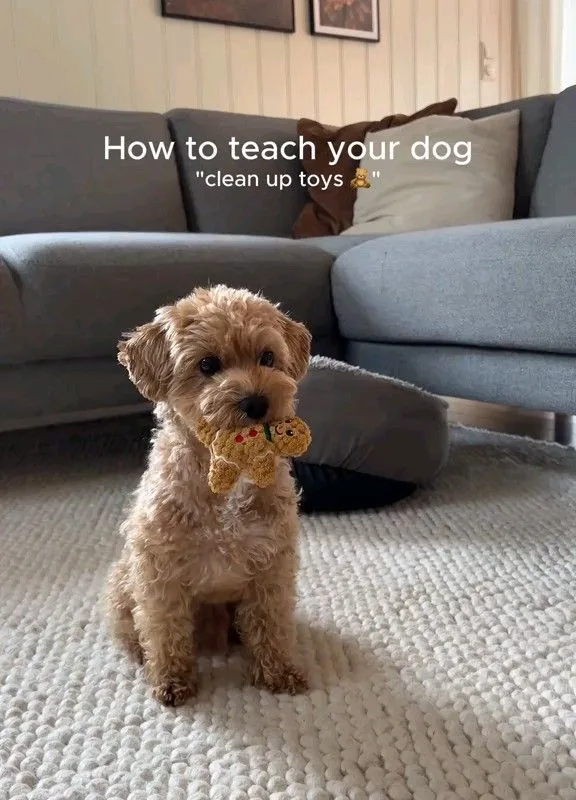
My dog Biscuit used to leave a toy graveyard across the living room every single night. Now he drops them in a basket on cue — and the whole trick took about three weeks of five-minute sessions. Here's the exact process, with the mistakes I made so you can skip them.
Advertisements1
- Break cleanup into two behaviors — hold the toy and target the basket — before linking them.
- A wide bowl as a bridge target prevents the stall-out most dogs hit with a basket.
- Keep sessions to three to five minutes and always end on a successful rep.
- Upgrade to multiple toys only when single-toy accuracy is high; two toys is a real jump in difficulty.
- Fade treats gradually but never fade praise — that's the reward that lasts.
Why 'Clean Up' Is Easier Than It Sounds
Tidying up is really just a chain of two behaviors your dog probably already knows: pick something up, and put it somewhere specific. If your dog can hold a toy and can target a spot with their nose or paws, you're most of the way there. The trick is teaching those two pieces separately before you link them.
I made the classic mistake of starting with a basket and a pile of toys on day one. Biscuit thought I'd lost my mind. Once I broke it into 'hold this' and 'touch the basket,' it clicked in days instead of weeks.
Aim for three to five minutes per session, once or twice a day. Dogs learn short, happy repetitions far better than long drills, and ending while they're still eager keeps them coming back for more.
Pick the Right Toy and the Right Basket
Start with one toy your dog can comfortably carry without it squeaking, rolling away, or being so big it blocks their view. A soft plush or a small rope toy is ideal. Biscuit's giant squeaky chicken was a disaster — every squeeze set him off on a play spiral.
For the basket, choose something low-sided and stable. A shallow wicker basket or a plastic tub with a 4- to 6-inch rim works well. Tall laundry baskets force the dog to drop the toy from height, and it usually bounces out. I learned that one the hard way with a hamper and a very confused terrier.
Put the basket in the same spot every session. Consistency turns the location into a cue all by itself.
Teach 'Take It' and 'Drop It' Before Anything Else
You can't clean up without a reliable release. Spend a few days reinforcing 'take it' (dog picks up a toy) and 'drop it' (dog releases it into your hand or a bowl). Use a treat reward after each correct drop, delivered away from the toy so the dog doesn't just re-grab it.
Here's the sequence I used: hand the toy over, say 'take it,' wait two seconds, say 'drop it,' and pay with a treat from your other hand. Ten reps, twice a day. Once Biscuit was dropping on the first word nine times out of ten, we moved on.
Don't rush this. A shaky 'drop it' will fall apart the moment the basket enters the picture.
Use a Bowl First, Then Upgrade to the Basket
Before the basket, practice dropping the toy into a wide bowl on the floor. The bowl is easy to hit and gives your dog a clear target. Say 'clean up' right as they release the toy into it, then treat.
After a week of successful bowl drops, swap the bowl for the low basket. The motion is nearly identical, so most dogs transfer quickly. If yours hesitates, put the bowl inside the basket for a session or two, then remove it.
This bridge step is the one most guides skip, and it's the reason so many dogs stall out at 'carry the toy around looking proud.'
Add Distance and Multiple Toys Slowly
Once your dog is reliably dropping one toy into the basket from right beside it, back up a foot at a time. Toss a toy two feet away, point to it, and cue 'clean up.' Reward every successful drop with a treat and calm praise.
Then add a second toy. Two toys is a big jump — it's the difference between one behavior and a sequence. Expect a few confused stares. Stay patient and reward each drop individually at first.
By week three, Biscuit was doing four toys in a row. We celebrated like he'd won a medal. Your dog will tell you when they're ready for more; if accuracy drops below about 70 percent, make it easier.
Fade the Treats Without Losing the Behavior
Treats get you the behavior; a reward schedule keeps it. Once your dog is solid, reward every other drop, then every third, then randomly. Keep verbal praise and a happy tone every single time — that's the reward that never fades.
I keep a small jar of kibble near the basket and pay out unpredictably. Biscuit still cleans up because sometimes there's a payoff and always there's a party.
If the behavior weakens after a few weeks, go back to rewarding every drop for a few sessions. It's a quick reset, not a failure.
Keep Sessions Short and End on a Win
Five minutes max. End every session with a successful drop, even if that means handing the toy back and asking for one easy rep. Dogs remember the last thing that happened.
Skip sessions when your dog is wound up or tired — a tired dog gets sloppy and a hyped dog just wants to play tug. Mid-morning or after a walk, when energy is calm but not flat, is the sweet spot for us.
Progress over perfection, always. Some days Biscuit nails all five toys; other days he drops one and flops over for a belly rub. Both are fine.
How to Do It, Step by Step
- 1Choose one easy-to-carry toy
Pick a soft plush or small rope toy your dog can hold comfortably. Avoid squeakers and giant toys that trigger play instead of focus. - 2Set up a low, stable basket
Use a shallow basket or tub with a 4- to 6-inch rim in a fixed spot. Tall baskets cause toys to bounce out and frustrate the dog. - 3Proof 'take it' and 'drop it' first
Practice ten reps twice a day until your dog drops on the first cue about nine times out of ten. This is the foundation for everything else. - 4Practice dropping into a bowl
Place a wide bowl on the floor and cue 'clean up' as the toy lands in it, then treat. The bowl is an easier target than a basket. - 5Swap the bowl for the basket
Move to the low basket once bowl drops are reliable. If your dog hesitates, put the bowl inside the basket for a session or two. - 6Add distance one foot at a time
Toss a toy a foot away, point to it, and cue 'clean up.' Reward each drop and only increase distance when accuracy stays high. - 7Build to two, then four toys
Add one toy at a time and reward each drop individually. If accuracy drops below 70 percent, make it easier and rebuild. - 8Fade treats on a variable schedule
Reward every other drop, then every third, then randomly. Keep enthusiastic praise every time so the behavior stays strong.
Tidying up is just two known behaviors chained together — pick up, and put it somewhere specific.
Frequently Asked Questions
How long does it take to teach a dog to clean up toys?
Most dogs learn a reliable single-toy cleanup in two to four weeks of short daily sessions. Adding multiple toys and distance typically takes another week or two depending on the dog.
What age can a dog learn to put toys away?
Puppies as young as four to five months can start once they have a solid 'drop it.' Older dogs learn it too — the key is short sessions and a toy they can comfortably carry.
Do I need clicker training to teach this?
No, a clicker helps but isn't required. A consistent verbal marker like 'yes' followed immediately by a treat works just as well for most dogs.
Why does my dog carry the toy but never drop it in the basket?
Your dog has learned the carry but not the target. Go back to dropping into a wide bowl on the floor, then place the bowl inside the basket to bridge the gap.
Can I teach my dog to clean up without treats?
Yes, but start with treats to build the behavior, then fade to random rewards plus praise. A toy or tug can also work as a reward if your dog values play more than food.

Maya writes about sustainable living and zero-waste swaps for everyday families. She focuses on small, budget-friendly changes that actually stick, tested in her own chaotic kitchen.


