

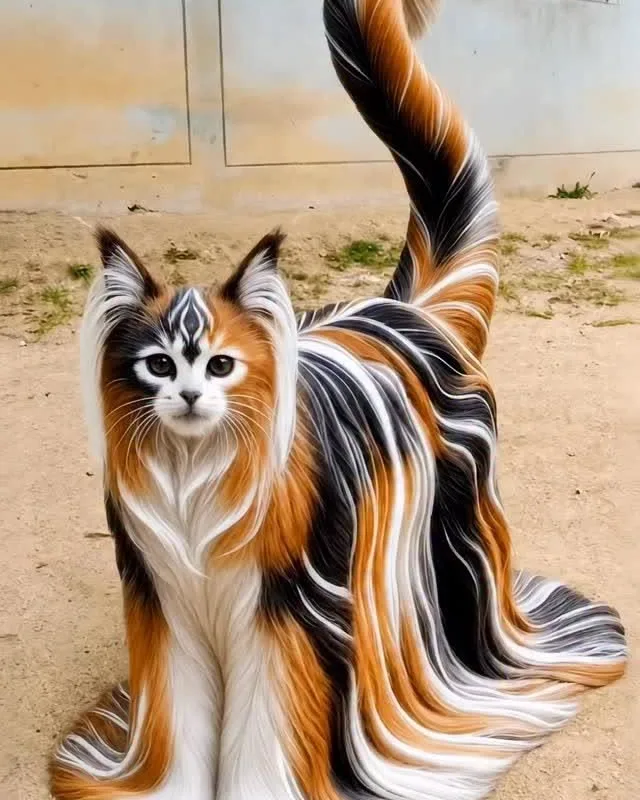
You know that moment when a sentence makes your fingertips tingle? That's the power of writing fur so real it practically purrs off the page. Let's turn flat descriptions into lush, touchable prose that readers can't resist.
Advertisements1
- Replace generic adjectives like 'soft' with specific, action-driven descriptions that engage multiple senses.
- Use the three-layer technique—undercoat, guard hairs, aura—to create depth and realism in fur descriptions.
- Connect fur to character, memory, or plot to make it mesmerizing rather than merely decorative.
- Avoid over-adjectiving and static descriptions; let fur move, react, and change with context.
- Practice with sensory prompts to build a versatile vocabulary of touch that you can apply to any texture.
Why Fur Is the Ultimate Sensory Playground
Fur is a writer's secret weapon. It's not just one texture—it's a symphony: the whisper of a fox's tail, the coarser bristle of a badger, the cloud-soft undercoat of a chinchilla. When you describe fur, you're inviting readers to pet with their minds. But most writers settle for 'soft' or 'fluffy' and call it a day. That's like describing a sunset as 'orange.'
Think about the last time you touched something truly mesmerizing. Maybe it was a cashmere scarf that felt like breathing. Or a dog's ear that was velvet wrapped in silk. Your brain didn't just register 'soft'—it registered temperature, weight, springiness, even sound. That's the level of detail that makes fur come alive.
So why does this matter? Because texture builds trust. When you nail the feel of fur, readers believe everything else you tell them. They lean in. They remember. And they keep reading. So let's ditch the generic and get gloriously specific.
The Do-This-Not-That of Fur Description
Do: Describe fur through action. Not 'Her fur was soft,' but 'She leaned into his hand, and her fur rippled like wind over wheat—each strand catching the light before settling back into place.' Action shows texture in motion, which is how we actually experience it. Not: 'The cat had fluffy fur.' That's a label, not an experience. Fluffy is a verdict; it tells us nothing about the sensation.
Do: Use unexpected comparisons. Fur can be 'like the inside of a seashell' or 'like static electricity made visible.' Not: 'soft as silk.' Silk is the default, and it's been done to death. Reach for the weird and wonderful—your reader's brain will light up.
Do: Engage multiple senses. Fur has a sound (the crackle of static, the hush of a paw on carpet), a smell (sun-warmed dust, faint musk), even a taste (if you're writing about a pet's fur after a bath—trust me, it's a thing). Not: just sight and touch. Layer them like a perfumer.
Do: Vary sentence rhythm. A long, flowing sentence for the sweep of a tail; a short, punchy one for the prickle of guard hairs. Not: a monotonous list of adjectives. Rhythm is the heartbeat of mesmerizing prose.
The Three-Layer Fur Technique
Every mesmerizing fur has three layers: the undercoat, the guard hairs, and the aura. The undercoat is the hidden softness—think of it as the bass note. Describe it as dense, downy, almost damp with warmth. The guard hairs are the outer coat—the crackle, the shine, the individual strands that catch light. And the aura is the intangible: the way fur holds scent, the way it moves in a draft, the way it feels when you bury your face in it.
When you write, move through these layers deliberately. Start with the overall impression, then zoom in to a single hair, then pull back to the emotional impact. For example: 'The wolf's pelt was a landscape—a thousand shades of gray that shifted with every breath. Up close, each guard hair was a tiny glass rod, and beneath it, the undercoat was so thick her fingers disappeared. She felt like she was touching a cloud that had learned to growl.'
This technique works for any fur, from a hamster's to a yeti's. The key is to make the reader feel the density, the warmth, the life. Fur isn't static; it's a living thing, and your prose should pulse with that vitality.
Fur as Character: Beyond the Physical
The most mesmerizing fur isn't just a texture—it's a story. A rescue dog's patchy coat tells of hardship and healing. A show cat's gleaming fur speaks of privilege and pampering. A wild fox's matted winter coat whispers of survival. When you describe fur, you're describing history.
Ask yourself: What has this fur survived? What does it hide? Maybe there's a scar beneath the fluff, or a bald patch from anxiety. Maybe the fur is coarse because the animal is old, or silky because it's young. These details make fur mesmerizing because they connect the physical to the emotional.
Try this exercise: Write a paragraph about a character's fur (human hair counts, too) without using any visual adjectives. Only touch, smell, sound, and memory. See what emerges. You might discover that the way fur feels when it's wet is more telling than any color.
Common Mistakes That Kill the Magic
Mistake #1: Over-adjectiving. 'Soft, fluffy, silky, smooth, velvety fur' is a pile-up, not a portrait. Pick one strong image and commit. Mistake #2: Ignoring context. Fur feels different in rain, snow, sunlight, or a dark room. Let the environment shape the texture. Mistake #3: Forgetting the animal. A rabbit's fur is not a bear's fur. Research the actual texture—go to a petting zoo, watch slow-motion videos, read grooming guides. Mistake #4: Making it static. Fur moves, sheds, clumps, and reacts. If your fur is always perfectly arranged, it's not mesmerizing—it's taxidermy.
Mistake #5: Using fur as decoration. If the fur doesn't reveal character or advance the mood, cut it. Every detail should earn its place. Mistake #6: Neglecting the human response. How does the character react to the fur? Do they recoil? Melt? Sneeze? The reaction is the payoff. Mistake #7: Forgetting the sound. Fur has a sound—the faint rustle of a turning head, the zip of static, the soft thud of a tail. Use it.
Writing Prompts to Flex Your Fur Muscles
Prompt 1: Describe a fur that feels like a memory. What does it remind the character of? Prompt 2: Write a scene where fur is the only source of warmth in a blizzard. How does that change the texture? Prompt 3: Create a creature whose fur is made of something impossible—like spun glass or living moss. How does it feel? Prompt 4: Describe the same fur from two perspectives: a child seeing it for the first time, and an old person who has known it for decades. Prompt 5: Write a paragraph where fur is the antagonist—it suffocates, tangles, or hides something sinister.
These prompts push you past the obvious. The goal isn't to write perfect prose; it's to build a vocabulary of touch. The more you practice, the more instinctively you'll reach for the right metaphor. And remember: the most mesmerizing fur is the one that makes the reader forget they're reading.
How to Do It, Step by Step
- 1Start with a sensory inventory
Before you write, list five textures, temperatures, and sounds associated with the fur you're describing. This prevents lazy defaults like 'soft' and gives you a palette to draw from. - 2Use action verbs to show texture
Instead of 'The fur was thick,' write 'Her fingers sank into the fur until they disappeared.' Action verbs make texture dynamic and immediate. - 3Compare to something unexpected
Avoid 'soft as silk.' Try 'soft as the inside of a mushroom' or 'like the static before a storm.' Surprising comparisons create lasting images. - 4Layer the three fur layers
Describe the undercoat (downy, dense), guard hairs (shiny, individual), and aura (scent, movement). This gives depth and realism. - 5Connect fur to character or plot
Ask: What does this fur reveal about the animal or person? A matted coat might signal neglect; a gleaming one, pride. Make it meaningful. - 6Read your description aloud
Rhythm matters. If it sounds like a list, revise. Vary sentence length to mimic the texture—long and smooth for soft fur, short and choppy for coarse. - 7Cut one adjective
After drafting, remove the weakest adjective. Often, one precise word beats three vague ones. This tightens your prose and sharpens the image.
The most mesmerizing fur isn't described—it's felt, and the reader's own skin becomes the page.
Frequently Asked Questions
How do you describe fur in writing?
Focus on sensory details beyond sight—texture, temperature, sound, and movement. Use action verbs and unexpected comparisons to make the fur feel alive. Avoid generic adjectives like 'soft' and instead show how the fur reacts to touch or environment.
What are some good adjectives for fur?
Instead of common ones like 'fluffy' or 'silky,' try 'downy,' 'bristly,' 'wiry,' 'plush,' 'dense,' 'feathery,' 'coarse,' 'glossy,' or 'static-filled.' Choose adjectives that evoke a specific sensation and fit the animal and context.
How can I make my description of fur more engaging?
Involve multiple senses and show the fur in action. Describe how it moves, what it sounds like when touched, and how characters react to it. Also, connect the fur to the animal's history or personality to add emotional depth.
What is the three-layer fur technique?
It's a method of describing fur in three layers: the undercoat (soft, dense), the guard hairs (outer, shiny, individual), and the aura (scent, movement, emotional impact). This creates a rich, immersive texture that readers can feel.
How do I avoid clichés when writing about fur?
Steer clear of overused similes like 'soft as silk' and instead invent fresh comparisons from your own observations. Also, avoid piling on adjectives; pick one precise image and expand on it through action and reaction.

Amara explores creative writing and storytelling, with a focus on finding your unique voice and building compelling narratives. She shares prompts and exercises to spark imagination, drawing on her love of folklore and modern fiction.


