

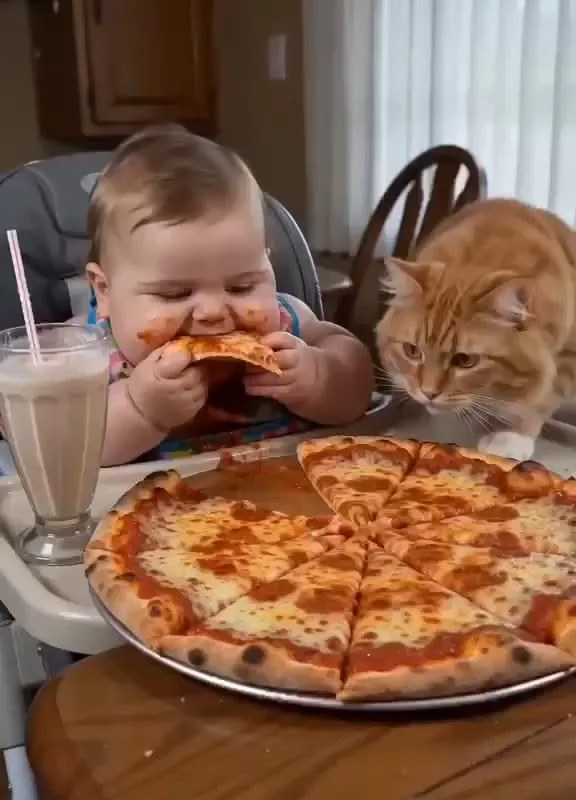
A toddler, a slice of pizza, and a curious cat under the table is a scene almost every parent knows. This guide gives you clear, practical rules for keeping both the child and the cat safe, happy, and well-fed — without turning mealtime into a battle.
Advertisements1
- Choose plain cheese or margherita for young children and cut it into small pieces.
- Keep pizza on a high table and close the box — a cat's jump height makes low surfaces a buffet.
- Feed the cat at the same time as the family so it has less reason to beg.
- Teach one simple rule, repeated daily, instead of correcting your child at every meal.
- Clear plates and wipe crumbs within five minutes to stop nighttime scavenging.
- Watch both child and cat for an hour after eating, and call the vet if a cat eats onion or garlic.
Why Pizza and Cats Are a Riskier Mix Than You Think
Pizza itself isn't dangerous for kids, but the toppings and the cat's reactions can be. A single slice of a typical delivery pepperoni pizza carries roughly 300 calories — and around 700 mg of sodium, which is close to a full day's limit for a two-year-old. That's before the cat starts circling.
Cats are drawn to cheese, cured meat, and warm dough, and they're fast. In my own kitchen I watched a 4-year-old's slice vanish from the plate in under three seconds while the adults were looking at the oven. The real issue isn't the pizza — it's the chaos of a hot, salty, dairy-heavy food plus an animal that wants all of it.
The fix is simple: decide the rules before the pizza box opens, not while a cat is on the table.
Set the Table So the Cat Can't Reach the Plate
Do this: eat at a table, not on the sofa or the floor, and push chairs in when you stand up. Why: a cat's jump height is around 5–6 times its body length, so a low coffee table is basically a buffet. A standard dining table at 75 cm is a genuine barrier.
Not that: leaving the pizza box open on the counter 'for a minute.' Cats associate open boxes with food, and once they learn that, they'll check every box forever. Close the lid, put the box in the oven, or move it to a closed room.
Concrete example: when my niece was three, we started a 'pizza lives in the kitchen' rule. The cat still begs, but she no longer gets on the table, because there's never anything up there to find.
Choose Toppings That Work for Kids and Are Safer Around Cats
Do this: pick plain cheese or a simple margherita for young children, and add vegetables on half. Why: cheese pizza has fewer choking hazards than thick pepperoni rounds, and it's easier to cut into small, safe pieces.
Not that: feeding a child a slice loaded with whole olives, whole cherry tomatoes, or big chunks of sausage. Those are classic choking shapes for under-fours. Slice grapes, tomatoes, and olives lengthwise into quarters — the same rule applies to pizza toppings.
One more thing: onions, garlic, and heavy cheese are not toxic to cats in the tiny amounts a lick might involve, but they can upset a cat's stomach. Don't let the cat 'clean the plate' as a treat.
Teach the Child One Simple Cat Rule
Do this: teach one sentence — 'we eat, the cat watches, nobody shares.' Why: kids copy what they see, and one clear rule sticks better than five complicated ones. Say it before every meal for two weeks and it becomes normal.
Not that: letting your child hand a piece of crust to the cat 'just this once.' Once is how habits start, and a cat that learns to beg from a toddler will beg every single meal.
Concrete example: a friend's five-year-old now says 'Kitty, this is people food' and puts her crust on her own plate. It took about ten days of reminders, and it works.
Keep Mealtime Calm With a Cat in the Room
Do this: feed the cat its own meal at the same time as the family eats. Why: a full cat is a much calmer cat, and a routine makes the begging fade within a week or two.
Not that: shouting or spraying water at the cat during dinner. It scares the child, confuses the cat, and doesn't teach anything useful.
Also worth doing: give the cat a high perch or a window spot near the kitchen. Cats want to be where the action is, and a good vantage point satisfies that without putting paws on the table.
Handle Leftovers and Crumbs Before They Become a Problem
Do this: clear plates within five minutes and wipe the table and floor right away. Why: crumbs and cheese scraps are exactly what a cat will hunt at 2 a.m., and a cat that learns to scavenge will keep doing it.
Not that: leaving pizza boxes in reach overnight. Grease-soaked cardboard is a cat magnet, and some cats will chew and swallow bits of it.
A quick wipe with a damp cloth takes thirty seconds and removes the whole reason the cat comes back.
Watch for These Signs After Mealtime
Do this: check in on both child and cat for about an hour after eating. Why: most problems are small and easy to spot early — a child coughing, a cat licking its lips and looking uncomfortable.
What to look for in a child: coughing, gagging, or a sudden refusal to swallow. In a cat: vomiting, drooling, or hiding. If a cat eats a lot of cheese or greasy meat, it may get a mild stomach upset; if it eats onion or garlic in any real amount, call your vet.
Not that: assuming 'it was just a little bit.' Small amounts matter more for a small animal, and a quick call to the vet costs nothing.
How to Do It, Step by Step
- 1Move the pizza to a table
Eat at a proper dining table and push chairs in when you leave. A high table keeps plates out of a cat's reach and gives your child a stable place to eat. - 2Close the box immediately
Put leftover pizza in a closed box inside the oven or fridge. An open box teaches the cat that the counter is a food source. - 3Feed the cat first
Give the cat its own meal at the same time as the family's. A full cat begs less and stays calmer during dinner. - 4Cut everything small
Quarter tomatoes, olives, and grapes lengthwise and cut pizza into small pieces. This removes the most common choking shapes for young children. - 5Say the one rule out loud
Before each meal, say 'we eat, the cat watches, nobody shares.' Repetition builds the habit in about two weeks. - 6Wipe up within five minutes
Clear plates and wipe the table and floor right after eating. Crumbs and cheese scraps are what bring the cat back.
The safest pizza dinner is the one where the rules are set before the box opens, not after the cat is already on the table.
Frequently Asked Questions
Is it safe to let my child share pizza with the cat?
No — keep pizza away from your cat entirely. Cheese, greasy meat, onion, and garlic can upset a cat's stomach, and teaching a cat to beg from a child creates a habit that's hard to break.
Can my child get sick from a cat near their food?
Yes, indirectly — cat paws and fur can carry bacteria onto plates and hands. Keep the cat off the table and wash your child's hands before and after eating to reduce the risk.
What pizza is best for a toddler?
Plain cheese or margherita, cut into small pieces, is the safest choice. Avoid whole olives, whole cherry tomatoes, and thick sausage rounds, which are common choking hazards for children under four.
How do I stop my cat from jumping on the table during meals?
Feed the cat its own meal at the same time and give it a high perch nearby. A full, occupied cat with a good view is far less likely to jump on the table.
What should I do if my cat ate pizza?
Watch for vomiting, drooling, or hiding, and call your vet if the pizza had onion or garlic. A small lick of cheese is usually mild, but onion and garlic are genuinely toxic to cats.

Maya writes about sustainable living and zero-waste swaps for busy families. She focuses on small, actionable changes that fit into real life without judgment or guilt.


