

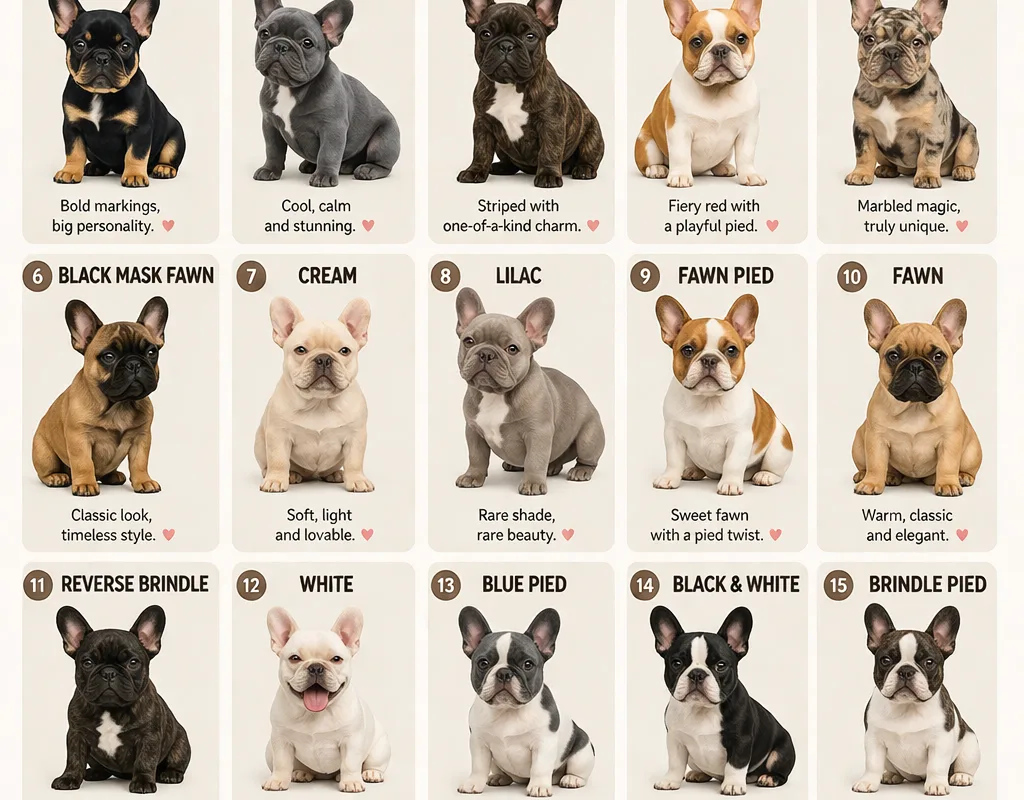
French Bulldog colors are more than a pretty palette—they're a genetic puzzle with real health and price implications. This guide breaks down every recognized and exotic coat, explains the DNA behind each, and gives you the numbers to choose wisely.
Advertisements1
- AKC recognizes only brindle, fawn, cream, and pied; exotic colors like blue and merle are not standard and carry health risks.
- DNA testing for B, E, and D loci confirms color genetics and helps avoid scams; expect to pay $100-$200.
- Blue Frenchies have a 10-15% risk of color dilution alopecia; merle breeding requires careful pairing to avoid double merle.
- Price range for standard colors: $2,500-$4,500; exotic colors: $5,000-$10,000, plus potential vet costs.
- Always prioritize health testing and breeder transparency over rare colors.
The Genetics Behind French Bulldog Colors
French Bulldog coat color is determined by two main genes: the B locus (tyrosinase-related protein 1) and the E locus (melanocortin 1 receptor). The B locus controls black versus chocolate/liver, while the E locus controls whether the dog can produce black pigment at all. A dog with two copies of the recessive e allele (e/e) will be cream, fawn, or pied regardless of the B locus. This is why two fawn parents can produce cream puppies—they're both e/e. The D locus (dilution) turns black to blue and chocolate to lilac, but it's associated with color dilution alopecia (CDA) in some lines. Understanding these genes helps you predict litter outcomes and avoid unethical breeding practices.
Recognized Colors: Standard, Code, and Price Ranges
The American Kennel Club (AKC) recognizes a limited set of colors for French Bulldogs: brindle, fawn, cream, and pied (with or without brindle markings). These are the only colors eligible for conformation shows. Prices for AKC-registered puppies from health-tested parents typically range from $2,500 to $4,500 in the US. For example, a cream male from champion lines might cost $3,500, while a brindle female could be $2,800. Breeders often charge more for rare patterns like pied, but the difference is usually within $500. Always ask for DNA test results for the B, E, and D loci to confirm the color genetics and rule out hidden recessive traits.
Exotic Colors: Blue, Lilac, Merle, and Their Risks
Exotic colors like blue, lilac, and merle are not recognized by the AKC and are often marketed as 'rare' with price tags of $5,000 to $10,000. However, these colors come with health risks. Blue (d/d) is linked to color dilution alopecia, which causes hair loss and skin infections in about 10-15% of blue Frenchies. Merle (M locus) can produce beautiful patterns but carries a 25% risk of double merle (M/M) when two merle dogs are bred, leading to deafness and blindness. Lilac (b/b d/d) combines chocolate and blue and may have similar issues. Reputable breeders avoid breeding merle to merle and screen for skin issues. If you're set on an exotic color, budget an extra $1,000-$2,000 for potential vet visits.
Pied and Brindle Patterns: What to Expect
Pied Frenchies have a white base with patches of color, often on the head and back. The pattern is caused by the piebald gene (S locus) and is considered standard. Brindle is a striped pattern of black and fawn, also standard. Both patterns are common and generally healthy. However, excessive white (over 80% white) can be associated with deafness in some breeds, though this is less common in Frenchies. When choosing a pied puppy, check for pigment around the ears and eyes—lack of pigment (known as 'lethal white' in other breeds) can indicate problems. Expect to pay $2,500-$4,000 for a well-bred pied or brindle.
How to Verify Color and Avoid Scams
Many breeders misrepresent colors to charge more. Always ask for a DNA test from a reputable lab like Embark or Paw Print Genetics. The test should show the genotype at the B, E, and D loci. For example, a true blue Frenchie will have d/d at the D locus. Also, request photos of the puppy at 8 weeks and 6 months to see if the color changes (some fawn puppies darken). Check the breeder's registration with the AKC or FCI and verify health clearances for hips, knees, and heart. Avoid breeders who can't provide documentation or who sell multiple exotic colors without health testing.
Grooming and Care for Different Coat Colors
Coat color doesn't affect grooming needs much, but some colors show dirt and shedding more. Brindle and fawn coats are medium shedders; brush weekly with a rubber curry brush to remove loose hair. Cream and pied coats show tear stains and dirt more easily—wipe their face daily with a damp cloth and use a whitening shampoo monthly. Blue and lilac coats are prone to dry skin and alopecia, so use a moisturizing shampoo and supplement with omega-3 fatty acids (200-300 mg per 10 lbs of body weight daily). Always dry your Frenchie thoroughly after baths to prevent skin infections, especially in skin folds.
Choosing the Right Color for You: A Decision Framework
Start with your priorities: if you want to show or breed, stick to AKC-recognized colors (brindle, fawn, cream, pied). If you want a unique look and are prepared for potential health issues, consider exotic colors but only from breeders who health test and offer a guarantee. Calculate the total cost: purchase price + potential vet bills. For example, a $6,000 blue Frenchie might incur $1,500 in dermatology visits over its lifetime, while a $3,000 cream may have no extra costs. Also, consider insurance: some companies charge higher premiums for exotic colors due to known risks. Finally, meet the puppy's parents to assess temperament and health—color is secondary to a sound mind and body.
How to Do It, Step by Step
- 1Request DNA testing for color genes
Ask the breeder for a DNA panel covering the B, E, and D loci from a lab like Embark. This confirms the color genotype and reveals hidden recessive traits. Expect to pay $100-$200 for the test, but reputable breeders often include it. - 2Verify AKC or FCI registration
Check that the puppy's parents are registered with a recognized kennel club. This ensures the breeder follows ethical practices and the color is within standard. Avoid breeders who can't provide registration papers. - 3Inspect health clearances
Ask for OFA or PennHIP evaluations for hips, patellas, and cardiac health. Frenchies are prone to IVDD and heart issues; health-tested parents reduce risk. Expect to see certificates for both parents. - 4See the puppy in person or via video
Observe the puppy's coat and skin condition. Check for bald spots, rashes, or excessive tearing. A healthy puppy should have a shiny coat and clear eyes. If buying remotely, request a live video call. - 5Calculate lifetime costs
Budget for purchase price plus potential vet bills. For exotic colors, set aside an extra $1,000-$2,000 for skin or eye issues. Use a spreadsheet to compare total costs across breeders. - 6Check breeder references
Ask for contacts of previous puppy buyers. Speak to them about their dog's health and temperament. A reputable breeder will happily provide references.
Color is cosmetic; health is permanent—never pay a premium for a coat that comes with a lifetime of vet bills.
Frequently Asked Questions
What is the rarest French Bulldog color?
Merle is often considered the rarest, but it's not recognized by the AKC and carries health risks. True lilac (b/b d/d) is also rare and expensive.
Are blue French Bulldogs more expensive?
Yes, blue Frenchies typically cost $5,000-$10,000 due to perceived rarity, but they may also incur higher vet bills for skin issues.
Can French Bulldogs be black?
Solid black is not a recognized color in French Bulldogs; they are typically brindle or fawn with black masks. A dog appearing black is usually a dark brindle.
What color French Bulldog is healthiest?
Standard colors like fawn, brindle, and cream have fewer associated health risks. Exotic colors like blue and merle have higher risks of skin and sensory issues.
How can I tell if a French Bulldog puppy will stay the same color?
Some colors change as puppies mature, especially fawn and cream. Ask to see photos of the parents and the puppy at 6-8 weeks; DNA testing can also predict adult color.

Diego covers personal finance and investing for freelancers and gig workers. His angle is practical money management for irregular income, from budgeting to tax basics.


