

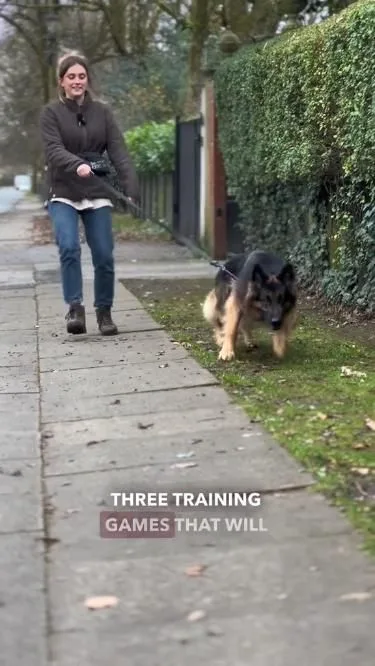
Most dog training advice fails for one boring reason: it asks you to fix behavior without first fixing the environment, the timing, or your own mechanics. Here is a quick win you can use in the next ten minutes, followed by the concrete do-this-not-that rules that separate fast progress from months of frustration.
Advertisements1
- Reward attention before you ask for obedience — a dog that checks in is a dog you can train anywhere.
- Marker timing within two seconds matters more than which training method you choose.
- Manage the environment first; corrections after the fact teach nothing except unpredictability.
- A tight leash creates more pulling. Stopping motion is the fastest fix for leash manners.
- Log success rates out of ten per session — below seven means you raised difficulty too fast.
- Twenty minutes of sniffing work often outperforms twenty minutes of repetitive drills.
The Quick Win: Reward the Behavior You Want Before It Disappears
Before you read another word, grab ten small treats (pea-sized, not bigger — a Labrador's daily calorie budget disappears fast with full-size biscuits). Stand still and wait. The instant your dog looks at you, mark it with a clicker or a calm "yes," then treat. Repeat for five minutes.
Why this works: you are building a reinforcement zone, the habit of checking in with you when nothing else is happening. Most training failures are not obedience failures — they are attention failures. A dog that checks in every few seconds is a dog you can actually train outdoors later.
Do this: reward eye contact and offered calm behavior. Don't do this: call your dog's name repeatedly to get attention. Every repeated name call that goes unanswered teaches your dog that the cue is background noise. Say it once, then wait or move away to create curiosity.
Timing Beats Technique: The Two-Second Rule
A marker word or click must land within about one to two seconds of the behavior. Beyond that, dogs associate the reward with whatever they were doing at the moment of delivery — often sitting when you wanted a down, or standing when you wanted a sit.
Practical fix: keep treats in a pouch at hip height, not in a pocket behind you. The reach-and-fumble is where most owners lose the timing window. If you use a clicker, click first, then reach. The click ends the behavior; the treat is just the paycheck.
A realistic example: teaching "down" on a slick floor. If your dog folds slowly and you mark the moment the elbows touch, you get a crisp down within three to five sessions of ten reps. If you mark when the belly hits, you reinforce a sloppy half-fold and then spend weeks shaping it back.
Management First, Training Second
If your dog steals shoes, chews the couch, or counter-surfs, the fastest intervention is not a correction — it is removing the opportunity. Put shoes behind a closed door. Block the kitchen with a baby gate. This is management, and it is not cheating; it is buying you the time to train the alternative behavior properly.
Do this: identify the trigger and block it for two weeks while you teach a replacement behavior. Don't do this: scold after the fact. Dogs cannot connect a correction to an action that happened four minutes ago, so you are only teaching your dog that your arrival is unpredictable and unpleasant.
Once the environment is clean, teach the alternative with real value attached. Chewing the couch becomes chewing a frozen stuffed toy. Counter-surfing becomes lying on a mat three feet away for a reward. The unwanted behavior fades because it stops paying.
Crate and Confinement: Numbers, Not Opinions
Crate size matters more than crate brand. Your dog needs enough room to stand, turn around, and lie flat — no more. An oversized crate invites a puppy to soil one corner and sleep in the other, which slows housetraining considerably.
A workable confinement schedule for a young puppy: roughly one hour of crate time per month of age, plus a bathroom break, and never longer than four hours during the day. Adult dogs with established house manners often do better with a dog-proofed room than a crate.
Do this: feed meals in the crate, toss treats in randomly, and never use it as punishment. Don't do this: use the crate only when you leave. If the crate only predicts your absence, you are building anxiety, not calm. Ten minutes of crate time while you cook dinner is worth more than an hour of crate time while you are at work.
Leash Mechanics: Where Most Walks Go Wrong
The most common leash problem is not the dog — it is a taut line. A tight leash creates oppositional reflex: your dog pulls harder against pressure. The fix is mechanical, not motivational.
Do this: stop moving the instant the leash goes tight, wait for slack, then reward the slack with forward motion. Your dog learns that pulling stops the walk and a loose leash restarts it. Expect the first two walks to cover about a third of your normal distance — that is normal and temporary.
Don't do this: yank, jerk, or use a retractable leash for training. Retractable leashes teach constant tension by design, and a sudden lock can injure a dog's neck. A six-foot flat leash and a front-clip harness give you control without relying on pain.
Enrichment Is Training: The 20-Minute Rule
A tired dog is not automatically a trained dog, but an under-stimulated dog is nearly untrainable. Twenty minutes of sniffing work — scatter feeding in grass, a snuffle mat, or a simple find-it game — often does more for behavior than twenty minutes of repetitive sits.
Do this: replace one walk per week with a decompression sniff walk where your dog sets the pace and sniffs everything. Don't do this: substitute endless fetch for mental work. Fetch is great cardio, but it builds arousal, and a high-arousal dog struggles to hold a down-stay in the living room.
Balance the week: three structured training sessions of five to ten minutes, two sniff walks, and one or two social outings. Short and frequent beats long and rare every time.
Track Your Sessions or You Are Guessing
Most owners cannot tell you whether their dog's recall improved this month. That is a data problem, not a training problem. Log three things per session: the behavior, the success rate out of ten reps, and the environment (living room, driveway, park).
Simple apps work fine for this — a notes app, a spreadsheet, or a dedicated training tracker with a rep counter and a distraction-level field. What matters is the pattern: if your success rate drops below seven out of ten, you moved to a harder environment too fast. Go back one step.
Do this: change one variable at a time — distance, duration, or distraction, never all three. Don't do this: judge progress by how a session felt. Feel is unreliable; a 7/10 written down is a fact you can act on.
How to Do It, Step by Step
- 1Set up a reinforcement zone
Stand still for five minutes and reward every offered eye contact with a pea-sized treat. Do this before every training session to prime attention. - 2Mark within two seconds
Use one consistent marker word ("yes") or a clicker, delivered the instant the behavior happens, then treat. Keep treats at hip height to protect your timing. - 3Remove the opportunity
Block access to the problem — shoes behind a door, kitchen behind a gate — for two weeks while you train the replacement behavior. Management buys training time. - 4Stop the walk when the leash tightens
Freeze, wait for slack, then move forward. Reward slack with progress. Expect shorter walks for the first week. - 5Size the crate correctly
Stand, turn, and lie flat — no extra room. Feed meals inside and use it for short daytime sessions, not only departures. - 6Log every session
Record behavior, success rate out of ten, and environment. If you drop below 7/10, reduce difficulty by one variable. - 7Swap one walk for a sniff walk
Let your dog set the pace and sniff freely for twenty minutes. This lowers arousal and makes formal training easier the next day.
Dogs do not fail training plans; handlers fail timing, environment, and record-keeping — fix those three and most behavior problems solve themselves.
Frequently Asked Questions
How long should a dog training session be?
Five to ten minutes, three times a day for a young dog or a new behavior. Short sessions keep arousal low and timing sharp, which is where learning actually happens.
Should I use a clicker or a marker word?
Either works; consistency matters more than the tool. A marker word is always with you, while a clicker is more precise — pick one and use it for every session.
Why does my dog ignore me outside but listen indoors?
You skipped a distraction level. Rebuild the behavior at 7/10 success indoors, then move to a driveway, then a quiet park, raising one variable at a time.
Is crate training cruel?
No, when the crate is sized correctly and paired with food and calm daytime sessions. It becomes cruel only when used as punishment or for long daily confinement.
How do I stop my dog from pulling on the leash?
Stop moving the moment the leash tightens and resume only when it goes slack. Your dog learns that tension ends the walk and a loose leash restarts it.

Kenji covers tech productivity and digital minimalism for remote workers. He writes about streamlining workflows and cutting digital clutter with a focus on mental clarity, not just efficiency.


