

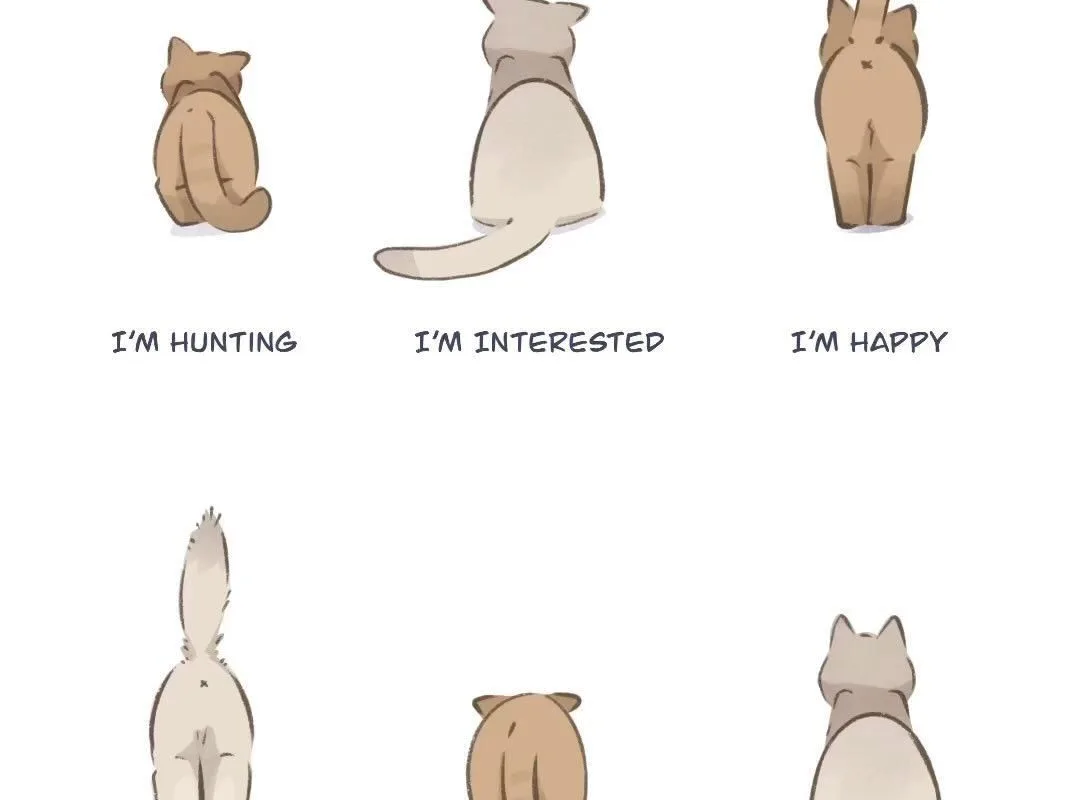
Ever wondered why your cat's tail twitches when you're petting them? Or why it puffs up like a bottlebrush when the doorbell rings? Let's decode the secret language of your cat's tail.
Advertisements1
- A high, curved tail means a happy, confident cat—safe to approach.
- A twitching tail tip is a warning: 'I'm getting overstimulated.'
- A puffed-up tail signals fear or aggression—give your cat space.
- A tucked tail indicates fear or pain—consult a vet if persistent.
- Slow blinks combined with a relaxed tail are a sign of trust and affection.
The Tail as a Mood Barometer
Think of your cat's tail as a mood ring that never lies. When it's held high and curved like a question mark, your cat is feeling confident and friendly—this is the feline equivalent of a warm smile. A tail tucked between the legs, on the other hand, signals fear or submission, much like a person shrinking into themselves during an awkward moment.
But here's where it gets interesting: the speed and intensity of tail movements matter. A slow, rhythmic swish often means your cat is focused or mildly annoyed—like when you're trying to read and someone keeps tapping your shoulder. A rapid, whipping motion? That's pure agitation, and it's your cue to back off. And a puffed-up tail? That's your cat's way of saying 'I'm scared, but I'm trying to look big'—like a person bluffing in poker.
Pay attention to the base of the tail, too. If it's bristled while the rest is relaxed, your cat is likely startled but not fully terrified. This nuance helps you respond appropriately: offer a hiding spot instead of picking them up.
The Slow Blink and Tail Connection
You've probably heard about the slow blink—that half-closed eye look that means 'I trust you.' But did you know the tail plays a supporting role? When your cat gives you a slow blink while their tail is gently curved upward, it's a double dose of affection. It's like a friend saying 'I love you' and giving you a hug at the same time.
To test this, try the slow blink yourself. Look at your cat, blink slowly, and then look away. If they blink back and their tail stays relaxed or gives a little flick, you've just had a silent conversation. This works because cats use eye contact and body language to communicate—and the tail is part of that package.
If the tail is twitching while they slow blink, though, they might be overstimulated. It's like someone smiling while tapping their foot impatiently. In that case, give them space.
Tail Position: The Vertical vs. Horizontal Rule
A tail held straight up is the universal sign of a happy, approachable cat. It's like a person walking with a spring in their step—open and ready to interact. This is the best time to offer pets or play.
A horizontal tail, parallel to the ground, means your cat is curious but cautious. They're assessing the situation, like a detective surveying a crime scene. Don't force interaction; let them come to you.
When the tail is low, near the ground, your cat is feeling insecure or unwell. If this persists, consult your vet. And a tail wrapped around the body? That's a classic sign of feeling cold or defensive—like wrapping yourself in a blanket on a chilly day.
The Twitch, the Swish, and the Whip
Not all tail movements are created equal. A twitching tip often means your cat is mildly irritated or in a playful mood—context matters. If they're watching a bird out the window, that twitch is excitement. If you're petting them and the tip twitches, it's a warning: 'That's enough.'
A full swish, where the tail moves side to side in a relaxed manner, usually indicates concentration. You'll see this when your cat is stalking a toy or solving a puzzle. It's their version of 'hmm, let me think.'
A whip-like motion, fast and forceful, is a clear sign of aggression or fear. This is when you should stop whatever you're doing and give them an escape route. It's like a person slamming a door—you don't want to be in the way.
When the Tail Talks to Other Cats
Cat-to-cat communication is a whole other language. A tail held high with a slight curve is a friendly greeting between cats. You'll often see this when two cats pass each other peacefully.
If one cat's tail puffs up while the other's stays relaxed, the puffed-up cat is trying to intimidate. This can escalate if the other cat doesn't back down. In multi-cat households, watch for tail wrapping during conflicts—it's a sign of tension.
Interestingly, mother cats use their tails to guide kittens. A low, sweeping tail tells kittens to follow. It's like a parent holding out a hand for a child to hold.
Common Misreadings and How to Avoid Them
One of the biggest mistakes is assuming a wagging tail means a happy cat. Unlike dogs, cats don't wag their tails in joy. A wagging tail usually signals conflict or annoyance—like a person shaking their head 'no.'
Another misread: a tail wrapped around your leg doesn't always mean affection. It can be a scent-marking behavior, claiming you as theirs. Still sweet, but not necessarily a hug.
Finally, don't ignore a tail that's constantly low or tucked. It could indicate pain or illness. When in doubt, a vet check is worth it. Your cat can't say 'I don't feel well,' but their tail might.
How to Respond: A Quick Guide
When your cat's tail is high and relaxed, engage! Play, pet, or just enjoy their company. This is prime bonding time.
If the tail is twitching, pause and assess. Are they playing or overstimulated? If the latter, stop petting and let them decompress.
For a puffed-up tail, don't try to comfort them by picking them up. Instead, remove the trigger (like a loud noise) and give them a safe space to calm down.
A tucked tail means your cat is scared or in pain. Speak softly, avoid sudden movements, and if it persists, call your vet.
How to Do It, Step by Step
- 1Observe the tail's position first
Before you interact, glance at where the tail is. High and curved? Go ahead. Low or tucked? Give space. This prevents misunderstandings. - 2Note the speed of movement
Slow swishes mean concentration; fast whips mean agitation. Adjust your behavior accordingly—it's like reading a traffic light. - 3Check the fur
Puffed fur means fear or aggression. Don't approach; instead, reduce stimuli and offer an escape route. - 4Look at the rest of the body
Ears flat? Pupils dilated? Combine tail signals with other body language for a full picture. - 5Respond appropriately
If relaxed, engage. If tense, withdraw. If scared, comfort indirectly by removing the threat. - 6Keep a journal
Track your cat's tail signals in different situations. You'll learn their unique patterns—like a secret code.
Your cat's tail is a mood ring that never lies—learn to read it, and you'll speak fluent feline.
Frequently Asked Questions
What does it mean when a cat's tail is up?
A tail held high and curved indicates a happy, confident cat that is open to interaction. It's a friendly greeting, so it's a good time to pet or play.
Why does my cat's tail twitch when I pet them?
A twitching tail often means your cat is overstimulated or mildly annoyed. It's a polite warning to stop petting and give them a break.
Do cats wag their tails when happy?
No, unlike dogs, cats don't wag their tails in happiness. A wagging or swishing tail usually indicates agitation, conflict, or concentration.
What does a puffed-up tail mean?
A puffed-up tail means your cat is scared or feeling aggressive and is trying to look bigger. It's best to give them space and remove any stressors.
Why does my cat wrap their tail around my leg?
Tail wrapping can be a sign of affection, but it's also a way to scent-mark you as their territory. It's a compliment either way!

Kwame writes about technology and digital privacy for everyday users. He breaks down complex topics like data tracking and encryption into simple, relatable terms.


