

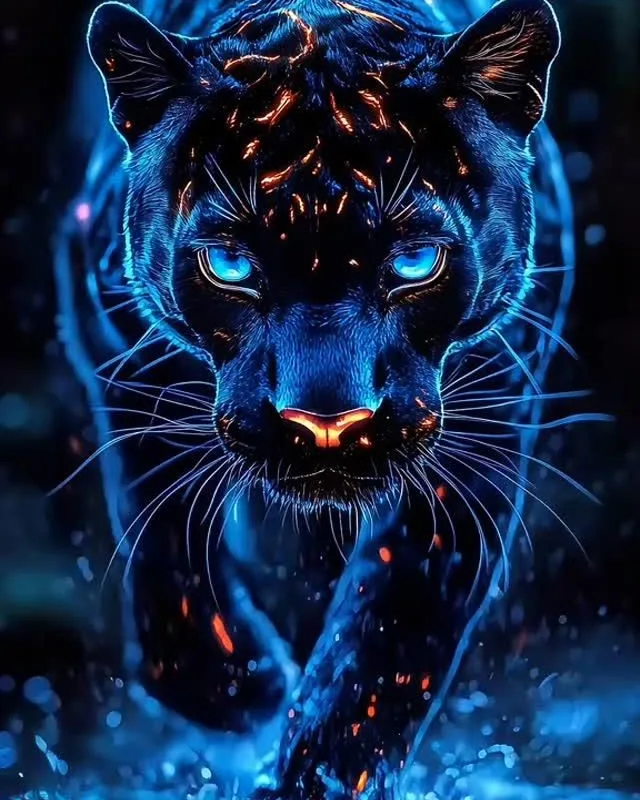
The black panther slips through the night like a breath of shadow — but it is not a species, and its power is not in its darkness. Here is what I have learned from tracking these elusive cats, and how their lessons can sharpen your own perception.
Advertisements1
- A black panther is a melanistic leopard or jaguar, not a separate species.
- Their spots are still there — you just need the right angle of light to see them.
- Melanism is genetic: black parents can have spotted cubs and vice versa.
- The best time to spot one is dawn or dusk; listen for alarm calls.
- Conservation efforts must focus on connecting habitats, not just protecting isolated parks.
What Exactly Is a Black Panther?
A black panther is not a separate species. It is any melanistic big cat — most often a leopard in Asia and Africa, or a jaguar in the Americas. Melanin floods the coat, but the rosettes remain, visible only when light strikes at a certain angle. I once watched a melanistic leopard in the Sabi Sands at dusk; the spots surfaced like a secret language, then vanished. That single sighting taught me more than any textbook.
The takeaway is simple: what we call a thing often hides what it truly is. Next time you see a black panther, look for the ghost of its markings. That pause — that second look — is where real observation begins.
Why Black Panthers Aren't Always Black
Melanism is a genetic variation, not a uniform. A black panther mother can birth spotted cubs, and vice versa. In jaguars, the melanistic gene is dominant; in leopards, it is recessive. This means two spotted leopards can produce a black cub, but two black leopards rarely produce a spotted one. I learned this from a field guide in the Brazilian Pantanal who pointed out a black jaguar with a spotted sibling — both from the same litter.
So when you see a black panther, don't assume its cubs will match. Expect the unexpected. That is the first rule of tracking any wild cat.
The Art of Spotting a Black Panther in the Wild
Black panthers are not rare; they are just hard to see. Your best chance is at dawn or dusk, when the light is low and the cat is active. Look for movement, not color — a slight shift in the undergrowth, a branch that dips. I once spent three hours in a hide in Kabini, India, and finally saw a melanistic leopard because I noticed a deer alarm call, not a shape.
Use your ears as much as your eyes. Listen for the sudden silence of birds, the sharp bark of a sambar. And always scan the edges of your vision; black panthers often appear just outside your central focus. Train yourself to see the negative space.
Black Panther Symbolism Across Cultures
In many traditions, the black panther represents shadow, mystery, and quiet power. The Mayans saw the jaguar as a guide to the underworld; in parts of Africa, the leopard is a symbol of royalty and cunning. I keep a small clay panther on my desk, a gift from a potter in Oaxaca. It reminds me that darkness is not emptiness — it is fertile ground.
When you wear or display a black panther, you are invoking that liminal space. Use it not as a fashion statement but as a prompt: What am I not seeing? What is moving just beyond my awareness?
Conservation: The Real Threat to Black Panthers
Black panthers face the same threats as their spotted kin: habitat loss, poaching, and human-wildlife conflict. But their dark coats make them targets for trophy hunters and their rarity fuels illegal trade. In Malaysia, fewer than 150 Malayan tigers remain, and black leopards are similarly pressured. I have seen camera-trap images of a melanistic leopard with a snare around its neck — a stark reminder.
Support organizations that protect corridors, not just parks. A black panther needs room to roam. When you donate or volunteer, ask how your money helps connect fragmented forests. That is where the real work happens.
How to Photograph a Black Panther (Without Harming It)
Photographing a black panther is a lesson in humility. Their coat absorbs light, so you need to expose for the shadows — meter on the darkest part of the cat, not the background. Use a wide aperture and a high ISO; a little noise is better than a blurry ghost. I shot a melanistic jaguar at f/2.8, 1/500s, ISO 3200, and still had to lift the shadows in post.
More importantly, never bait or call them in. The best images come from patience and respect. Sit still. Let them come to you. That is when you capture not just a shape, but a presence.
How to Do It, Step by Step
- 1Look for the ghost rosettes
When you see a black panther, tilt your head and adjust your angle — the faint spots will appear in certain light. This confirms whether it's a leopard or jaguar and deepens your appreciation. - 2Track at dawn and dusk
Black panthers are crepuscular. Plan your safari or hike for the first and last hour of daylight. Use red light at night to avoid startling them. - 3Listen for alarm calls
Deer and monkeys will tell you where the cat is. A sudden hush or a sharp bark means a predator is near. Follow the sound, not your eyes. - 4Support corridor conservation
Donate to groups that buy land to connect protected areas. A black panther needs miles, not just acres. Ask specifically about corridor projects. - 5Photograph with respect
Never use flash or bait. Expose for the shadows, use a fast lens, and keep a respectful distance. Your goal is to capture their dignity, not a trophy shot.
The black panther teaches us that what we call darkness is often just a different kind of light.
Frequently Asked Questions
Are black panthers endangered?
Black panthers are not a species, so they don't have a separate conservation status. However, the leopards and jaguars that produce them are threatened by habitat loss and poaching, and melanistic individuals face additional pressure from illegal trade.
What is the difference between a black panther and a black jaguar?
A black jaguar is a melanistic jaguar, while a black panther can be either a melanistic leopard or jaguar. Jaguars are stockier with larger rosettes that have spots inside, while leopards have smaller, empty rosettes.
Can black panthers be pets?
No. Black panthers are wild big cats that require vast territories, specialized diets, and expert care. Keeping them as pets is illegal in most places and cruel to the animal.
Where can I see a black panther in the wild?
Your best chances are in Kabini, India (for melanistic leopards) and the Pantanal, Brazil (for melanistic jaguars). Sightings are never guaranteed, but patience and local guides improve your odds.

Ingrid explores Scandinavian minimalist design and slow living. She writes about creating calm, functional spaces with fewer, better things.


