

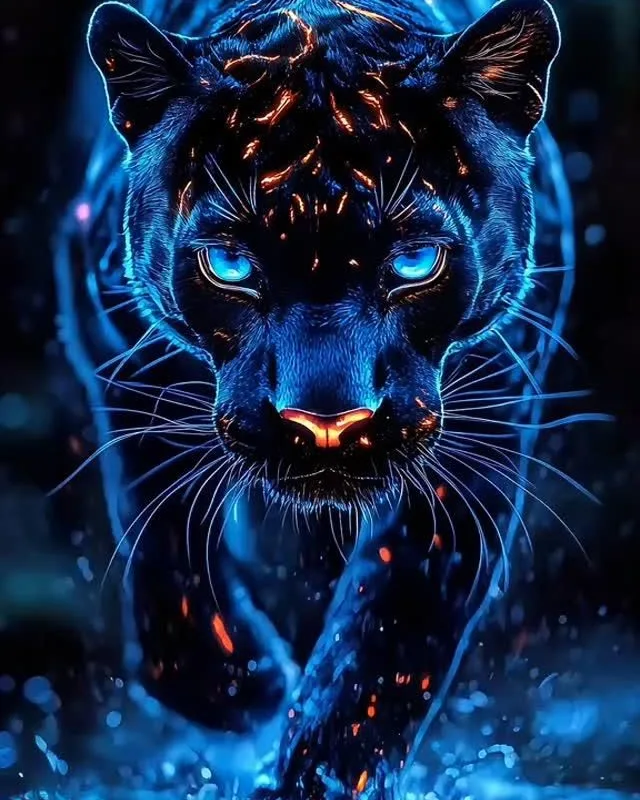
Black panthers aren't a separate species—they're leopards or jaguars with a genetic quirk called melanism. Here's what the science actually says, and why it matters for conservation.
Advertisements1
- Black panthers are not a separate species; they're melanistic leopards or jaguars.
- Melanism is a genetic trait that provides camouflage in dense forests but is a disadvantage in open habitats.
- Black jaguars are more common than black leopards because the gene is dominant in jaguars.
- Poaching and habitat loss are the biggest threats; support anti-poaching patrols and habitat protection.
- Seeing one in the wild is rare—camera traps offer the best chance without disturbing them.
What Exactly Is a Black Panther?
A black panther is not a distinct species. It's any big cat—most commonly a leopard (Panthera pardus) in Asia and Africa, or a jaguar (Panthera onca) in the Americas—that carries a recessive gene for melanism, which increases dark pigmentation. In leopards, the gene is recessive; in jaguars, it's dominant. That's why black jaguars are more common in the wild than black leopards.
Melanism is not albinism. The animals still have spots—they're just hard to see against the dark coat. Under certain light, you can spot the rosettes. This adaptation likely helps with camouflage in dense forests, where shadows dominate.
Key takeaway: If you see a 'black panther' in the Americas, it's a jaguar; in Asia or Africa, it's a leopard. There's no such thing as a separate 'panther' species.
Black Panther vs. Black Jaguar vs. Black Leopard: Key Differences
Size matters. Jaguars are stockier and larger: males average 80–120 kg (176–264 lb), while leopards are more slender, with males around 30–80 kg (66–176 lb). Jaguars have a broader head and shorter tail; leopards have a longer tail for balance in trees.
Habitat also differs. Jaguars prefer dense rainforests and wetlands of Central and South America. Leopards are more adaptable, found in savannas, forests, and mountains across Africa and Asia.
Behaviorally, jaguars are powerful swimmers and often hunt caimans and fish. Leopards are excellent climbers and frequently hoist prey into trees to avoid scavengers. Both are solitary and territorial.
Key takeaway: Location and body shape are your best clues. In the Amazon, it's a jaguar; in the Serengeti, it's a leopard.
Why Melanism Matters for Survival
Melanism isn't just a cosmetic trait. In dense forests with low light, a dark coat provides better camouflage, especially during dawn and dusk when these cats are most active. In open savannas, however, a black coat is a disadvantage—it absorbs heat and stands out against golden grass. This is why black leopards are rare in open habitats but more common in tropical forests, such as the Malay Peninsula.
A 2019 study found that black leopards in the Malay Peninsula are more common than previously thought, with melanistic individuals making up over 90% of the population in some areas. This suggests a strong selective advantage in that environment.
Key takeaway: Melanism is a trade-off. It helps in dark forests but hurts in open plains. Conservation efforts must account for these habitat-specific adaptations.
The Threats They Face—and What Actually Works
Black panthers face the same threats as their spotted counterparts: habitat loss, poaching, and human-wildlife conflict. But their rarity makes them more vulnerable. For example, the black leopard population in the Malay Peninsula is estimated at fewer than 1,000 individuals, and they're threatened by deforestation for palm oil plantations.
Poaching for traditional medicine and skins is a persistent problem. A single black leopard pelt can fetch thousands of dollars on the black market. Anti-poaching patrols and camera-trap monitoring have proven effective. In India's Kabini Wildlife Sanctuary, improved patrols reduced snare incidents by 40% over two years.
Key takeaway: Support organizations that focus on habitat protection and anti-poaching. Don't buy products that may contain illegal wildlife parts.
How to See One Ethically (and Why You Probably Won't)
Seeing a black panther in the wild is extremely rare. Your best bet is the Malay Peninsula (e.g., Taman Negara National Park) or the Amazon basin for black jaguars. But even there, sightings are uncommon. A 2020 survey in Taman Negara recorded only 12 black leopard sightings over 5,000 camera-trap nights—a rate of 0.24%.
Ethical tourism matters. Choose operators that don't bait wildlife or use flash photography at night. Respect distance regulations—at least 30 meters (100 feet). Never share location data on social media; poachers monitor those posts.
Key takeaway: If you want to see one, invest in a reputable camera-trap tour or support conservation groups. Don't expect a guaranteed sighting.
Conservation Status: What the Numbers Say
The IUCN lists leopards as Vulnerable and jaguars as Near Threatened. Black panthers are not assessed separately because they're not a species. However, melanistic individuals are often rarer and more sought after by poachers.
Population estimates are grim: fewer than 1,000 black leopards in the Malay Peninsula, and black jaguars are thought to be less than 10% of the total jaguar population. Conservation efforts are underfunded; a 2021 report showed that only 2% of global conservation funding goes to big cats.
Key takeaway: Support organizations like Panthera and the Wildlife Conservation Society. Every dollar helps, but systemic change is needed.
How to Do It, Step by Step
- 1Identify the species by location
In the Americas, a black panther is a jaguar; in Asia or Africa, it's a leopard. This matters because their conservation needs differ. - 2Check for spots under good light
Melanistic cats still have rosettes. Use a flashlight at an angle to reveal the pattern—this confirms it's not a solid black cat. - 3Support habitat protection
Donate to groups that secure corridors and prevent deforestation. Habitat loss is the biggest threat, and it's solvable. - 4Avoid products with illegal wildlife parts
Never buy traditional medicines or pelts that may come from poached cats. Report suspicious sales to local authorities. - 5Practice ethical wildlife tourism
Choose operators that follow distance guidelines and don't bait animals. Share sightings responsibly—never post exact locations.
The black panther is a masterclass in adaptation—but its future depends on our willingness to protect the shadows it calls home.
Frequently Asked Questions
Are black panthers real?
Yes, they are real, but they are not a separate species. They are leopards or jaguars with a genetic condition called melanism that makes their fur appear black.
What is the difference between a black panther and a black jaguar?
A black panther is a general term; in the Americas, it refers to a black jaguar, which is larger and stockier with a broader head. In Asia and Africa, it refers to a black leopard, which is more slender and has a longer tail.
Where do black panthers live?
Black leopards live in dense forests of Asia and Africa, while black jaguars inhabit the rainforests of Central and South America, particularly the Amazon basin.
Why are black panthers endangered?
They face habitat loss, poaching, and human-wildlife conflict. Their rarity makes them more vulnerable, and they are often targeted for their pelts and body parts.
Can black panthers be kept as pets?
No, they are wild animals and are not suitable as pets. They require large territories, specialized diets, and are dangerous. In most countries, keeping them is illegal without permits.

Diego covers personal finance and investing for freelancers and gig workers. His angle is practical money management for irregular income, from budgeting to tax basics.


