

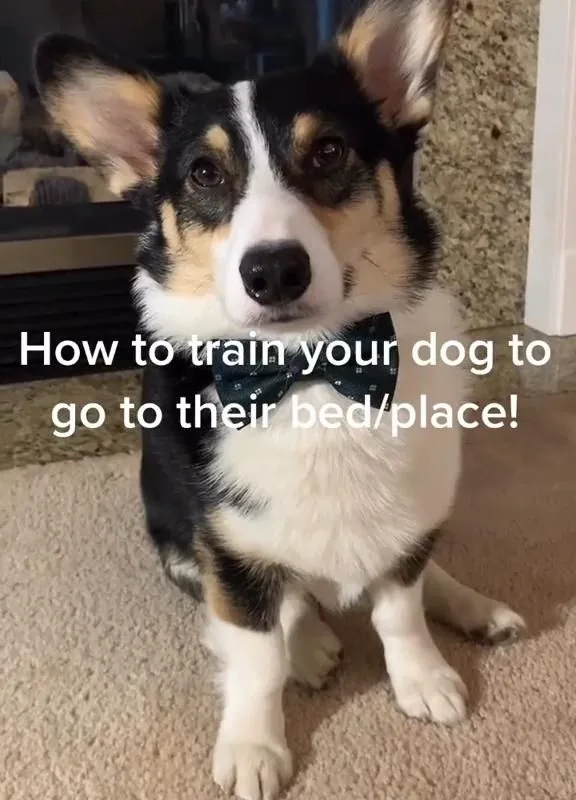
Picture this: the doorbell rings, and instead of a furry cannonball launching at your guest's knees, your dog trots to their bed and settles like a tiny, self-employed professional. That's not magic — it's a cue called "go to place," and it's one of the most useful tricks you can teach.
Advertisements1
- Train "go to place" in 2–3 minute sessions, three times a day — short and frequent beats long and rare.
- Mark and reward while all four paws are on the mat, never after your dog has left it.
- Increase duration by only 20–30% per session to avoid breaking the stay.
- Use a release word like "free" so your dog knows exactly when the trick ends.
- Never use the bed as punishment or a time-out zone — it must stay a good-news place.
- Proof the trick in at least three locations before trusting it around guests.
Why "Go to Place" Is the Trick That Keeps on Giving
A mat cue is the Swiss Army knife of dog training. It gives your dog a job during chaos — dinner parties, deliveries, the moment you're juggling a hot pan — and jobs are calming. Dogs who know where to be tend to offer fewer unwanted behaviors because "stand here and look adorable" is incompatible with "counter-surf."
The trick also builds what trainers call a "settle" — the ability to relax on cue, not just lie down. In my experience running group classes, dogs who practice mat work for even five minutes a day show noticeably calmer greetings within two weeks. The mat becomes a visual anchor: a place where good things happen and nothing is demanded of them.
One important distinction: this is a trick, not a punishment. Never send your dog to their bed mid-scold, or the mat becomes a time-out zone and they'll start avoiding it. Pair it with treats, praise, and calm — always.
Gather Your Gear (It's Less Than You Think)
You need four things: a mat or bed your dog already likes, a marker word or clicker, small high-value treats (think pea-sized bits of chicken or cheese, not kibble), and a quiet room with minimal foot traffic. That's it. No fancy equipment required.
Here's what most people get wrong: they use a bed the dog already treats like a toy chest. If your dog's bed is where they shred plush toys, pick a different mat. A simple bath mat or a folded blanket works beautifully and is easy to move from room to room later.
Treat size matters more than treat type. Pea-sized pieces let you deliver 15–20 rewards in a two-minute session without filling your dog up. If your dog is food-obsessed, use part of their breakfast kibble; if they're picky, break out the good stuff. This is a trick, so pay accordingly.
Lure First, Then Fade the Lure Fast
Start with a lure: hold a treat right at your dog's nose and guide them onto the mat. The instant all four paws touch, mark it — say "yes!" or click — and reward. Do this five times, then stop and watch. Most dogs will start offering the mat on their own within a few repetitions because the mat is now a treat dispenser.
Now fade the lure. The trick is to move your hand as if you still have a treat, but without one. Reward from your pocket or a nearby bowl instead. If your dog stalls, go back to luring for three reps, then try again. This is the messy-first-draft phase — expect a few wobbly attempts and don't correct them.
Once your dog is stepping on reliably, add the verbal cue "go to bed" right before they step on. Say it once, clearly, and only when you're confident they'll do it. Repeating a cue while your dog ignores you teaches them that the word is background noise.
Build Duration and Distance in Tiny Increments
This is where most training falls apart: people ask for a 30-second stay on day one. Instead, reward the instant your dog lies down, then reward again after two seconds, then four, then six. The rule of thumb is to increase duration by no more than 20–30% per session. If your dog pops up, you asked for too much — no drama, just reset with an easier rep.
Distance comes next. Take one step back, return, reward. Then two steps. Then three. If your dog breaks, you've found your threshold — back up half the distance and rebuild. I like to use a release word like "free" so your dog knows when the job is officially over; without one, they'll guess, and guessing usually means leaving early.
Add a hand signal — a flat palm pointing at the bed — alongside the verbal cue. Dogs read body language far better than words, and the visual cue will eventually do most of the work.
Proof It in the Real World (Slowly)
A trick that only works in your quiet living room isn't finished. Once your dog is solid there, move the mat to the kitchen. Then the hallway. Then the backyard. Each new location resets difficulty, so drop your criteria — shorter duration, closer distance — and rebuild.
Next, add mild distractions: a dropped spoon, a knock on the door, a family member walking past. Reward heavily for staying. If your dog breaks, the distraction was too big; dial it back. This is the same principle as learning to drive on quiet streets before the highway.
Finally, practice the doorbell scenario in five-minute bursts. Ring, cue "go to bed," reward generously on the mat. Repeat until your dog beats you to the bed when they hear the bell. That's the payoff — a dog with a job instead of a dog with a complaint.
Common Mistakes That Stall Progress
The biggest one: rewarding the dog after they've already left the mat. Timing is everything — the treat must land while paws are on the bed, or you're rewarding the departure. Use a marker word to freeze the moment, then deliver.
Second: training when your dog is wound up. A dog who's just come in from a squirrel chase can't settle on a mat. Train after a walk or a meal when energy is lower. Third: sessions that run too long. Two to three minutes, three times a day, beats one 20-minute marathon every time.
And please — don't call your dog off the mat to punish them or clip their nails. If the bed predicts unpleasant things, the trick dies. Keep the mat a good-news zone and your dog will keep choosing it.
How to Do It, Step by Step
- 1Pick a dedicated mat
Choose a simple bath mat or blanket your dog doesn't already chew. A distinct texture helps them recognize the target. - 2Charge the mat with treats
Toss five treats onto the mat and let your dog eat them. This builds positive association before any behavior is asked for. - 3Lure all four paws on
Guide a treat from nose to mat, mark the instant all paws land, and reward. Repeat five times. - 4Fade the lure
Move your empty hand toward the mat as if holding a treat. Reward from a bowl or pocket when your dog steps on. - 5Add the verbal cue
Say "go to bed" once, just before your dog steps on. Never repeat it while they ignore you. - 6Extend duration gradually
Reward after 2 seconds, then 4, then 6. Increase by no more than 20–30% per session. - 7Add distance and a release word
Step back one pace, return, reward. Use "free" to officially end the trick. - 8Proof in new rooms and with distractions
Move the mat to the kitchen, then practice with dropped spoons and door knocks, lowering criteria each time.
A mat cue doesn't just move your dog — it gives them a job, and a dog with a job is a dog who can relax.
Frequently Asked Questions
How long does it take to train a dog to go to their bed?
Most dogs learn the basic cue in three to five days of short daily sessions, with reliable duration and distance taking two to four weeks. Puppies and high-energy breeds may need a little longer.
What if my dog won't stay on the bed?
You're almost certainly asking for too much duration or distance too soon. Drop back to rewarding after one or two seconds and rebuild gradually.
Can I use this trick instead of a crate?
A mat cue can supplement crate training but isn't a direct substitute, since a mat doesn't physically contain your dog. It's excellent for settling during meals or greetings.
Should I use a clicker or a marker word?
Either works — the key is consistency. A marker word like "yes" is easier for family members to use, while a clicker gives sharper timing.
Why does my dog leave the bed as soon as I stop treating?
You may be rewarding only after they've moved, or you haven't built duration slowly enough. Reward the position, then add a release word so leaving is on your terms.

Priya explores creative writing prompts and storytelling techniques for aspiring authors. She shares exercises to spark imagination and build narrative confidence, drawn from her own writing practice.


