
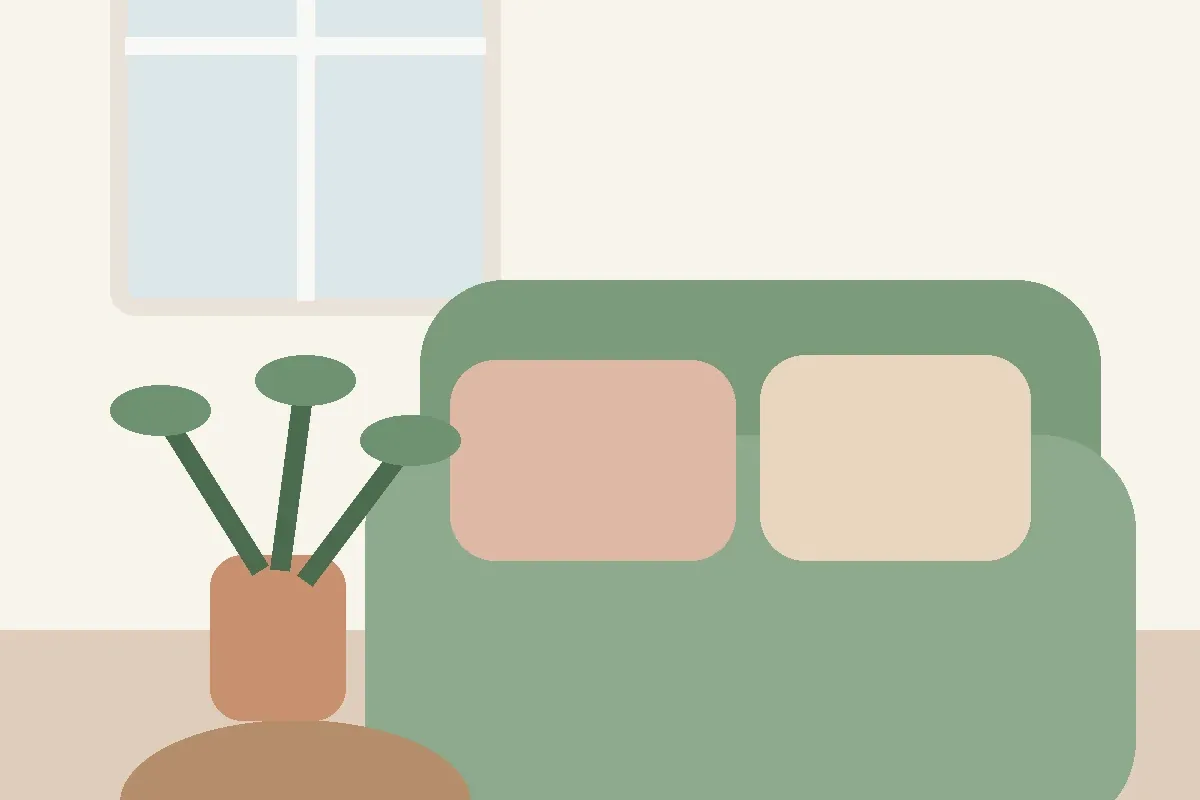
A small living room does not need to feel crowded. The goal is not to make the room look empty. It is to make the space easier to move through and easier for your eyes to understand.
Advertisements1
Start with one or two changes instead of buying a whole new room. Often, the biggest difference comes from layout and clutter, not expensive furniture.
1. Clear the walking path first
Stand at the doorway and look at where people naturally walk. Move baskets, small tables, and extra chairs out of that path. A clear route through the room makes it feel more comfortable right away.
2. Pull furniture away from awkward corners
Pushing every piece against a wall can sometimes make a room feel flat and crowded. If space allows, pull the sofa forward a few inches or angle a small chair so the seating area feels intentional.
3. Keep the largest pieces simple
A sofa with a clean shape and visible legs can feel lighter than a bulky piece that reaches all the way to the floor. You do not have to replace a good sofa just for this reason, but it is useful to remember when you eventually shop for furniture.
4. Use one larger rug instead of several tiny ones
A rug that connects the main seating area can make the room feel more unified. Several small rugs can break the floor into little sections and make the space look busier.
5. Let in as much daylight as you can
Heavy window coverings can make a small room feel closed. Open curtains during the day and keep tall furniture away from the part of the window that brings in light. If privacy is needed, consider a lighter layer that still lets daylight through.
6. Hang curtains a little higher
When it fits the window and wall, placing the curtain rod higher than the top of the window can draw the eye upward. Curtains that reach close to the floor also look more finished than panels that stop at an awkward height.
7. Choose storage that hides visual clutter
Open shelves are pretty when they are carefully edited, but everyday items can quickly make them look busy. A cabinet, lidded basket, or storage ottoman can hide chargers, games, toys, and extra blankets.
8. Leave some surfaces empty
You do not need to decorate every inch. Try leaving part of the coffee table, TV cabinet, or bookshelf open. A little empty space gives the items you keep more room to stand out.
9. Repeat a few colors
A room can feel more connected when the same two or three colors appear in different places. For example, a warm wood tone, a soft green, and a cream fabric can repeat in pillows, a basket, and a small piece of art.
10. Use mirrors where they make sense
A mirror can bounce light and create a feeling of depth. Place it where it reflects something pleasant, such as a window, a lamp, or a clean part of the room rather than a pile of clutter.
11. Remove one thing before adding another
This is the easiest rule to remember. If the room already feels full, take something out before you bring in a new decorative object or piece of furniture. You may find that the room needs less than you thought.
Start with a 15-minute reset
If you want a quick result today, remove anything that belongs in another room, clear the main walking path, fold blankets, open the curtains, and leave one surface mostly empty. Then step back and see what still bothers you.
A small room can still feel warm, personal, and useful. The best layout is the one that makes everyday life easier, not the one that follows the most decorating rules.