

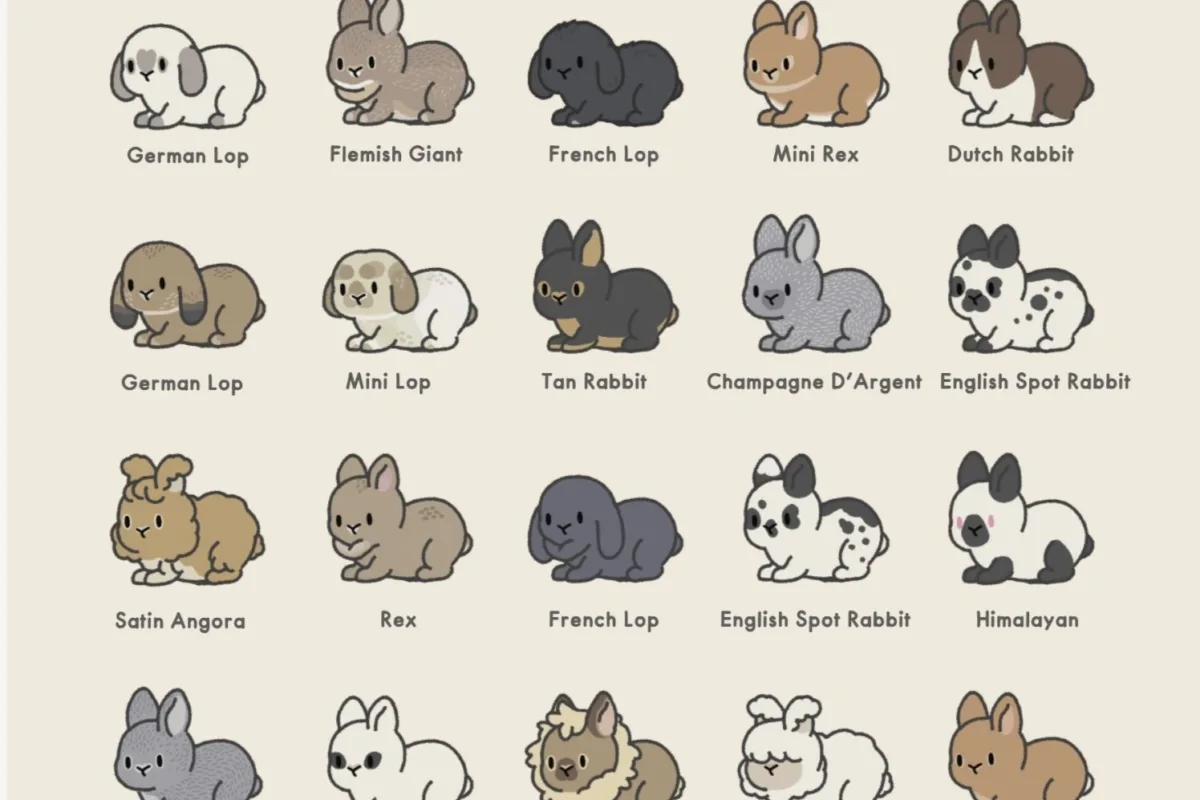
Most people pick a rabbit breed based on a photo, then discover the adult size, temperament, or health quirks don't match their lifestyle. This guide gives you concrete numbers, breed-by-breed breakdowns, and a decision framework so you choose right the first time.
Advertisements1
- Adult weight determines cage size, food cost, and lifespan—small breeds live 8–12 years, giants 5–7.
- Breed predicts temperament only loosely; early handling and environment matter more.
- Lops have 3–4x higher ear infection risk; dwarfs have ~10% malocclusion rate.
- First-year costs range from $350 for a Netherland Dwarf to $620+ for a New Zealand.
- Adopting an adult mixed breed from a rescue saves $100–$200 and gives you a known personality.
- Every rabbit needs at least 12 sq ft of cage space and 3–4 hours of daily exercise.
Size Matters: What the Numbers Actually Mean
Rabbit breeds are categorized by adult weight, and that weight determines everything from cage size to food cost. The American Rabbit Breeders Association (ARBA) recognizes five size groups:
– Small: 2–6 lb (e.g., Netherland Dwarf at 2.5 lb, Holland Lop at 4 lb)
– Medium: 6–9 lb (e.g., Rex at 7.5 lb, Mini Rex at 4.5 lb)
– Large: 9–12 lb (e.g., New Zealand at 10 lb, Californian at 10.5 lb)
– Giant: 12–16 lb (e.g., Flemish Giant at 14 lb, Checkered Giant at 12 lb)
– Dwarf: under 2.5 lb (e.g., Polish at 2.5 lb)
Why this matters: a 10 lb New Zealand eats roughly 4–6 oz of pellets per day, while a 4 lb Holland Lop eats 2–3 oz. Over a year, that's a difference of about 45 lb of feed. At $25 per 50 lb bag, you're looking at $22 vs. $11 annually—small, but it compounds with bedding, vet costs, and housing. A 14 lb Flemish Giant needs a cage at least 36" x 30" (vs. 24" x 24" for a small breed), which changes your setup cost by $50–$100.
Don't trust online photos for size. Visit a breeder or rescue and see the adult rabbits in person. Ask to see the parents—if the parents are 12 lb, the baby will be too.
Temperament: The Breed Stereotypes That Hold Up (and Those That Don't)
Breed temperament is a generalization, but some patterns are reliable across thousands of owners:
– **Reliable:** Netherlands Dwarfs are high-energy and can be nippy if not handled daily. Flemish Giants are docile and calm. New Zealands are curious and bold. Holland Lops are generally friendly but can be skittish.
– **Unreliable:** "Rex rabbits are cuddly"—actually, Rex are active and need space. "Lionheads are aggressive"—they're just high-strung and need early socialization.
A 2019 survey of 1,200 rabbit owners by the House Rabbit Society found that 68% of aggression cases were resolved with daily handling and a larger enclosure, not breed change. So before you blame the breed, fix the environment.
If you want a lap rabbit, look for an adult from a foster home where the temperament is already known. Baby rabbits change personality at 6–8 months when hormones kick in. A calm 8-week-old can become a territorial 6-month-old. Breeders who let you meet the parents and observe the litter's behavior are worth the extra $20–$50.
Health Risks by Breed: What to Screen For
Certain breeds have genetic predispositions you should know before buying:
– **Lop breeds (Holland, Mini, French):** ear canal infections are 3–4 times more common due to narrowed ear canals. Budget $50–$100 per year for vet checks.
– **Dwarf breeds (Netherland Dwarf, Polish):** malocclusion (misaligned teeth) affects about 10% of dwarfs. Ask the breeder if they've had cases; if yes, walk away.
– **Giant breeds (Flemish Giant, Checkered Giant):** higher risk of sore hocks (foot ulcers) and heart issues. Need soft bedding and low-stress environments.
– **Rex:** prone to sore hocks due to thin fur on feet. Use fleece or hay mats, not wire floors.
A reputable breeder will provide a health record and allow you to see the rabbit's teeth and feet. If they refuse, that's a red flag. Also ask about average lifespan: small breeds live 8–12 years, giants 5–7 years. That's a 5-year difference in commitment and cost—$1,500 vs. $800 in lifetime vet care, roughly.
Housing and Cost: The Real Budget for Each Size Group
Here's a realistic first-year cost breakdown for three common breeds, assuming you buy from a breeder:
– **Netherland Dwarf (2.5 lb):** rabbit $50, cage $60, food $80, litter $60, vet $100 = $350
– **Holland Lop (4 lb):** rabbit $75, cage $80, food $100, litter $80, vet $150 = $485
– **New Zealand (10 lb):** rabbit $60, cage $120, food $140, litter $100, vet $200 = $620
These are minimums. Add $100–$200 for a playpen or exercise pen, which every breed needs. A rabbit confined to a cage 24/7 will develop behavioral issues and health problems. The House Rabbit Society recommends a minimum of 12 square feet of cage space plus 3–4 hours of daily exercise for any breed. For a giant breed, double that.
Don't cheap out on the cage. A $40 pet store cage is too small for any rabbit over 3 lb. Build a DIY pen from wire grids (like a C&C cage) for about $60 and get 4x the space.
Breed vs. Individual: When to Ignore the Label
Breed gives you probabilities, not guarantees. Two rabbits of the same breed can have opposite personalities. If you're set on a specific temperament, adopt an adult from a rescue. Foster-based rescues typically know the rabbit's behavior in a home setting—whether it's litter-trained, good with kids, or destructive.
A 2020 study in Applied Animal Behaviour Science found that early handling (before 10 weeks) had a stronger effect on adult friendliness than breed. So if you buy a baby, handle it daily for 15 minutes for the first month. That's more impactful than choosing a "friendly" breed.
Also consider mixed breeds. A mixed rabbit often has fewer genetic health issues (hybrid vigor) and can be just as affectionate. Rescues are full of mixes for $30–$50 adoption fees, including spay/neuter. That's a $100–$200 savings compared to buying from a breeder and paying for surgery separately.
Myth-Busting: Common Misconceptions That Cost You Money
– **"Small breeds are easier."** Small breeds are often more energetic and can be nippier. They also live longer, so it's a longer commitment.
– **"Giant breeds are lazy."** Giants are calm but still need exercise. A bored Flemish Giant will chew baseboards and destroy furniture.
– **"Lops are always sweet."** Lops are prone to ear infections and can be skittish if not socialized early.
– **"You can litter-train any rabbit."** Most can be trained, but intact rabbits (not spayed/neutered) mark territory. Spaying/neutering ($150–$300) drastically improves litter habits.
– **"Rabbits are low-maintenance."** They need daily hay, fresh water, cage cleaning 2–3 times per week, and 3–4 hours of exercise. That's more work than a cat.
One more: "Rabbits are good starter pets for kids." They're prey animals and often don't like being picked up. A guinea pig is a better starter pet for young children. For kids over 10 who can handle gently, a calm adult rabbit from a rescue is ideal.
How to Do It, Step by Step
- 1Define your must-haves
Write down your maximum adult size (in pounds), minimum time you can commit to daily exercise (in hours), and budget for first-year costs. This filters breeds instantly. - 2Research three breeds that fit
Use ARBA's breed profiles for weight and temperament. Cross-check with the House Rabbit Society for health issues. Pick three finalists. - 3Visit a breeder or rescue in person
Ask to see the parents and observe the rabbit's behavior. Hold it. If it's skittish or aggressive, that's data. Don't buy based on a photo. - 4Check health records and teeth
Look at the incisors for alignment. Ask about malocclusion, ear infections, and sore hocks in the line. A good breeder will have answers. - 5Calculate the real cost
Add up rabbit price, cage, food, litter, vet, and spay/neuter. For a 10 lb rabbit, expect $600–$800 in year one. If that's a stretch, choose a smaller breed or adopt. - 6Prepare the habitat before bringing it home
Set up the cage or pen with hay, water, and a hide box. A rabbit needs a safe space from day one to reduce stress. - 7Commit to daily handling
Spend 15 minutes per day handling and petting, especially in the first month. This builds trust and reduces aggression more than breed choice.
Breed gives you probabilities, not guarantees—the rabbit's early handling and your daily commitment shape its personality more than any label.
Frequently Asked Questions
What is the best rabbit breed for beginners?
The New Zealand or Californian are often recommended for beginners because they are calm, hardy, and medium-sized (9–10 lb). However, an adult mixed breed from a rescue is often a better choice because its temperament is already known.
How much does a rabbit cost per year?
Expect $300–$600 per year for food, litter, and routine vet care, depending on breed size. Giant breeds cost more due to higher food intake and potential health issues.
Do rabbits make good pets for children?
Rabbits can be good pets for children over 10 who can handle them gently, but they are prey animals and often dislike being picked up. A guinea pig is usually a better starter pet for younger kids.
What is the friendliest rabbit breed?
Flemish Giants, New Zealands, and Holland Lops are often cited as friendly, but individual personality varies. Early socialization and daily handling are more reliable predictors of friendliness than breed.
How long do rabbits live?
Small breeds live 8–12 years, medium breeds 6–10 years, and giant breeds 5–7 years. Plan for a decade-long commitment if you choose a small breed.

Diego covers personal finance and investing for freelancers and gig workers. His angle is practical money management for irregular income, from budgeting to tax basics.


