

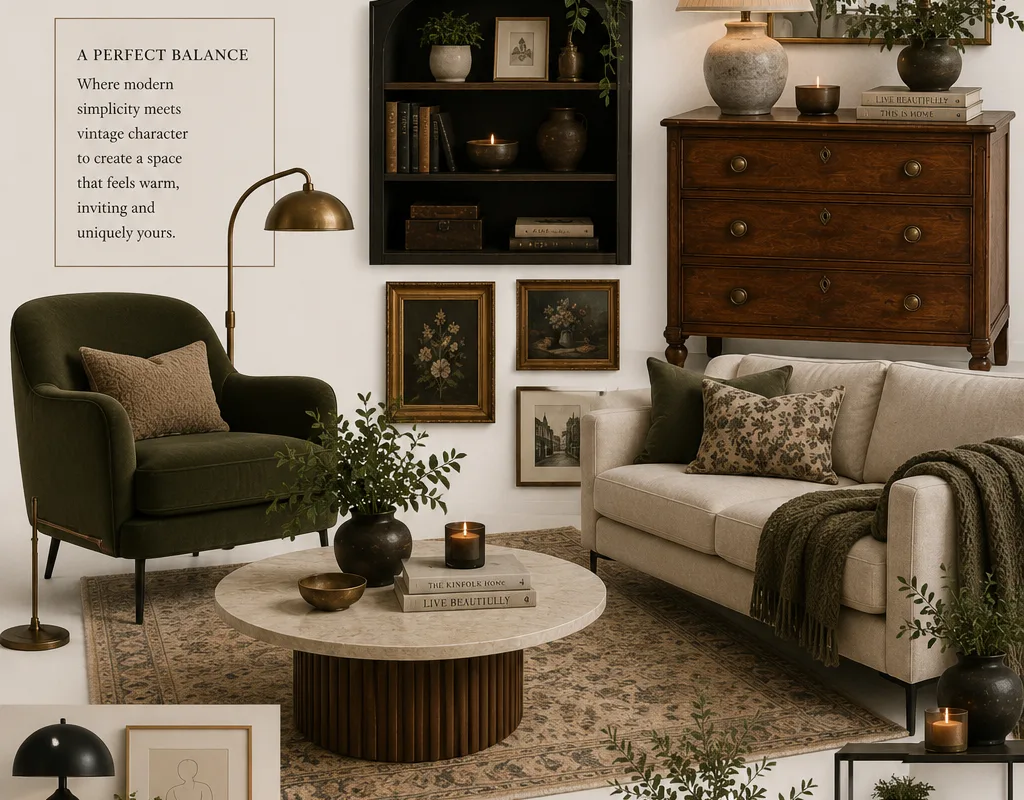
Create a stunning modern vintage moodboard with these 10 practical hacks that blend old-school charm with contemporary flair. From sourcing authentic pieces to nailing the color palette, you'll get actionable steps to transform your space.
Advertisements1
- Start with a narrative to guide all design decisions.
- Use the 60-30-10 rule for a balanced color palette.
- Mix 70% vintage with 30% modern for a fresh look.
- Layer at least five textures to add depth.
- Source vintage from estate sales and online marketplaces to save money.
- Create a focal point with vintage art hung at eye level.
Hack 1: Start with a Story, Not a Swatch
Before you pin a single image, write a one-sentence narrative for your room. For example, 'A sun-drenched Parisian atelier where a ceramicist works.' This story acts as your compass, ensuring every element—from a 1970s rattan chair to a modern linen sofa—feels intentional. Why it works: It gives your moodboard emotional cohesion, making it easier to edit out pieces that don't fit. Common mistake: Skipping this step and ending up with a random collection of pretty things that don't gel. Take 10 minutes with a notebook and pen—no screens—to craft your story.
Hack 2: Build a Base Palette with 60-30-10
Use the classic 60-30-10 rule: 60% dominant color (e.g., warm white), 30% secondary (e.g., muted sage), and 10% accent (e.g., burnt orange). For modern vintage, opt for colors with a dusty, aged quality—think Farrow & Ball's 'Setting Plaster' or Benjamin Moore's 'Pashmina.' Why it works: It creates balance and prevents the chaos that can come from too many vintage patterns. Common mistake: Choosing trendy colors that date quickly; instead, pull hues from actual vintage textiles or art you own.
Hack 3: Mix Eras with a 70/30 Ratio
A foolproof formula for modern vintage is 70% vintage or antique pieces and 30% modern. This ratio keeps the room feeling fresh, not like a museum. For example, pair a 1950s teak sideboard with a sleek modern lamp and a contemporary abstract rug. Why it works: The modern pieces provide contrast and functionality, while vintage items add character. Common mistake: Going 100% vintage, which can feel heavy or dated. Aim for at least one modern element in every vignette.
Hack 4: Layer Textures for Depth
Modern vintage thrives on tactile variety. Combine at least five textures: smooth (leather), rough (burlap), shiny (brass), soft (velvet), and woven (rattan). Why it works: Texture adds richness and makes a space feel collected over time. Common mistake: Using only one type of texture (e.g., all wood) leads to a flat, boring look. Start with a vintage rug as your texture anchor—a worn Persian or Turkish rug offers a mix of wool, cotton, and natural dyes.
Hack 5: Source Authentic Vintage Without Breaking the Bank
You don't need a fortune to find real vintage. Start with these sources: local estate sales (arrive early on the first day), Facebook Marketplace (set alerts for keywords like 'mid-century' or 'antique'), thrift stores in wealthy neighborhoods, and online auctions like Everything But The House. Why it works: These venues often have hidden gems at a fraction of retail. Common mistake: Overpaying at trendy vintage boutiques; instead, hunt for pieces that need minor restoration—a little elbow grease saves hundreds.
Hack 6: Create a Focal Point with Vintage Art
Every modern vintage room needs a focal point, and vintage art is an easy win. Look for original oil paintings, lithographs, or even pages from old books. Hang a large piece above the sofa or lean it on a mantel. Why it works: Art adds color, personality, and a sense of history. Common mistake: Hanging art too high; the center should be at eye level (57-60 inches from the floor).
Hack 7: Incorporate Vintage Lighting for Ambiance
Lighting is the jewelry of a room. Swap out modern fixtures for vintage-inspired ones: a brass pharmacy lamp, a milk glass pendant, or a ceramic table lamp with a linen shade. Why it works: Vintage lighting adds warmth and a sculptural element. Common mistake: Using only overhead lighting; layer in table lamps, floor lamps, and sconces for a cozy glow.
The Hacks, Step by Step
- 1Gather Inspiration
Spend 30 minutes on Pinterest or Instagram saving 20-30 images that fit your story. Use a secret board to keep it focused. Why: This gives you a visual library to pull from. - 2Create a Physical Moodboard
Use a foam core board and pin fabric swatches, paint chips, and printed images. Why: Tangible boards help you see how colors and textures interact in real life. - 3Define Your Palette
Select your 60-30-10 colors and order samples. Paint large swatches on the wall. Why: This ensures the colors work in your lighting. - 4Source Key Vintage Pieces
Set a budget and hunt for 2-3 statement vintage items (e.g., a rug, a chair, art). Why: These anchor the room and provide authenticity. - 5Layer Textures
Add at least five textures through textiles, metals, and natural materials. Why: Texture prevents the room from feeling flat. - 6Edit Ruthlessly
Remove anything that doesn't match your story or palette. Why: A cohesive moodboard is better than a cluttered one.
A modern vintage moodboard isn't about replicating the past—it's about curating a story that feels uniquely yours.
Frequently Asked Questions
What is a modern vintage moodboard?
A modern vintage moodboard is a visual collage that blends vintage and contemporary elements to guide a room's design. It typically includes color swatches, fabric samples, and images of furniture and decor.
How do I mix modern and vintage furniture?
Aim for a 70/30 ratio of vintage to modern pieces, and ensure each vignette has at least one modern item for balance. Choose vintage pieces with clean lines and pair them with sleek modern furniture.
Where can I find affordable vintage decor?
Estate sales, thrift stores, Facebook Marketplace, and online auctions are great sources for affordable vintage decor. Look for pieces that need minor restoration to save even more.
What colors work best for a modern vintage palette?
Muted, dusty tones like sage green, terracotta, mustard yellow, and warm white work well. Use the 60-30-10 rule to balance dominant, secondary, and accent colors.
How do I prevent my vintage room from looking dated?
Incorporate modern elements like a sleek sofa or contemporary lighting, and avoid too many ornate patterns. Keep the overall look fresh by editing ruthlessly and sticking to your story.


