

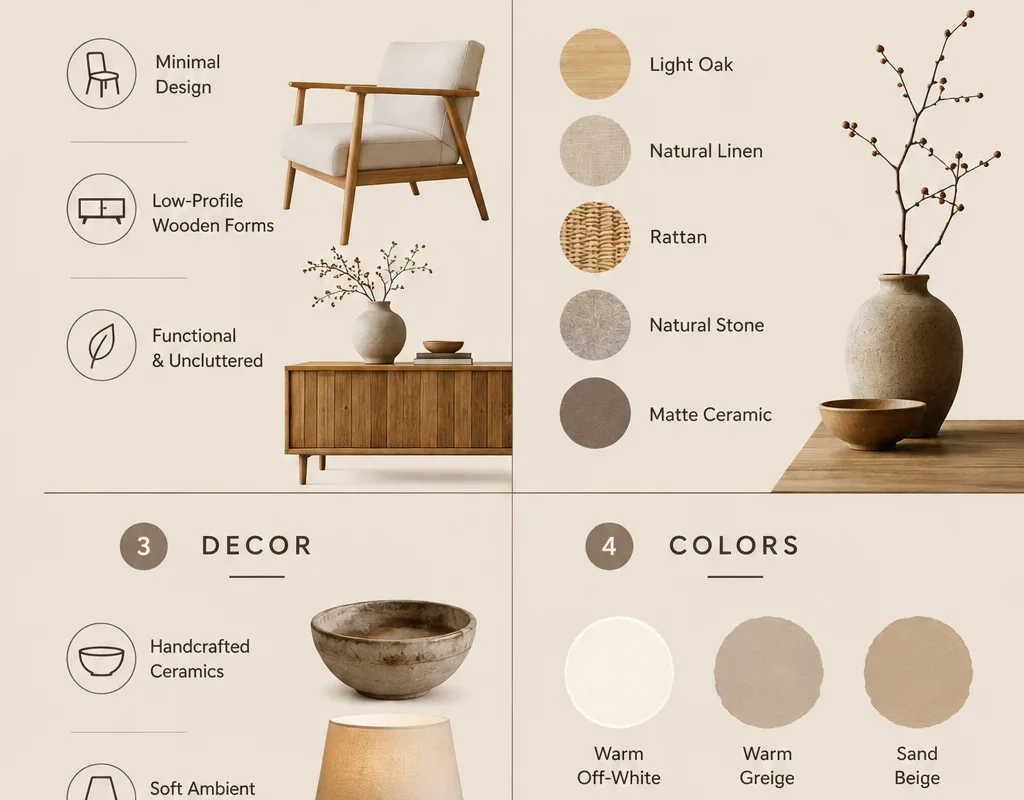
Japandi is not a trend. It is a design philosophy that merges Japanese wabi-sabi with Scandinavian hygge. The result: a home that feels warm, calm, and intentional. But most guides gloss over the basics. They show pretty pictures without explaining the how or the why. This guide fixes that. Below are 19 fundamental elements of Japandi design, from furniture to lighting. Each item includes what it is, why it matters, and who it’s for. No fluff. Just actionable steps to create a space that works.
Advertisements1
Table of Contents(Click to Toggle)
- Why Japandi Basics Matter for a Calm Home
- 19 Japandi Basics for a Warm Minimalist Home
- 1. Low-Profile Furniture
- 2. Natural Materials
- 3. Earthy Color Palette
- 4. Handcrafted Decor
- 5. Soft Ambient Lighting
- 6. Minimalist Storage
- 7. Wabi-Sabi Imperfection
- 8. Hygge Warmth
- 9. Functional Layout
- 10. Textural Contrast
- 11. Biophilic Elements
- 12. Neutral Textiles
- 13. Decluttered Surfaces
- 14. Artisanal Ceramics
- 15. Paper Lanterns
- 16. Wood Tones
- 17. Negative Space
- 18. Sustainable Sourcing
- 19. Seasonal Rotation
- Bonus Mentions
- The Japandi Mindset: Less, But Better
Why Japandi Basics Matter for a Calm Home
Japandi is more than a style; it’s a response to clutter and chaos. By blending Japanese minimalism with Scandinavian warmth, it creates spaces that reduce stress and improve focus. Studies show that clutter can elevate cortisol levels, while natural elements can lower heart rate. Japandi addresses both. It’s not about empty rooms; it’s about intentional objects. This guide covers the 19 essentials. Each one builds on the others. Start with furniture, then layer in materials, colors, and lighting. The goal is a home that feels lived-in but not messy. Warm but not cluttered. Calm but not cold. These basics will get you there.
19 Japandi Basics for a Warm Minimalist Home
1. Low-Profile Furniture : Ground Your Space with Horizontal Lines
What it is: Furniture with low height, such as platform beds, floor sofas, and low coffee tables. These pieces sit close to the ground, creating an open, airy feel.
Category: Furniture
Why it stands out: Low-profile furniture emphasizes horizontal lines, which visually expand a room. It also aligns with Japanese traditions of sitting close to the floor. A low sofa, like Muji’s Floor Sofa, can make a small room feel larger. It also encourages a relaxed, casual atmosphere.
Best for: Small apartments or rooms with low ceilings. If you have a compact living room, a low sofa and coffee table can free up visual space and make the area feel more open.
2. Natural Materials : Bring the Outdoors In with Wood, Stone, and Linen
What it is: Using materials like oak, walnut, stone, linen, and wool. These materials age gracefully and add texture.
Category: Materials
Why it stands out: Natural materials create a connection to nature, which is a core Japandi principle. They also add warmth that synthetic materials lack. For example, a solid oak dining table from Ikea’s Stockholm collection can become a centerpiece that lasts for decades.
Best for: Anyone who wants a home that feels organic and timeless. If you’re tired of fast furniture, investing in natural materials is a smart move.
3. Earthy Color Palette : Use Muted Tones for a Calm Backdrop
What it is: A color scheme of warm neutrals: beige, taupe, soft gray, muted green, and charcoal. These colors mimic earth and stone.
Category: Color
Why it stands out: Earthy tones are soothing and versatile. They don’t overwhelm the senses. Farrow & Ball’s archive colors, like ‘Elephant’s Breath’ or ‘Drop Cloth’, are perfect examples. They provide a subtle backdrop that lets furniture and decor stand out.
Best for: Creating a cohesive look throughout your home. If you have an open floor plan, a consistent earthy palette ties rooms together.
4. Handcrafted Decor : Add Soul with Artisan-Made Pieces
What it is: Items made by hand, such as ceramics, woven baskets, and textiles. These pieces have unique variations and imperfections.
Category: Decor
Why it stands out: Handcrafted decor adds a human touch. It contrasts with mass-produced items and supports artisans. On Etsy, you can find ceramic vases from Japan or woven seagrass baskets from Vietnam. Each piece tells a story.
Best for: Adding character to a minimalist space. If your home feels too sterile, a few handcrafted items can warm it up.
5. Soft Ambient Lighting : Layer Light for Warmth and Depth
What it is: Using multiple light sources at low intensity, such as floor lamps, table lamps, and candles. Avoid harsh overhead lights.
Category: Lighting
Why it stands out: Soft lighting creates a cozy atmosphere. It also highlights textures and shapes. Philips Hue smart bulbs let you adjust color temperature from cool to warm, mimicking natural light cycles. This can improve your circadian rhythm.
Best for: Evening relaxation. If you use your living room at night, layered lighting can make it feel like a retreat.
6. Minimalist Storage : Hide Clutter with Sleek Solutions
What it is: Storage that is functional and unobtrusive, like built-in cabinets, floating shelves, and woven baskets.
Category: Organization
Why it stands out: Clutter is the enemy of Japandi. Good storage keeps surfaces clear. The Container Store offers modular systems that blend into walls. For example, their Elfa shelving can be customized to fit any space.
Best for: Families or anyone with lots of belongings. If you struggle with mess, smart storage is essential.
7. Wabi-Sabi Imperfection : Embrace the Beauty of Flaws
What it is: A Japanese worldview that finds beauty in imperfection and transience. In decor, it means using items with visible repairs, asymmetry, or natural wear.
Category: Philosophy
Why it stands out: Wabi-sabi adds depth and authenticity. It rejects the pursuit of perfection. On 1stDibs, you can find antique kintsugi pottery, where cracks are highlighted with gold. These pieces become conversation starters.
Best for: Collectors and those who value uniqueness. If you want a home that feels personal, wabi-sabi is your ally.
8. Hygge Warmth : Create a Cozy Atmosphere with Soft Textiles
What it is: The Danish concept of coziness, achieved through soft throws, plump cushions, and warm lighting.
Category: Comfort
Why it stands out: Hygge makes a space feel inviting. It balances Japandi’s minimalism with comfort. Hygge Haus offers chunky knit blankets and linen cushions that add texture without clutter.
Best for: Cold climates or anyone who loves to snuggle. If your home feels too austere, hygge elements soften it.
9. Functional Layout : Design for How You Live
What it is: Arranging furniture to support daily activities, with clear pathways and multi-purpose areas.
Category: Layout
Why it stands out: Japandi prioritizes function over form. A well-planned layout improves flow. Article’s modular sofas, like the Sven, can be reconfigured for movie nights or conversations.
Best for: Open-plan homes. If you have a studio apartment, a functional layout is critical.
10. Textural Contrast : Mix Smooth and Rough for Visual Interest
What it is: Combining different textures, like smooth ceramic with rough wool, or sleek metal with rustic wood.
Category: Texture
Why it stands out: Texture prevents minimalism from feeling flat. West Elm’s handwoven jute rugs paired with velvet cushions create a dynamic look.
Best for: Rooms with a monochrome palette. If your space feels boring, add texture.
11. Biophilic Elements : Connect with Nature Indoors
What it is: Incorporating plants, natural light, and organic shapes to mimic nature.
Category: Nature
Why it stands out: Biophilia reduces stress and boosts creativity. The Sill offers low-maintenance plants like snake plants and ZZ plants that thrive indoors.
Best for: City dwellers. If you lack outdoor space, indoor plants bring nature in.
12. Neutral Textiles : Use Soft Furnishings in Calm Hues
What it is: Fabrics in shades of white, gray, and beige, such as linen bedding and cotton curtains.
Category: Textiles
Why it stands out: Neutral textiles create a serene backdrop. Brooklinen’s linen sheets are breathable and get softer with age.
Best for: Bedrooms. If you want a hotel-like calm, start with your bedding.
13. Decluttered Surfaces : Keep It Simple and Tidy
What it is: Keeping countertops, tables, and shelves free of unnecessary items.
Category: Organization
Why it stands out: Clear surfaces reduce visual noise. Muji’s acrylic organizers help corral small items in drawers.
Best for: Kitchens and entryways. If you drop keys and mail on the counter, create a designated spot.
14. Artisanal Ceramics : Showcase Handmade Pottery
What it is: Bowls, vases, and mugs made by individual potters, often with unique glazes.
Category: Decor
Why it stands out: Ceramics add an organic touch. On Etsy, you can find Japanese-inspired mugs with wabi-sabi glazes.
Best for: Coffee tables and open shelves. If you love tea, a handmade teapot elevates the ritual.
15. Paper Lanterns : Diffuse Light Softly
What it is: Pendant lights or floor lamps made with paper shades, often in round or rectangular shapes.
Category: Lighting
Why it stands out: Paper lanterns spread light evenly, creating a warm glow. HAY’s Rice Paper Shade is a modern classic.
Best for: Dining rooms. If you want a focal point, hang a large lantern over the table.
16. Wood Tones : Choose Light or Dark for Contrast
What it is: Using wood in furniture and flooring, either light (ash, oak) or dark (walnut, teak).
Category: Materials
Why it stands out: Wood adds warmth and natural grain. Carl Hansen & Søn’s oak dining chairs are iconic.
Best for: Flooring and large furniture. If you have light floors, dark wood furniture creates contrast.
17. Negative Space : Let Your Home Breathe
What it is: Empty areas that give the eye a rest and make the room feel larger.
Category: Philosophy
Why it stands out: Negative space is as important as the objects. Kinfolk magazine often showcases homes with ample negative space.
Best for: Small rooms. If your space feels cramped, remove one piece of furniture.
18. Sustainable Sourcing : Choose Eco-Friendly and Ethical
What it is: Buying from brands that use recycled materials, fair labor, and low-impact processes.
Category: Ethics
Why it stands out: Sustainability aligns with Japandi’s respect for nature. The Good Trade lists ethical home brands.
Best for: Conscious consumers. If you care about the planet, vote with your wallet.
19. Seasonal Rotation : Refresh Your Space with the Seasons
What it is: Changing textiles, plants, and decor to reflect the current season.
Category: Decor
Why it stands out: Rotation keeps your home feeling fresh. Terrain offers seasonal plants and accessories.
Best for: Those who get bored easily. If you want a home that evolves, try rotating a few key items.
Bonus Mentions
These extra elements can enhance your Japandi home without overhauling your entire design.
- IKEA : Affordable Scandinavian basics like the POÄNG chair.
- Muji : Japanese minimalism with a focus on functionality.
- HAY : Danish design with a modern twist.
- Etsy : Handmade and vintage finds from independent artisans.
The Japandi Mindset: Less, But Better
Japandi is not about following rules; it’s about cultivating a mindset. Each of these 19 basics contributes to a home that feels calm, warm, and intentional. Start with one change: swap a bulky sofa for a low-profile one, or add a handmade ceramic bowl to your coffee table. Over time, these small shifts create a space that supports your well-being. Remember, Japandi is a journey, not a destination. Stay sharp, stay solvent.
What’s your favorite Japandi element? Share your finds in the comments below.

Diego covers personal finance and investing for freelancers and gig workers. His angle is practical money management for irregular income, from budgeting to tax basics.


