

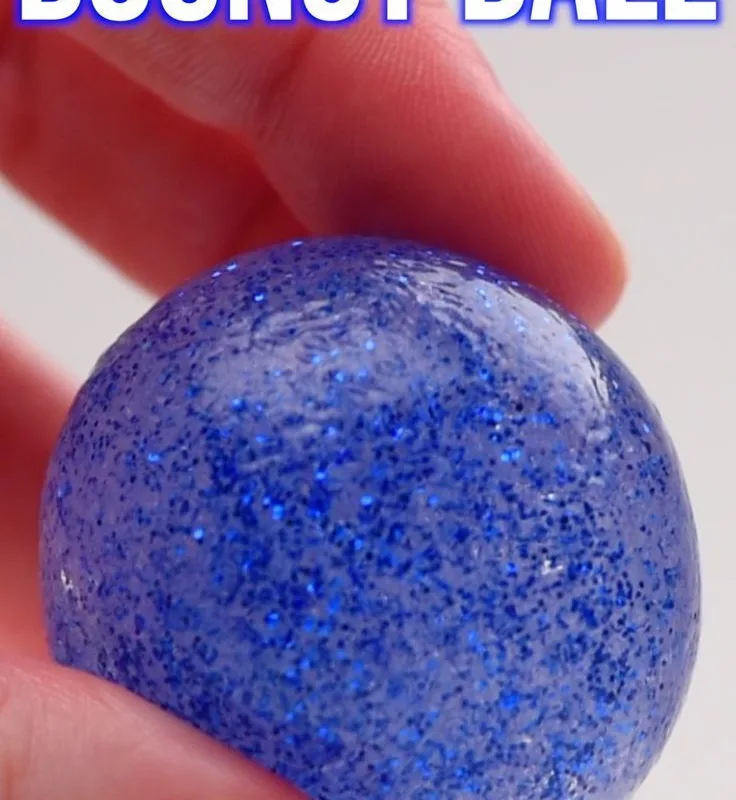
Ever watched a store-bought bouncy ball soar and thought, 'I could make that'? You can—with two ingredients and five minutes. These seven hacks will have you bouncing like a pro.
Advertisements1
- The classic borax and glue method yields a ball that bounces about 60-70% as high as a store-bought one.
- Adding an egg white to the glue mixture can increase bounce height by 20%.
- Kneading for at least 2 minutes is crucial for a smooth, elastic ball—don't rush it.
- A hot water bath after kneading makes the ball last for weeks instead of days.
- Store your ball in an airtight container with a damp paper towel to prevent drying and cracking.
- Common fixes: too sticky? add cornstarch. Too crumbly? add water. Too flat? reduce borax.
The Classic Borax and Glue Method: Your Reliable Starting Point
The most tried-and-true DIY bouncy ball uses white school glue and a borax solution. Mix 1/2 cup of warm water with 1 tablespoon of borax powder until dissolved. In a separate bowl, combine 2 tablespoons of white glue with 1 tablespoon of cornstarch and 1 tablespoon of warm water. Stir the glue mixture into the borax solution and watch it instantly turn into a rubbery blob. Knead it for a minute, then roll it into a ball. The borax acts as a cross-linker, connecting the polymer chains in the glue to create an elastic solid. This ball will bounce about 60-70% as high as a commercial one on a hard floor. A common mistake is using too much borax—it makes the ball brittle and crumbly. Stick to the ratio: 1 tablespoon borax to 1/2 cup water. If your ball cracks after a day, add a drop of water and knead again.
Hack #2: Add Glitter or Color for a Personal Touch
Plain white balls are fine, but a little sparkle makes them magical. After kneading your ball, flatten it into a disc and sprinkle in a pinch of fine glitter or a drop of food coloring. Fold the dough over and knead until the color is even. Why does this work? The glitter gets trapped inside the polymer matrix, so it won't rub off on your hands. For a galaxy effect, use two colors and twist them gently—don't overmix, or you'll get a muddy gray. The mistake to avoid: adding wet food coloring directly to the glue before mixing with borax. It dilutes the glue and weakens the cross-linking, resulting in a sad, flat ball. Always add color after the ball has formed. I learned this the hard way when my niece's purple ball turned into a sticky mess.
Hack #3: The Egg White Trick for Extra Bounce
Want a ball that bounces higher? Replace the water in the glue mixture with one egg white. The proteins in the egg white add extra elasticity and resilience. Whisk the egg white until slightly frothy, then mix with 2 tablespoons of glue and 1 tablespoon of cornstarch. Combine with the borax solution as usual. The result is a ball that bounces about 20% higher than the standard recipe. It also has a slightly translucent, pearlescent finish. The downside? It's not vegan, and it has a shorter shelf life—about 3 days before it starts to smell. Keep it in the fridge between uses. Common mistake: using the yolk by accident. Even a trace of yolk adds fat, which interferes with the polymer bonds and makes the ball greasy and less bouncy.
Hack #4: Perfect Your Kneading Technique for a Smooth Ball
The secret to a professional-looking bouncy ball is in the kneading. After the blob forms, take it out and knead it on a clean, dry surface for at least 2 minutes. This aligns the polymer chains and distributes any lumps. If it's too sticky, dip your fingers in a little cornstarch. If it's too dry, wet your hands with a drop of water. Roll it between your palms in a circular motion, applying gentle pressure. You want a sphere, not a lumpy potato. A common mistake is rushing this step—kneading for only 30 seconds leaves hard spots that cause erratic bounces. Think of it as a mini meditation: feel the texture change as it becomes smooth and elastic. That's your cue to stop.
Hack #5: The Hot Water Bath for a Longer-Lasting Ball
To make your ball last for weeks instead of days, give it a hot water bath. After kneading, drop the ball into a bowl of hot tap water (about 120°F) for 2 minutes. The heat helps the polymer chains relax and set, making the ball more durable and less prone to cracking. Remove it, pat dry, and let it air-dry for an hour. This trick is especially useful in dry climates where balls tend to dry out and crumble. The mistake: using boiling water. It can melt the ball or make it overly sticky. Hot tap water is perfect. I keep a small bowl of hot water next to my workspace—it's a game-changer for consistency.
Hack #6: Store It Right to Keep the Bounce Alive
Even the best bouncy ball will lose its bounce if left out in the open. Store it in an airtight container, like a small zip-top bag or a jar with a lid. Add a tiny piece of damp paper towel to maintain humidity. Why? The ball's elasticity depends on moisture; if it dries out, it becomes hard and brittle. Keep it away from direct sunlight and heat, which accelerate drying. A common mistake is storing it in the fridge without a container—the cold air dries it out even faster. If your ball does dry out, you can revive it by soaking it in warm water for 10 minutes, then kneading again. It's like a spa day for your ball.
Hack #7: Troubleshooting: Fixing Common Bouncy Ball Failures
Sometimes things go wrong. If your ball is too sticky, add a pinch of cornstarch and knead. If it's too crumbly, add a few drops of water and knead. If it won't bounce at all, it probably has too much borax—try again with less. If it flattens after a few bounces, it needs more kneading to develop elasticity. The key is to adjust gradually. Remember, this is a gentle process—no need to rush. Each failure teaches you something. My first ball was a sticky disaster, but by the third try, I had a bouncy beauty. Ask yourself: what does the dough feel like? Trust your senses. With a little patience, you'll get it right.
The Hacks, Step by Step
- 1Gather Your Ingredients
You'll need white school glue (like Elmer's), borax powder, cornstarch, warm water, and a bowl. Optional: food coloring, glitter, or egg white for variations. - 2Make the Borax Solution
Dissolve 1 tablespoon of borax in 1/2 cup of warm water. Stir until fully dissolved—this is your cross-linking agent. - 3Mix the Glue Base
In a separate bowl, combine 2 tablespoons of glue, 1 tablespoon of cornstarch, and 1 tablespoon of warm water. Stir until smooth. - 4Combine and Form the Ball
Pour the glue mixture into the borax solution. Stir for 30 seconds until a blob forms. Remove and knead for 2 minutes until smooth. - 5Add Color or Glitter
Flatten the ball, add a drop of food coloring or a pinch of glitter, fold, and knead until evenly distributed. - 6Hot Water Bath (Optional)
Dip the ball in hot tap water for 2 minutes to set the polymers and increase durability. - 7Store Properly
Keep the ball in an airtight container with a damp paper towel to maintain moisture and bounce.
The perfect bouncy ball isn't about perfection—it's about feeling the dough, adjusting gradually, and enjoying the process.
Frequently Asked Questions
What is the best recipe for a DIY bouncy ball?
The most reliable recipe uses 2 tablespoons of white glue, 1 tablespoon of cornstarch, and 1 tablespoon of water, mixed into a solution of 1 tablespoon borax and 1/2 cup water. This creates a ball that bounces well and lasts for days.
How do you make a bouncy ball without borax?
You can use liquid starch instead of borax. Mix 2 tablespoons of glue with 1 tablespoon of liquid starch and knead. The starch acts as a cross-linker, though the ball may be slightly less bouncy.
Why is my DIY bouncy ball not bouncing?
It likely has too much borax or wasn't kneaded enough. Borax excess makes it brittle, while insufficient kneading prevents polymer chains from aligning. Try reducing borax and kneading for 2 full minutes.
How long do DIY bouncy balls last?
With proper storage in an airtight container with a damp paper towel, they can last 2-3 weeks. Without it, they may dry out and crack within a few days.
Can you make a bouncy ball with just glue and water?
No, you need a cross-linker like borax or liquid starch to turn the glue into an elastic solid. Glue and water alone will just make a sticky mess.


