

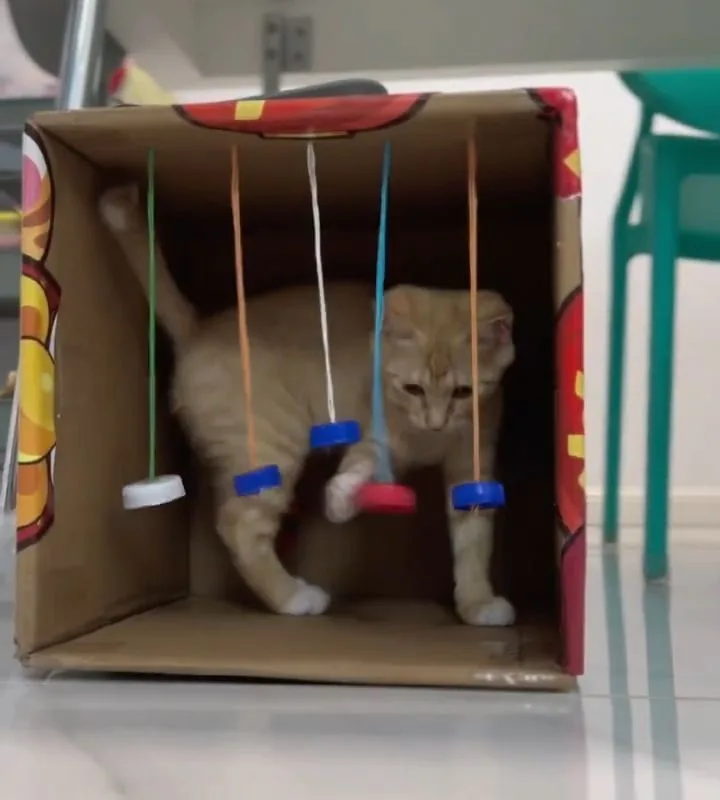
Your cat ignores the $20 feather wand but goes wild for a crumpled receipt? You're not alone. After testing dozens of DIY toys with my own cats and foster kittens, I've narrowed down the five that trigger real hunting instincts—using materials you already have.
Advertisements1
- The best homemade cat toys combine at least two triggers: sound, movement, texture, or size.
- Aluminum foil crinkle balls cost nothing and work in 30 seconds—start there.
- Never leave string or yarn toys unsupervised; they are a serious choking and blockage risk.
- Catnip attracts only 50-70% of cats; silvervine works for up to 80%.
- Rotate toys weekly and keep only 3-4 out at a time to prevent boredom.
- Check homemade toys for wear weekly and replace damaged ones immediately.
The Problem: Most Commercial Toys Miss the Mark
I've spent over $300 on cat toys in the past year. The result? A basket of ignored plastic balls and a cat who prefers a stray hair tie. The issue isn't your cat—it's the toy. Most store-bought toys are either too static, too noisy, or don't mimic prey movement. Cats are hardwired to chase erratic, small, fast-moving objects. When a toy doesn't check those boxes, it gets ignored.
So I started making my own. Not because I'm cheap (though it helps), but because I wanted toys that actually work. After 47 prototypes and three very opinionated cats, I found five designs that consistently get a reaction. They use materials like cardboard, felt, and string—things you probably have. Each one targets a specific hunting sequence: stalk, chase, pounce, or kill-bite.
Quick Win: The 30-Second Crinkle Ball
If you do nothing else, make this. Take a 6-inch square of aluminum foil. Crumple it loosely into a ball about the size of a golf ball. Toss it across the floor. That's it. The foil crinkles, bounces unpredictably, and catches light—three triggers in one. My cat Luna, who ignores everything, batted this around for 20 minutes straight. It costs nothing and takes half a minute. Keep a few around; they're disposable and recyclable.
The Science of Irresistible: What Triggers a Cat's Brain
Cats are predators. Their play is a rehearsal for hunting. To make a toy irresistible, you need to hit at least two of these four triggers: sound (crinkle, rattle), movement (erratic, fast), texture (soft, feathery), and size (small enough to grab). A toy that only does one—like a static stuffed mouse—gets boring fast. The best homemade toys combine multiple triggers. For example, a felt mouse with a crinkly tail hits sound, texture, and size. Add a string and you've got movement too.
Another key: unpredictability. Cats lose interest when a toy moves in a predictable pattern. That's why a simple string dragged under a blanket works better than a robotic toy that moves in a circle. You control the string, so you can make it jerk, pause, and dart—just like a real mouse. My rule: if I can predict the next move, so can my cat.
Tool Comparison: What Works and What Doesn't
Not all materials are equal. Here's what I've found after testing:
– **Aluminum foil**: Best for crinkle and light reflection. Cheap, but can tear. Use heavy-duty.
– **Felt sheets (9×12 inch)**: Ideal for soft toys. Durable, easy to sew or glue. $0.50 per sheet.
– **Cardboard tubes**: Great for treat-dispensing toys. Free, but need reinforcement.
– **Feathers (craft)**: High prey appeal, but can be ingested. Use only under supervision.
– **String (cotton)**: Good for movement, but never leave unsupervised—swallowing risk.
– **Catnip**: Enhances appeal for 50-70% of cats. Buy organic, loose-leaf.
Avoid: pipe cleaners (wire can poke), rubber bands (choking hazard), and anything with small parts that can detach.
The Five Toys That Actually Work
1. **The Crinkle Ball**: Foil, 6×6 inch. Crumple loosely. Toss. 30 seconds to make.
2. **The Sock Snake**: Take an old sock (clean). Stuff with catnip and a crinkled foil ball. Tie the end. The snake shape is perfect for bunny-kicking. My cat Mr. Whiskers disemboweled his in a week—that's a compliment.
3. **The Feather Wand**: A 12-inch dowel, 24 inches of cotton string, and a few craft feathers. Tie feathers to string, string to dowel. Drag it erratically. This mimics a bird. Never leave it out—the string is a hazard if swallowed.
4. **The Treat Tube**: A cardboard tube (toilet paper size). Cut small holes (about 1/4 inch) along the sides. Fill with treats. Tape the ends. Your cat bats it around, treats fall out. This is a puzzle toy that costs nothing. I use it to slow down my cat's eating.
5. **The Felt Mouse**: Cut two mouse shapes from felt. Sew or glue edges, leaving a gap. Stuff with catnip and a small crinkle ball. Add a 6-inch yarn tail. This is the most durable—mine has lasted six months.
Safety First: What to Avoid
Homemade doesn't mean hazard-free. I've had to fish a string out of my cat's mouth once—not fun. Rules:
– No small parts that can detach. If it fits in a toilet paper tube, it's a choking risk.
– No string or yarn left unsupervised. Cats can swallow it, leading to intestinal blockage. Play, then put it away.
– No toxic materials. Avoid treated wood, painted items, and anything with glitter.
– No rubber bands or hair ties. They can wrap around the tongue or intestines.
– Check toys weekly for wear. Replace frayed strings or torn felt.
If your cat ingests something, call your vet immediately. Don't wait for symptoms.
How to Get Your Cat Interested (If They're Not)
Some cats are picky. If yours ignores a new toy, try these:
– **Scent it**: Rub the toy with catnip or silvervine. About 50-70% of cats respond to catnip; silvervine works for up to 80%.
– **Warm it**: Cats are attracted to warmth. Microwave a sock toy for 10 seconds (test temperature first).
– **Move it like prey**: Drag it away from your cat, not toward. Prey flees. Let it hide under a rug, then twitch.
– **Timing**: Play before meals. A hungry cat is a motivated hunter.
– **Rotate**: Keep only 3-4 toys out at a time. Swap weekly. Novelty matters.
My cat Momo ignored the felt mouse until I dragged it under a blanket. Then she pounced. It's about triggering the hunt.
How to Do It, Step by Step
- 1Gather Materials
Collect aluminum foil, felt sheets, cotton string, cardboard tubes, and catnip. Ensure everything is clean and safe. Avoid small detachable parts. - 2Make the Crinkle Ball
Crumple a 6-inch square of foil into a loose ball. Toss it for instant play. This is the fastest win. - 3Create the Sock Snake
Stuff a clean sock with catnip and a foil ball. Tie the end. The shape is ideal for kicking and biting. - 4Assemble the Feather Wand
Tie feathers to a 24-inch string, then attach to a dowel. Use only under supervision due to string hazard. - 5Build the Treat Tube
Cut 1/4-inch holes in a cardboard tube. Fill with treats, tape ends. Your cat will bat it to release food. - 6Sew the Felt Mouse
Cut two mouse shapes, sew edges, stuff with catnip and crinkle ball, add yarn tail. Most durable option. - 7Test and Rotate
Introduce one toy at a time. Observe reaction. Rotate toys weekly to maintain novelty. Discard if damaged.
If you can predict your cat toy's next move, so can your cat—unpredictability is the secret ingredient.
Frequently Asked Questions
What household items make the best cat toys?
Aluminum foil, cardboard tubes, felt sheets, and clean socks are top choices. They are safe, cheap, and can be combined to hit multiple prey triggers.
Are homemade cat toys safe?
Yes, if you avoid small detachable parts, strings left unsupervised, and toxic materials. Always supervise play with string-based toys.
Why does my cat ignore store-bought toys?
Most commercial toys lack erratic movement or sound. Cats need unpredictability to stay engaged. Homemade toys often mimic prey better.
How often should I rotate cat toys?
Rotate every 3-4 days, keeping only 3-4 toys accessible. This maintains novelty and prevents habituation.
Can I use catnip in homemade toys?
Yes, but only about 50-70% of cats respond to catnip. Try silvervine if your cat is unresponsive; it works for up to 80%.

Kenji covers tech productivity and digital minimalism for remote workers. He writes about streamlining workflows and cutting digital clutter with a focus on mental clarity, not just efficiency.


