

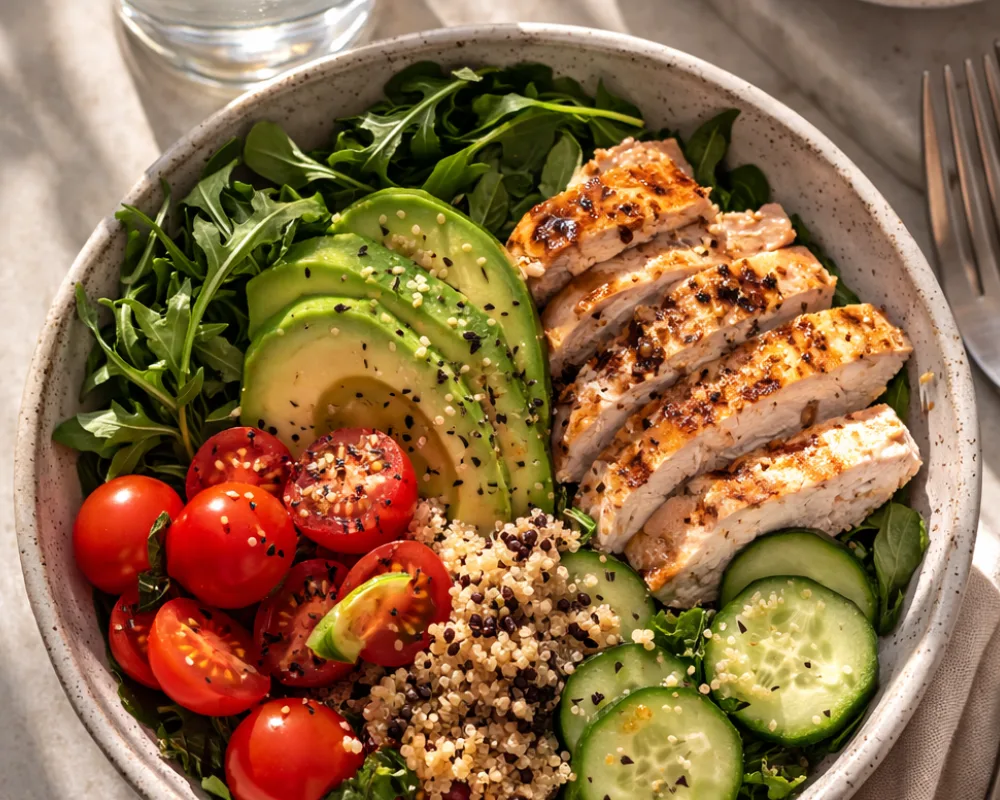
Most people know they should eat better, but knowing and doing are two different things. After years of coaching clients and testing what actually works, I’ve distilled the most effective, no-nonsense healthy eating ideas that fit into a real life. Here’s how to build a balanced plate without obsessing over every calorie.
Advertisements1
- Use your hand as a portion guide: palm for protein, fist for starch, two fists for vegetables.
- Pre-plate snacks to cut mindless eating by up to 40%.
- Drink a glass of water and wait 10 minutes before snacking to rule out thirst.
- Make vegetables half your plate to feel full on fewer calories.
- Start with a protein-rich breakfast (20-30g) to reduce cravings all day.
- Batch-cook on Sundays to have healthy meals ready for busy days.
Start with a Protein, a Vegetable, and a Starch
When you build a meal, think in three parts: a palm-sized portion of protein, at least two fists of vegetables, and a fist-sized portion of whole grains or starchy vegetables. This simple template ensures you get enough protein for satiety, fiber for digestion, and carbohydrates for energy. For example, a dinner of grilled chicken (4-5 oz), roasted broccoli (2 cups), and quinoa (1 cup cooked) hits all three.
The reason this works is that it takes the guesswork out of portion control. You don’t need a food scale—just use your hand as a guide. This method is flexible enough to work with any cuisine, from a stir-fry to a burrito bowl. It’s the foundation of a balanced lifestyle because it’s sustainable, not restrictive.
Pre-Plate Your Snacks to Avoid Mindless Eating
The biggest mistake I see is eating directly from the bag or container. When you do that, you lose track of how much you’ve eaten, and portion distortion sets in. Instead, before you sit down to work or watch TV, portion out a single serving into a small bowl or plate. For example, measure out 1 ounce of almonds (about 23 nuts) or 3 cups of popcorn.
This simple act forces you to be mindful. You’re making a conscious decision about how much you’re going to eat, rather than letting the package decide. I’ve seen clients reduce their snack calories by 30-40% just by pre-plating. It’s a habit that takes less than 30 seconds and pays off all day.
Hydrate Before You Decide You’re Hungry
Thirst is often mistaken for hunger. The brain’s hunger and thirst signals are close together, and by the time you feel thirsty, you’re already mildly dehydrated. So, before you reach for a snack, drink a glass of water and wait 10 minutes. You might find that the craving disappears.
A practical rule: aim for 8-10 cups of water a day, and keep a reusable bottle on your desk. I use an app called Plant Nanny that reminds me to drink, but a simple sticky note works too. Hydration also improves energy and focus, which reduces the urge to snack for a boost. It’s a low-effort, high-impact habit.
Use the 'Half-Plate' Rule for Vegetables
At lunch and dinner, make vegetables the star—aim for half your plate to be non-starchy vegetables like leafy greens, peppers, cucumbers, or broccoli. This automatically lowers the calorie density of your meal while increasing fiber and micronutrients. You’ll feel full on fewer calories because vegetables have high water and fiber content.
To make this easy, prep vegetables in bulk on Sunday: chop bell peppers, wash lettuce, and roast a tray of mixed veggies. Then, during the week, you can quickly toss them into any dish. I’ve seen clients double their veggie intake just by making them the default side. It’s a visual cue that’s easy to remember and hard to ignore.
Don’t Skip Breakfast—But Make It Protein-Rich
Skipping breakfast often leads to overeating later in the day. Instead, start with a protein-rich breakfast to stabilize blood sugar and reduce cravings. Aim for 20-30 grams of protein at breakfast. Examples: 3 eggs with spinach, Greek yogurt with berries and nuts, or a smoothie with protein powder.
Why protein? It increases satiety hormones and decreases ghrelin, the hunger hormone. In a 2015 study, people who ate a high-protein breakfast consumed fewer calories at lunch. A practical tip: prep overnight oats with Greek yogurt and chia seeds the night before, so you have a grab-and-go option. This sets the tone for the day and makes healthier choices easier.
Plan Your Meals Around Your Schedule
The best healthy eating plan is one you can actually follow. If you have a busy week, plan meals that match your energy levels. For example, on days you know you’ll be late, have a slow-cooker meal or a batch-cooked casserole ready. On weekends, try new recipes and cook extra for leftovers.
I use a simple Sunday meal prep: I cook a large batch of brown rice, grill chicken breasts, and roast a mix of vegetables. Then I assemble different bowls throughout the week. This saves time and reduces the temptation to order takeout. Planning prevents decision fatigue, which is a major driver of unhealthy choices. It’s not about being perfect—it’s about having a default that’s healthy.
Mindful Eating: Slow Down and Enjoy
Eating quickly leads to overeating because it takes about 20 minutes for your brain to register fullness. When you eat fast, you’re likely to consume more than you need. To slow down, put your fork down between bites, chew thoroughly, and savor the flavors. Try to eat without screens (TV, phone) at least once a day.
This practice, called mindful eating, has been shown to reduce binge eating and improve digestion. A simple technique: take a bite, then set down your utensil, and chew 20-30 times. You’ll find you enjoy your food more and feel satisfied with less. It’s a powerful tool for a balanced lifestyle.
How to Do It, Step by Step
- 1Start with a protein, vegetable, and starch template
Build every meal with a palm-sized protein, two fists of vegetables, and a fist-sized starch. This ensures balanced nutrition without calorie counting. - 2Pre-portion your snacks
Before eating, put a single serving in a bowl or plate. This prevents mindless munching from the bag and helps control portions. - 3Drink water before you snack
When you feel hungry, drink a glass of water and wait 10 minutes. Thirst is often mistaken for hunger, and this simple check reduces unnecessary snacking. - 4Make vegetables half your plate
At lunch and dinner, fill half your plate with non-starchy vegetables. This increases fiber and nutrients while lowering calorie density. - 5Eat a protein-rich breakfast
Aim for 20-30 grams of protein at breakfast to stabilize blood sugar and curb cravings later. Prep overnight oats or eggs in advance. - 6Plan meals around your schedule
Batch-cook on weekends and have go-to meals for busy days. This prevents decision fatigue and reduces reliance on unhealthy takeout. - 7Practice mindful eating
Slow down, put your fork down between bites, and chew thoroughly. This helps you recognize fullness and enjoy your food more. - 8Keep a food journal for one week
Track what you eat, including snacks and drinks, for a week. This increases awareness and reveals patterns you can adjust.
Balanced eating isn't about perfection; it's about building a default that works for you, most of the time.
Frequently Asked Questions
What are the best healthy snacks for weight loss?
The best snacks are those with protein and fiber, like Greek yogurt, apple slices with peanut butter, or a handful of almonds. These keep you full and stabilize blood sugar.
How many calories should I eat a day to lose weight?
It varies by age, sex, and activity, but a general starting point is 1,500-1,800 calories for women and 2,000-2,200 for men. Use a calorie calculator to find your number, then create a 500-calorie deficit.
Is it okay to eat carbs at night?
Yes, carbohydrates at night are fine as long as they fit your total calorie needs. In fact, including complex carbs like quinoa or sweet potatoes can improve sleep and satiety.
What are some easy meal prep ideas for beginners?
Start with a base of cooked grains, roasted vegetables, and a protein like grilled chicken or tofu. Assemble bowls for the week, and keep sauces separate to avoid sogginess.


