

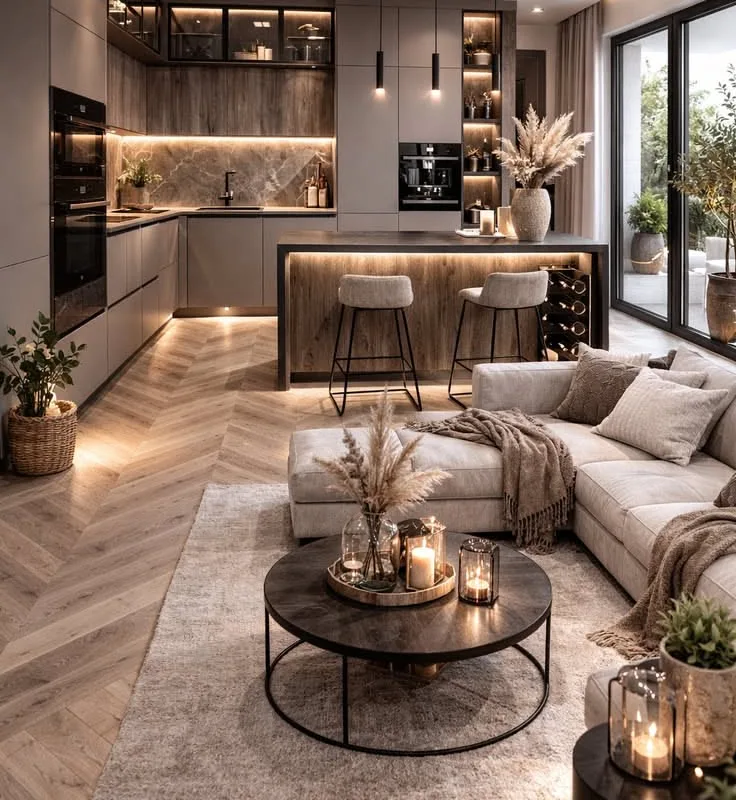
Most wine storage is ugly. There, I said it. You walk into a home with a beautiful kitchen, warm lighting, a rug that costs more than my first car — and then there’s a metal rack shoved in the corner holding three dusty bottles and a Christmas ornament. The wine cellar got turned into a marketing myth, sold to you as a $40,000 concrete cave you don’t need. What you actually need is a smarter structure: the right rack, the right material, the right placement. A wine rack is furniture, not plumbing. Treat it like furniture and your whole room changes. Below are 17 storage pieces and design approaches that make wine look intentional instead of accidental.
Advertisements1
Table of Contents(Click to Toggle)
- Why Wine Storage Is a Design Decision, Not a Utility
- The 17 Best Wine Storage Ideas for a Stylish Home
- 1. Cava Actual de Vinos
- 2. VintageView Wall Series
- 3. IKEA VADHOLMA
- 4. Wine Enthusiast N’FINITY
- 5. KALLAX Insert Conversion
- 6. Stact Modular Panels
- 7. EuroCave Revelation
- 8. Custom Under-Stair Cellar
- 9. Anthropologie Marble Wine Rack
- 10. Reclaimed Barrel Stave Rack
- 11. Floating Brass Rail
- 12. Casework Kitchen Island Storage
- 13. Wine Fridge With Glass Door
- 14. Rattan Basket Floor Rack
- 15. Bookshelf Wine Nook
- 16. Cellar Cooling Split System
- 17. Lighting the Bottles
- Bonus: Cork Display Shadow Box
- Bonus: Magnetic Fridge Rails
- Bonus: Wine Crate Stacking
- Bonus: Decanter Shelf
- The Quiet Upgrade Your Room Was Missing
Why Wine Storage Is a Design Decision, Not a Utility
Here’s the part the appliance industry doesn’t want you to hear: 90% of wine storage problems are solved by geometry, not refrigeration. Bottles are cylinders. Cylinders stack, roll, and nest beautifully if you give them the right frame. The reason your current rack looks bad is usually that it was designed by someone thinking about logistics, not sightlines.
Think of it like a bookshelf. Nobody buys a bookshelf because they need to “store paper.” They buy it because spines create color, texture, and rhythm on a wall. Wine bottles do the same thing — dark glass, foil caps, colored labels. The trick is exposing them instead of hiding them.
So before you spend a cent, decide three things:
- Placement: Is this a showpiece (living room, dining wall) or a service zone (kitchen, pantry)?
- Capacity: Count your actual bottles. Most people overbuy racks by 2x.
- Light and heat: Direct sun and radiators are the two killers. Everything else is negotiable.
Get those right and even a $60 rack reads as intentional. Get them wrong and a $6,000 cabinet looks like clutter.
The 17 Best Wine Storage Ideas for a Stylish Home
1. Cava Actual de Vinos : The styled storage area that started this whole search
What it is: A styled wine storage area — the kind of vignette you see in interior design feeds, where bottles, wood, and light are composed rather than crammed.
Category: Design inspiration and layout reference.
Why it stands out: It treats the wine area as a room feature, not an appliance. The composition matters more than the brand: mixed bottle heights, a warm material palette, and negative space between rows.
Best for: Anyone planning a dining room or kitchen wall who wants a visual target before buying hardware.
2. VintageView Wall Series : Label-forward metal rails that turn bottles into wall art
What it is: Powder-coated steel rails that hold bottles horizontally with the label facing out.
Category: Wall-mounted racking.
Why it stands out: The label-forward orientation is the whole trick. You read the wine instead of guessing. Rails come in 1 to 9-foot widths and hold 3 to 18 bottles per row, so you can build a full wall or a single column.
Best for: Modern and industrial interiors where exposed metal looks deliberate.
3. IKEA VADHOLMA : Affordable open-frame rack with a real furniture look
What it is: A wooden open wine rack from the VADHOLMA kitchen series.
Category: Freestanding budget rack.
Why it stands out: Solid wood at a price that undercuts almost every boutique option. The open frame means no visual weight, which is exactly what a small dining room needs.
Best for: Renters and first apartments where drilling into walls is a negotiation.
4. Wine Enthusiast N’FINITY : A proper cabinet with dual temperature zones
What it is: Freestanding wine cabinets with separate temperature zones and UV-resistant glass doors.
Category: Climate-controlled furniture.
Why it stands out: Dual zones let you keep whites colder than reds in the same unit — a real functional difference, not a marketing line. The glass door is tinted, so bottles stay visible without baking.
Best for: Collectors with 100+ bottles who want storage to double as a design statement.
5. KALLAX Insert Conversion : Hack a shelf unit into a wine wall for under $100
What it is: Using grid shelving with bottle inserts or simple wooden dowels to create modular wine storage.
Category: DIY modular storage.
Why it stands out: Each cube holds roughly 6 to 9 bottles laid flat or upright. You can mix wine cubes with book cubes and nobody notices it’s a hack.
Best for: Small spaces that need storage to do two jobs at once.
6. Stact Modular Panels : Wall tiles that hold one bottle each, beautifully
What it is: Interlocking wall panels, each holding a single bottle, available in wood, metal, and lacquer finishes.
Category: Modular wall system.
Why it stands out: Because each bottle gets its own frame, the wall reads as a grid — like a shadow box collection. You can expand one panel at a time as the collection grows.
Best for: Design-led homes where the rack is the art.
7. EuroCave Revelation : The French cabinet built like a piece of furniture
What it is: Premium French wine cabinets with solid doors, vibration damping, and charcoal filtration.
Category: High-end climate cabinet.
Why it stands out: Vibration damping is the detail most brands skip. It matters for long-term aging, and it’s the difference between a fridge and a cellar.
Best for: Serious collectors storing bottles for a decade or more.
8. Custom Under-Stair Cellar
What it is: Converting the dead triangular space under a staircase into racking.
Category: Built-in joinery.
Why it stands out: That space is already lost to the house. Filling it costs less than a new room and looks like an architectural feature. Diagonal racks follow the stair line.
Best for: Homeowners doing a renovation who want maximum capacity per square foot.
9. Anthropologie Marble Wine Rack : Small, heavy, and instantly elegant
What it is: A countertop rack in marble or stone, usually holding 3 to 6 bottles.
Category: Countertop accessory.
Why it stands out: Stone adds visual weight, which anchors a kitchen counter. It’s the opposite of a wire rack — it looks like a sculpture that happens to hold wine.
Best for: Small kitchens and apartment counters where you only keep a few bottles out.
10. Reclaimed Barrel Stave Rack
What it is: Racking built from disused oak barrel staves, often curved to follow the original barrel shape.
Category: Rustic statement piece.
Why it stands out: The curve is the point. A barrel-stave rack wraps bottles in a way flat shelving can’t, and the oak already smells like a cellar.
Best for: Farmhouse, wine-country, and warm-toned interiors.
11. Floating Brass Rail
What it is: A slim brass or blackened-steel rail mounted to the wall, holding bottles by the neck or body.
Category: Minimalist wall storage.
Why it stands out: It takes up almost no depth — under 4 inches — so it works in narrow hallways and beside doorframes. Brass warms up a white wall instantly.
Best for: Hallways, galley kitchens, and small dining nooks.
12. Casework Kitchen Island Storage
What it is: Building horizontal bottle slots into the side or end of a kitchen island.
Category: Integrated joinery.
Why it stands out: It hides storage inside furniture you already own, so you gain capacity without gaining a single new object in the room.
Best for: Kitchens with an island and no spare wall.
13. Wine Fridge With Glass Door
What it is: A built-in or freestanding cooler with a glass front and interior LED lighting.
Category: Appliance-as-display.
Why it stands out: The lighting does the decorating. A glass door with warm interior LEDs turns a functional appliance into a lit display case.
Best for: Open-plan living where the kitchen is always visible.
14. Rattan Basket Floor Rack
What it is: Woven baskets or rattan frames sized to hold bottles upright on the floor.
Category: Soft, movable storage.
Why it stands out: Texture. Rattan breaks up hard surfaces in a room full of stone and metal, and the whole thing moves when you rearrange.
Best for: Coastal, boho, and warm-minimal interiors.
15. Bookshelf Wine Nook
What it is: Reserving one shelf or one column of a bookcase for bottles.
Category: Zero-cost integration.
Why it stands out: Books and bottles share the same visual language — vertical shapes, varied colors. Mixed together, they read as a curated collection.
Best for: Living rooms where a dedicated rack would feel out of place.
16. Cellar Cooling Split System
What it is: A dedicated cooling unit installed for a real cellar room, with the condenser placed outside the space.
Category: Room-level climate control.
Why it stands out: Unlike a fridge, it cools the room, not the box — so you can rack hundreds of bottles on open joinery. The split design keeps compressor noise and heat out of the cellar.
Best for: Basements and converted rooms holding 300+ bottles.
17. Lighting the Bottles
What it is: LED strip or puck lighting aimed at the rack rather than the room.
Category: Finishing detail.
Why it stands out: This is the single cheapest upgrade on this list and the one that changes the most. Backlighting makes dark glass glow and turns a rack into a feature wall. Use warm LEDs and keep them off the labels’ direct heat path.
Best for: Any existing rack that already looks fine but reads as flat.
Bonus: Cork Display Shadow Box
A deep frame where saved corks become a textured grid. Cheap, personal, and it fills wall space above the rack.
Bonus: Magnetic Fridge Rails
Magnetic strips on the side of a fridge hold a few bottles horizontally and cost almost nothing. Great for tiny kitchens.
Bonus: Wine Crate Stacking
Wooden crates stacked two or three high make instant rustic racking. Check that the base is level — stacked crates wobble.
Bonus: Decanter Shelf
A single narrow shelf for decanters and glasses above the rack ties the whole vignette together.
The Quiet Upgrade Your Room Was Missing
Notice what almost none of these required: a contractor, a permit, or a five-figure budget. Wine storage looks expensive when it’s composed well, and composed well usually just means the right frame in the right place with the right light on it.
Start with one decision. Pick the wall you actually look at every day, measure the depth you have, and choose the smallest rack that fits your real bottle count. Then add lighting. That’s it. You’ll get 80% of the result of a built-in cellar for about 2% of the cost.
And skip the marketing that tells you wine needs a dedicated room. It needs stable temperature, low light, and a frame that respects it. Everything else is decoration — which, conveniently, is the fun part.
Which one of these are you trying first — and have you found a storage piece that looks better than it costs? Tell me in the comments.
Stay sharp, stay private.

Lucas covers technology and digital privacy, explaining complex topics in plain language for non-techies. He focuses on how everyday people can protect their data without being paranoid.


