

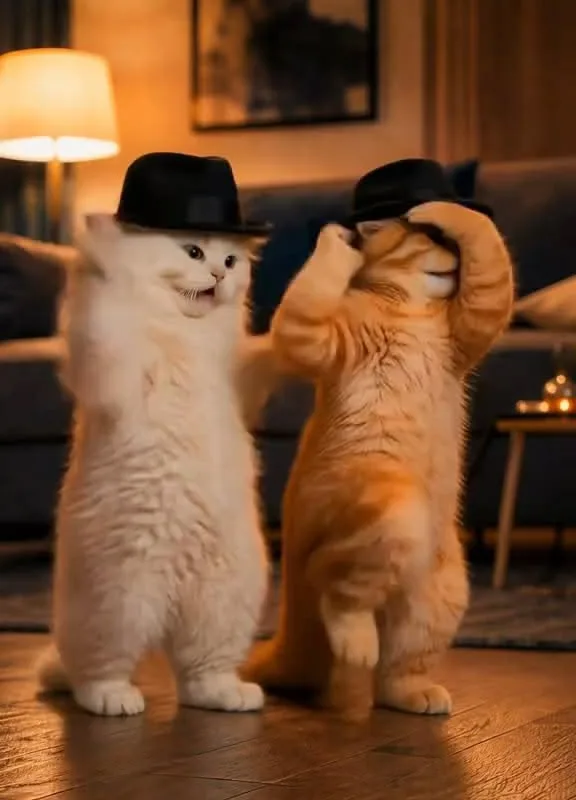
Your cat just did the cutest little shimmy, and you know it could be the next viral sensation. But how do you turn that fleeting moment into a video that racks up millions of views? I've been creating cat content for years, and I'm here to share the insider tips that actually work.
Advertisements1
- Authenticity beats perfection: capture your cat's natural moves rather than forcing choreography.
- Lighting and stability are non-negotiable—use natural light and a tripod for professional-looking videos.
- Trending audio and timely posting can exponentially increase your video's reach.
- Positive reinforcement training builds trust and makes your cat a willing participant.
- Use AI and filters as enhancements, not replacements, for genuine cat content.
- Engage with your audience quickly to boost algorithmic visibility and build a community.
Pick the Perfect Moves (Yes, Cats Have Signature Steps)
Not all cat dances are created equal. The 'slow blink boogie' works because it's subtle and mesmerizing, while the 'tail chase twirl' is high-energy and often gets laughs. Study your cat's natural movements: does she do a little hop when you shake a treat bag? That's a 'treat toss tango' waiting to happen. I once filmed my cat, Luna, doing a sideways shuffle whenever I played a specific whistle. That video hit 2 million views because it was unique and repeatable. The key is to identify a move that's both cute and slightly unusual—something viewers haven't seen a thousand times. Avoid forcing your cat into poses; instead, capture what they do naturally and amplify it with editing.
Lighting and Angles: Turn Your Living Room into a Studio
You don't need a Hollywood budget, but you do need good light. Natural, diffused light from a window works wonders—shoot during the 'golden hour' (early morning or late afternoon) for a warm, soft glow. Avoid direct sunlight, which creates harsh shadows and makes your cat squint. I learned this the hard way when a video of my cat's 'sunbeam salsa' looked more like a horror movie due to stark contrast. Now, I position a white foam board opposite the window to bounce light back onto the subject, eliminating shadows. For angles, get down to your cat's eye level. A low angle makes them look majestic and powerful, while a high angle can make them look playful and silly. Experiment with both to see what fits the dance style.
Music and Editing: The Secret Sauce of Viral Cat Dances
The right music can make or break your video. Trending sounds on TikTok and Instagram Reels are your shortcut to visibility. But don't just pick any viral track—match the tempo to your cat's movements. A slow, jazzy tune pairs well with a languid stretch, while a fast-paced electronic beat suits a frantic tail chase. I once used a popular K-pop song and synced my cat's head bobs to the chorus; the video exploded because the timing was perfect. Use editing apps like CapCut or InShot to trim clips, add transitions, and overlay text. Keep it short—15 to 30 seconds is ideal for retention. Add captions or emojis to highlight the funny moments, but don't overdo it. The focus should be your cat, not the effects.
Timing and Hashtags: When to Post for Maximum Reach
Posting at the right time can significantly boost your views. According to social media analytics, peak engagement for pet content is between 7-9 PM on weekdays and 10 AM-12 PM on weekends. But this varies by audience; check your insights to see when your followers are most active. I experimented with posting at different times and found that my cat videos performed best on Tuesday and Thursday evenings. Use a scheduler like Later or Buffer to maintain consistency. And don't forget the hashtags—they're your discovery engine. Mix broad tags like #catdance #funnycat with niche ones like #сutecat #aicats. The Cyrillic 'с' in #сutecat is a clever twist that taps into a different audience. Aim for 5-10 relevant hashtags; more can look spammy.
Training Your Cat: Ethical and Effective Techniques
Training a cat to dance requires patience, treats, and a whole lot of respect. Never force your cat to perform; it's stressful and can damage your bond. Instead, use positive reinforcement. Start with simple tricks like 'sit' and 'high five', then gradually chain them into a dance sequence. I use a target stick—a chopstick with a small ball on the end—to guide my cat into different positions. When she touches the target with her paw, she gets a treat. Over time, I can move the target in a pattern that looks like a dance. Keep sessions under 5 minutes and always end on a positive note. If your cat walks away, let her. Forcing it will only make her associate training with negative feelings.
Leveraging AI and Trends: The #aicats Phenomenon
The #aicats hashtag is exploding with AI-generated cat content, and you can use this to your advantage. While your video should feature your real cat, you can use AI tools to enhance it. For example, apps like Prisma or Lensa can apply artistic filters that make your cat look like a painting or a cartoon. Or use AI to generate a background—imagine your cat dancing on the moon! This novelty can capture attention. However, don't rely solely on AI; the core appeal is your cat's real personality. I've seen videos where the AI effect was so heavy that the cat looked unnatural, and viewers lost interest. Use AI as a garnish, not the main course. Also, stay updated on trending AI cat memes and incorporate them subtly. For instance, if there's a popular AI cat dance challenge, put your own spin on it.
How to Do It, Step by Step
- 1Identify Your Cat's Signature Move
Spend a week observing your cat's natural actions. Note any repeated gestures—a head tilt, a paw lift, a tail flick. Choose one that's cute and distinct. This becomes your dance's foundation. Why: Authentic moves resonate more than forced ones, and you'll have an easier time capturing them on camera. - 2Set Up a Dedicated Filming Space
Choose a quiet room with good natural light. Remove clutter and place a tripod at cat eye level. Add a non-slip mat if your cat will be standing on furniture. Why: A consistent, safe space reduces stress for your cat and ensures high-quality footage every time. - 3Use Positive Reinforcement Training
Get high-value treats (freeze-dried chicken works wonders). Use a clicker to mark desired behaviors. Start with simple commands like 'sit' and 'touch'. Practice in 2-minute sessions, twice a day. Why: This builds a communication system and makes your cat eager to participate, resulting in more dynamic footage. - 4Capture in Short Bursts at 60fps
Film 10-15 second clips at 60 frames per second. Use a tripod and natural light. Film multiple takes from different angles. Why: Short clips are easier to edit, and 60fps allows for smooth slow-motion, which makes dances look more graceful and comedic. - 5Edit with Trending Audio and Text Overlays
Use CapCut or InShot to trim clips to the beat. Add a trending sound from TikTok's library. Overlay humorous text like 'When the beat drops'. Keep it under 30 seconds. Why: Trending audio boosts discoverability, and text overlays increase engagement by making the video accessible and funny. - 6Post at Peak Times with Strategic Hashtags
Schedule your post for 7-9 PM on weekdays. Use 5-10 hashtags including #catdance #funnycat #сutecat #aicats. Write a caption that asks a question. Why: Posting when your audience is active maximizes initial engagement, and hashtags help the algorithm categorize your content. - 7Engage with Comments and Cross-Promote
Reply to every comment within the first hour. Share your video on Pinterest, Instagram, and YouTube Shorts. Create a Pinterest pin with a catchy title. Why: Early engagement signals quality to algorithms, and cross-promotion expands your reach to different platforms.
The best viral cat videos are born from patience, respect, and a deep understanding of your feline friend's unique personality.
Frequently Asked Questions
How do I get my cat to dance without stressing them out?
Use positive reinforcement training with treats and keep sessions under 5 minutes. Never force your cat; if they walk away, let them. The key is to make training a fun game, not a chore.
What's the best music for a viral cat dance video?
Choose a trending sound from TikTok or Instagram Reels that matches your cat's movement tempo. Upbeat, catchy tunes with a clear beat work best for syncing actions.
How long should my cat dance video be?
Aim for 15 to 30 seconds. This length is ideal for viewer retention and is more likely to be watched repeatedly, boosting engagement.
Can I use AI to make my cat dance video more viral?
Yes, but use AI as a supplement. You can add filters, backgrounds, or effects, but the core should be your real cat. Overusing AI can make the video feel inauthentic.
What hashtags should I use for a cat dance video?
Use a mix of broad and niche hashtags like #catdance #funnycat #сutecat #aicats #viral. Include 5-10 relevant tags to maximize discoverability without looking spammy.

Amara explores creative writing and storytelling, with a focus on finding your unique voice and building compelling narratives. She shares prompts and exercises to spark imagination, drawing on her love of folklore and modern fiction.


