

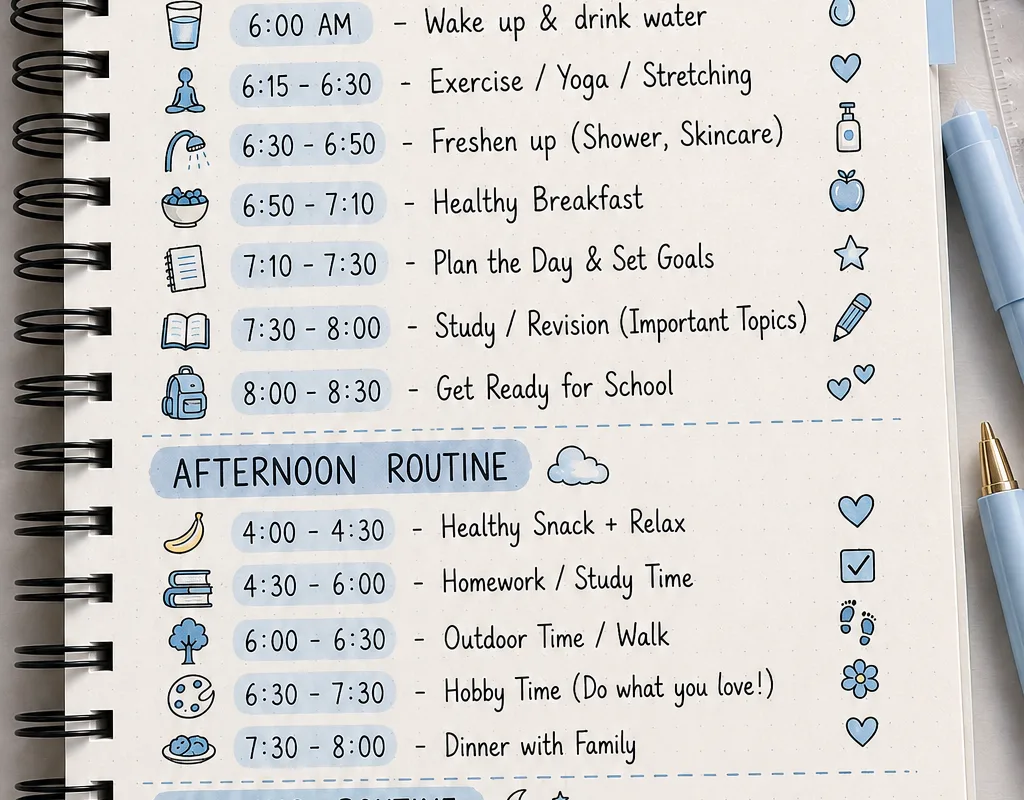
If your study space looks like a Pinterest dream but your grades don't match, the problem isn't aesthetics—it's structure. This guide gives you a realistic, beautiful routine that actually boosts focus and helps you glow up academically and personally.
Advertisements1
- Aesthetics should support function, not replace it.
- 50/10 focus blocks align with your brain's natural attention span.
- Use a simple color code in your planner—max three colors.
- Cornell notes are the most effective method for active recall.
- Sleep, hydration, and movement are non-negotiable for cognitive performance.
- Consistency beats intensity: a simple routine you follow daily wins.
Why Aesthetic Routines Fail (and How to Fix Yours)
Most 'aesthetic study routines' are just surface-level: cute desk setups, matching highlighters, and a color-coded planner that never gets opened after week one. The real issue is that aesthetics without function create a false sense of productivity. You feel organized, but you're not actually learning. To fix this, treat aesthetics as a reward for focus, not a prerequisite. Set up your space minimally—just a lamp, a notebook, and your device—then add one personal item that makes you smile. This prevents the 'decorating procrastination' trap.
The Science of a Glow-Up Study Session: Focus Blocks and Energy
Your brain craves rhythm. The Pomodoro Technique (25 minutes work, 5 minutes break) is a classic, but I've found 50/10 works better for deep study. In a 50-minute block, you're fully immersed; in the 10-minute break, you move your body—stretch, walk, or grab water. Track your energy levels for a week. You'll likely notice two peak focus windows (e.g., 9–11 AM and 3–5 PM). Schedule your hardest subjects during those windows, and use low-energy times for review or flashcards. This isn't just productivity woo; it's aligning with your circadian rhythm.
Designing Your Aesthetic Planner: Function First, Beauty Second
Your planner is your command center, not a scrapbook. Start with a weekly spread: left page for time-blocked schedule, right page for tasks and notes. Use a simple color code: blue for classes, green for assignments, pink for self-care. But here's the key: only use three colors max. Too many colors create visual chaos. I recommend the 'Rocketbook' or 'Erin Condren' for physical planners, but a digital option like 'Notion' or 'Google Calendar' with a pastel theme can be just as effective—just ensure it syncs across devices. The best planner is the one you'll actually use daily.
Glam Your Notes: The Cornell Method Meets Aesthetic Layouts
Cornell notes are a research-backed method: divide your page into a left cue column, right main notes, and bottom summary. To make it aesthetic, use a brush pen for headings and a subtle highlighter for key terms—but avoid overdecorating. I've seen students spend 20 minutes making a title look 'pretty' when they should be reviewing. Instead, after class, spend 5 minutes summarizing each page in your own words. That's how learning sticks. For digital notes, use 'GoodNotes' or 'Notability' with templates that have built-in Cornell sections.
The Glow-Up Habit: Sleep, Hydration, and Movement
A glow-up isn't just about grades; it's about feeling and looking your best. But here's the no-nonsense truth: no amount of skincare will fix chronic sleep deprivation. Aim for 7–9 hours of sleep, and keep a consistent wake-up time—even on weekends. Hydration matters too: keep a 1-liter bottle on your desk and finish it by 4 PM to avoid late-night bathroom trips. Movement breaks aren't optional. Every 50 minutes, do 10 air squats or a quick yoga flow. This boosts blood flow to your brain, improving memory and alertness.
Tools That Actually Help: Apps and Stationery
You don't need a cart full of supplies. For digital focus, use 'Forest' to grow a virtual tree while you study—it gamifies focus. For blocking distracting apps, 'Freedom' or 'Cold Turkey' are effective. On the stationery side, invest in a quality gel pen (like the Muji 0.5) and one mild-liner highlighter. For planning, 'Notion' offers free aesthetic templates, but 'Google Calendar' is more reliable for time-blocking because it sends reminders. Compare apps based on your needs: if you're easily distracted, choose a minimal app like 'Focus@Will' for music, not a feature-heavy one.
Your Weekly Aesthetic Routine Template
Here's a realistic template you can adapt: Sunday evening—plan the week (30 minutes). Monday to Friday—use 50/10 focus blocks for each subject, with a 1-hour lunch break. Include a 'glow-up' slot: 20 minutes for skincare or a walk. Saturday—review your week, update your planner, and do a brain-dump. This routine balances academics and self-care. For example, a student might study math from 9–10 AM, take a walk, then do history from 11–12. The key is consistency over intensity. Remember, a routine is a habit, not a one-time makeover.
How to Do It, Step by Step
- 1Set up a distraction-free study zone
Clear your desk, keep only your laptop, notebook, and one pen. This reduces visual clutter and decision fatigue, helping you start work faster. - 2Time-block your day in 50-minute chunks
Use a paper planner or Google Calendar to assign specific subjects to specific times. This creates structure and prevents procrastination because you know exactly what to do next. - 3Use the Cornell note-taking method
Divide your page into cues, notes, and summary. This forces you to process information actively, improving retention and making review easier. - 4Take a 10-minute movement break every hour
Stand up, stretch, or do a quick walk. Movement increases blood flow and oxygen to the brain, boosting focus and energy for the next block. - 5Review your notes within 24 hours
Spend 10 minutes summarizing or quizzing yourself on what you learned. This moves information into long-term memory, so you don't have to cram later. - 6Plan your week every Sunday evening
Lay out your schedule and tasks for the upcoming week. This reduces anxiety and gives you a clear roadmap, so you can start Monday with confidence.
The most beautiful study routine is the one that gets you results—not the one that looks good on Pinterest.
Frequently Asked Questions
How do I make my study routine aesthetic without wasting time?
Focus on function first, then add minimal decoration. Set up a clean workspace, use a simple color code, and limit decoration to one or two items that inspire you.
What is the best daily planner for students?
The best planner is one you'll actually use, like a weekly spread with time-blocking. Digital options like Google Calendar or Notion sync across devices and send reminders.
How can I stay consistent with a study routine?
Start small and attach your study time to an existing habit, like after breakfast. Use a habit tracker and reward yourself after each week of consistency.
Does an aesthetic study space improve focus?
Yes, but only if it's clutter-free and functional. A pleasant, organized space reduces stress and distractions, but over-decorating can become a distraction itself.
What are some glow-up habits for students?
Prioritize sleep (7–9 hours), drink enough water, take movement breaks, and practice daily skincare. These habits boost your energy and confidence, enhancing your academic performance.

Kenji covers tech productivity and digital minimalism for remote workers. He writes about streamlining workflows and cutting digital clutter with a focus on mental clarity, not just efficiency.


