

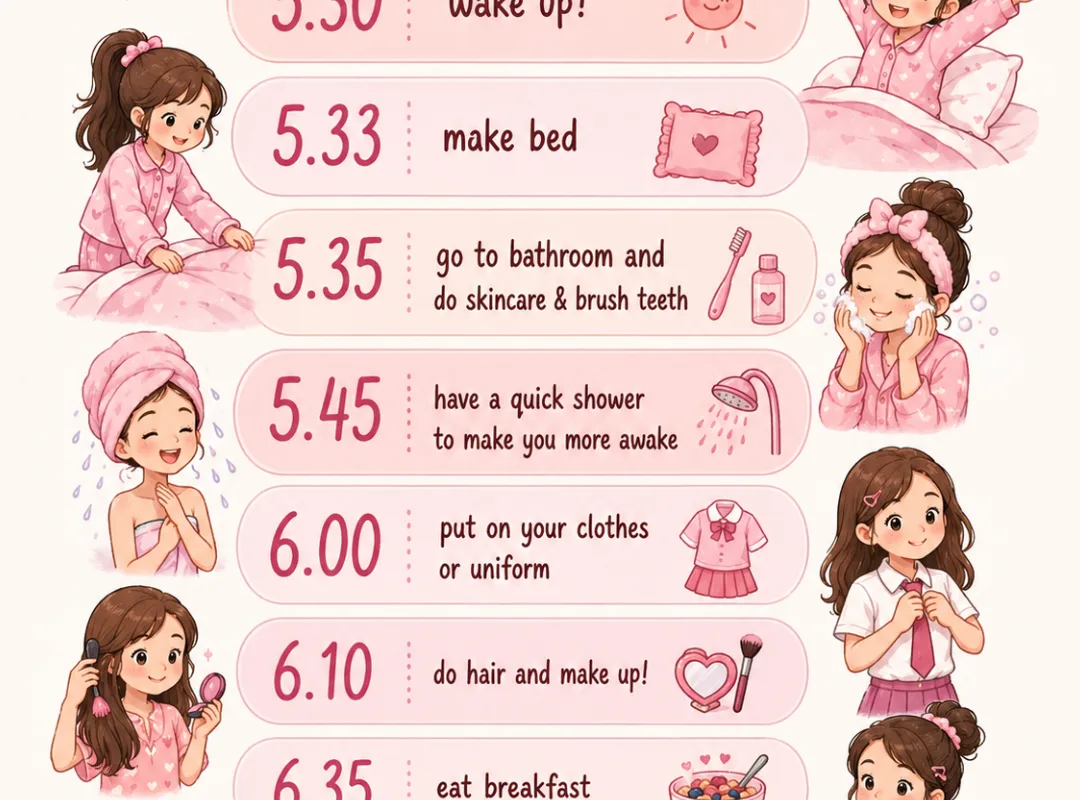
Imagine waking up before the sun, the house still quiet, and having two whole hours just for you before the school rush begins. That’s the magic of a 5:30 AM to 7:00 AM morning routine—it turns chaos into calm and sets the tone for a day where you’re ahead, not behind. Here’s how to make it happen, with playful twists and practical steps that actually stick.
Advertisements1
- Place your alarm across the room to avoid snoozing.
- Start with water, then move your body for 10 minutes.
- Use 10 minutes of journaling or meditation to center yourself.
- Eat a protein-rich breakfast like a smoothie or overnight oats.
- Pack your bag and review your schedule 30 minutes before leaving.
- Consistency beats perfection—stick with it for 21 days.
Why 5:30 AM Works (and How to Make It Stick)
The early morning is a blank canvas—no homework, no siblings, no notifications. By 7:00 AM, you’ve already done more than most people do all day. But waking up early isn’t about willpower; it’s about creating a ritual your brain loves. Start by setting your alarm to 5:30 AM, but place it across the room so you have to physically get up. The first week will be tough, but after 21 days, it becomes a habit. Pair it with a reward—like a special breakfast or a few minutes of your favorite podcast—to make it feel like a treat, not a punishment.
The 5:30 to 6:00 AM Power Hour: Movement and Mindfulness
The first 30 minutes are crucial. Instead of checking your phone, do 10 minutes of stretching or yoga (try the 'Sun Salutation' flow) to wake up your body. Then, spend 10 minutes journaling or meditating—just write down three things you’re grateful for or focus on your breath. This isn’t about being perfect; it’s about showing up. I call this the 'brain shower'—it clears the mental cobwebs so you’re ready to learn. By 6:00 AM, you’ll feel alert, calm, and in control.
6:00 to 6:30 AM: Fuel Your Brain with a Power Breakfast
Skipping breakfast is like starting a road trip with an empty tank. You need protein and complex carbs to keep your brain sharp until lunch. Try a quick smoothie: spinach, banana, Greek yogurt, and a scoop of peanut butter—blend it in 2 minutes. Or overnight oats: rolled oats, milk, chia seeds, and berries, prepped the night before. The key is to have a go-to recipe so you don’t waste time deciding. Eat without screens—use this time to review your goals for the day or chat with family if they’re up.
6:30 to 7:00 AM: Smart Prep for a Smooth School Day
This is your 'launchpad' time. Lay out your clothes the night before, but use this 30 minutes to double-check your backpack: homework, permission slips, library books, and lunch money. Then, review your schedule for the day—highlight any tests or big projects. I like to write a 'top three' list: the three most important things to focus on in class. This isn’t about over-planning; it’s about being intentional. By 7:00 AM, you’re ready to walk out the door with confidence, not chaos.
Common Pitfalls and How to Dodge Them
The biggest enemy of a morning routine is the snooze button—it’s a trap that fragments your sleep and leaves you groggy. Instead, use an app like Alarmy that forces you to solve a math problem to turn it off. Another pitfall is checking social media first thing; it floods your brain with dopamine and steals your focus. Leave your phone on airplane mode until after breakfast. And if you have a late night, don’t beat yourself up—just stick to the routine the next day. Consistency beats perfection every time.
How to Do It, Step by Step
- 1Set your alarm for 5:30 AM and place it across the room
This forces you to physically get out of bed to turn it off, breaking the snooze cycle and getting your blood moving. - 2Drink a glass of water immediately
Your body is dehydrated after sleep, and water kickstarts your metabolism and wakes up your brain. Add a squeeze of lemon for extra freshness. - 3Do 10 minutes of stretching or yoga
Simple moves like cat-cow or downward dog loosen up tight muscles and increase blood flow, making you feel more alert and ready to learn. - 4Spend 10 minutes journaling or meditating
Write down three things you’re grateful for or just focus on your breath. This calms your mind and sets a positive tone for the day. - 5Make a quick, healthy breakfast (aim for 10 minutes)
A smoothie with spinach, banana, and Greek yogurt takes 2 minutes to blend and gives you protein, fiber, and vitamins to fuel your brain. - 6Review your schedule and pack your bag (10 minutes)
Check your planner for tests or projects, and make sure you have all necessary books and materials. Write a 'top three' list of priorities for the day. - 7Do a final check and head out with calm confidence
Take a deep breath, glance at your 'top three,' and walk out the door knowing you’re prepared. You’ve already won the morning.
The morning is a blank canvas; how you paint it determines the colors of your whole day.
Frequently Asked Questions
What if I'm not a morning person?
You can become one by gradually shifting your wake-up time 15 minutes earlier each day and pairing it with a reward. Your body adapts to a consistent schedule, so give it two weeks.
How much sleep do I need if I wake up at 5:30 AM?
Teens need 8-10 hours, so aim to be in bed by 9:30 PM. If you can't sleep that early, try a wind-down routine: no screens 30 minutes before bed and a relaxing activity like reading.
What if I have a late night and can't wake up early?
Don't stress—just stick to your routine the next day. One missed morning won't ruin your progress. Consistency over time is what matters.
Can I do this routine on weekends?
Yes, but you can adjust the times. The key is to keep a similar rhythm to avoid 'social jetlag.' If you sleep in, try to keep it within an hour of your usual wake-up.
What's the best way to avoid checking my phone in the morning?
Keep your phone on airplane mode until after breakfast, and charge it in another room. Use a physical alarm clock if necessary. This prevents the dopamine rush that derails your focus.

Priya explores creative writing prompts and storytelling techniques for aspiring authors. She shares exercises to spark imagination and build narrative confidence, drawn from her own writing practice.


