

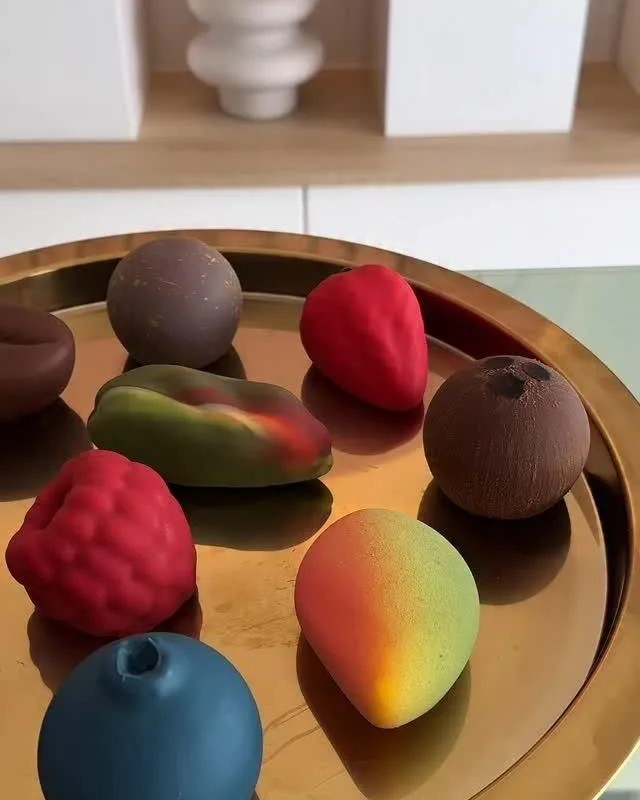
This viral fruit trompe-l'oeil patisserie is the UK dessert trend that fills TikTok feeds: hyper-realistic fruit-shaped entremets built from a crisp sable base, a silky fruit cremeux centre, a light vanilla mousse shell, and a mirror glaze that makes people do a double take. It looks like a greengrocer's display; it eats like a modern patisserie.
Advertisements1
Here is the honest maths. A professional silicone fruit mould set costs GBP 15-30 and is reusable for years. A single bakery fruit entremet in London runs GBP 6-9. This recipe makes 6 for roughly GBP 9-12 in ingredients, so your break-even lands on the second batch. The real cost is time: 15 minutes prep, 35 minutes active cook, plus chilling.
I built this version around equipment most UK home cooks already own: a hand whisk, a saucepan, and one silicone mould. No stand mixer, no tempering machine, no glucose syrup hunt. Follow the temperatures exactly and the glaze will be mirror-smooth, not rubbery.
Why You'll Love This Recipe
About the Ingredients
150 g white chocolate, finely chopped (for the mirror glaze)
Use a bar chopped with a serrated knife, not chips, which contain stabilisers and set dull. Substitution: milk chocolate works but darkens the colour, so add 2 drops of gel food colouring.
100 ml double cream, plus 250 ml for the mousse
Double cream must be at least 48 percent fat to whip and set. Substitution: whipping cream at 35 percent works for the mousse but will not set the glaze, so do not swap it there.
80 g caster sugar
Caster dissolves faster than granulated and keeps the cremeux smooth. Substitution: golden caster sugar adds a faint caramel note that suits peach and apricot moulds.
4 large free-range egg yolks
Yolks thicken the cremeux and give it body. Buying tip: UK large eggs are roughly 58 g each, so weigh if yours are medium and add a fifth yolk.
200 g fruit puree (peach, mango, raspberry or lemon curd)
Use 100 percent fruit puree, not cordial or squash, which is diluted with sugar syrup. Substitution: blend and sieve fresh fruit, or use a good-quality tinned puree from the world foods aisle.
6 g powdered gelatine (about 2 sachets), bloomed in 40 ml cold water
Powdered gelatine is the reliable UK supermarket option. Substitution: 3 platinum leaf gelatine sheets equal roughly 6 g powder; soak in ice water for 5 minutes first.
120 g plain flour, plus 40 g icing sugar and 70 g cold unsalted butter for the sable base
Cold butter rubbed into flour gives a short, snappy base that survives the mousse weight. Substitution: a 200 g pack of ready-rolled shortcrust works if you blind-bake it 3 minutes longer.
200 ml whole milk
Whole milk carries the vanilla and keeps the mousse from tasting thin. Substitution: oat milk works but sets slightly softer, so add 1 extra gram of gelatine.
1 tsp vanilla bean paste
Paste gives visible seeds and a stronger flavour than extract. Substitution: 2 tsp vanilla extract, or the finely grated zest of 1 unwaxed lemon for citrus moulds.
Gel food colouring in yellow, red and green
Gel, never liquid, or the glaze turns watery and streaky. Buying tip: a 4-bottle gel set from a supermarket baking aisle covers every fruit colour you need.
Tips & Tricks
Temperature is the whole recipe
gelatine sets below 15C and melts above 35C, so chill each layer fully before the next or they will merge into one muddy block.
- Bloom gelatine in cold water for 5 minutes until it looks like wet sand, then melt it into a warm liquid no hotter than 60C; boiling destroys its setting power permanently.
- Glaze at 32-35C, never hotter, or the mousse beneath melts and slides off the fruit shape.
- Freeze the assembled fruit for at least 4 hours before glazing, because a frozen core stops the glaze from running straight off the surface.
Pro Tips
Step-by-Step Instructions
1. Make the sable base
Rub 70 g cold butter into 120 g flour and 40 g icing sugar until it looks like coarse breadcrumbs, press into a 20 cm tin and bake at 170C (340F) for 18 minutes until pale golden and firm to the touch. Cool completely, then cut into 6 rounds that fit the mould openings.
2. Cook the fruit cremeux
Whisk 4 yolks with 80 g caster sugar, heat 200 g puree and 100 ml cream to 85C (185F) and pour over the yolks, whisking constantly. Return to the pan and cook at 83C (181F) for 3 minutes until it coats the back of a spoon, then stir in half the bloomed gelatine and sieve into a jug.
3. Set the cremeux cores
Pour the cremeux into small half-sphere silicone moulds or an ice cube tray and freeze at -18C (0F) for 2 hours until solid. Frozen cores are what stop the mousse from bleeding into the centre.
4. Whip the vanilla mousse
Warm 200 ml milk with 1 tsp vanilla paste to 60C (140F), melt in the remaining gelatine, then cool to 30C (86F). Whip 250 ml double cream to soft peaks and fold it into the milk in three additions, keeping the mix loose enough to pour.
5. Fill and freeze the fruit
Half-fill each cavity of the fruit mould with mousse, press a frozen cremeux core into the centre, then top with mousse and a sable round. Tap the mould 10 times, level the base and freeze at -18C (0F) for at least 4 hours, ideally overnight.
6. Make the mirror glaze
Heat 150 g white chocolate with 100 ml cream and 40 ml water to 80C (176F), stirring until smooth, then blend in gel colouring and the last of the gelatine. Pass through a fine sieve and cool to 32-35C (90-95F); it should coat a spatula in a thin, even film.
7. Glaze the fruit
Unmould the frozen fruit onto a wire rack and pour the glaze over each one in a single steady motion, letting the excess run off. The glaze sets in 2-3 minutes at room temperature with a mirror shine; do not touch it while it sets.
8. Finish and chill
Blot the glaze drips from the base with a palette knife, add a real stem or a chocolate leaf, and refrigerate at 4C (39F) for 30 minutes before serving. Serve within 6 hours for the crispest sable base.
Delicious Variations
Lemon meringue trompe-l'oeil
swap the puree for 200 g good lemon curd and add a torched Italian meringue core instead of cremeux.
Summer berry trio
make raspberry, strawberry and blackcurrant mousses in one batch and glaze each in a matching shade of red.
Chocolate orange
use dark chocolate in the glaze, orange zest in the mousse and a thin disc of orange ganache as the core.
How to Store Viral Fruit Trompe-l'oeil Patisserie (UK Style)
Refrigerator
Keep glazed fruit in an airtight box at 4C for up to 3 days; the glaze may weep slightly after 48 hours, so blot with kitchen paper before serving.
Freezer
Freeze unglazed assembled fruit at -18C for up to 1 month, wrapped individually; glaze straight from frozen when you need them.
Reheating
Do not reheat. Let frozen fruit thaw in the fridge for 4 hours before serving; a microwave will collapse the mousse and destroy the glaze.
Frequently Asked Questions
Q: Can I make fruit trompe-l'oeil without a silicone mould?
Yes, but the shape will be less convincing. Use small hemispherical silicone moulds or even an ice cube tray, then join two halves with a little melted mousse before freezing. A dedicated 6-cavity fruit mould costs GBP 15-30 and is the single upgrade that makes this dessert look professional.
Q: Why did my mirror glaze turn out rubbery?
Too much gelatine or a glaze that was too hot when poured is almost always the cause. Stick to 6 g powdered gelatine for the whole recipe and pour at 32-35C (90-95F); above 35C the glaze melts the mousse and sets thick and chewy.
Q: How long does trompe-l'oeil patisserie last in the fridge?
Three days at 4C is the realistic limit before the sable base softens and the glaze starts to weep. For best texture, glaze and serve on the same day, and keep the finished fruit in a sealed box away from strong-smelling foods.
Q: Do I need a thermometer to make this recipe?
Yes, and it is the cheapest tool that guarantees success. An instant-read thermometer costs under GBP 10 and lets you hit 83C for the cremeux, 60C for the gelatine and 32-35C for the glaze, which are the three temperatures that decide whether this dessert works.
Q: Can I use fresh fruit instead of puree?
Yes, blend and sieve fresh ripe fruit, then weigh out 200 g of the smooth puree. You may need up to 1 extra gram of gelatine for watery fruits like watermelon or strawberry, because their higher water content dilutes the set.
Pick one fruit, buy one mould, and make this viral fruit trompe-l'oeil patisserie this weekend. Weigh your gelatine, buy a GBP 10 thermometer, and the rest is just patience and a freezer. Stay sharp, stay solvent.

Viral Fruit Trompe-l'oeil Patisserie (UK Style)
This viral fruit trompe-l'oeil patisserie turns real peaches, lemons and apples into glossy hyper-realistic desserts that taste as bright as they look.
🧂 Ingredients
- 150 g white chocolate, finely chopped (for the mirror glaze)
- 100 ml double cream, plus 250 ml for the mousse
- 80 g caster sugar
- 4 large free-range egg yolks
- 200 g fruit puree (peach, mango, raspberry or lemon curd)
- 6 g powdered gelatine (about 2 sachets), bloomed in 40 ml cold water
- 120 g plain flour, plus 40 g icing sugar and 70 g cold unsalted butter for the sable base
- 200 ml whole milk
- 1 tsp vanilla bean paste
- Gel food colouring in yellow, red and green
📋 Instructions
- 1Make the sable base — Rub 70 g cold butter into 120 g flour and 40 g icing sugar until it looks like coarse breadcrumbs, press into a 20 cm tin and bake at 170C (340F) for 18 minutes until pale golden and firm to the touch. Cool completely, then cut into 6 rounds that fit the mould openings.
- 2Cook the fruit cremeux — Whisk 4 yolks with 80 g caster sugar, heat 200 g puree and 100 ml cream to 85C (185F) and pour over the yolks, whisking constantly. Return to the pan and cook at 83C (181F) for 3 minutes until it coats the back of a spoon, then stir in half the bloomed gelatine and sieve into a jug.
- 3Set the cremeux cores — Pour the cremeux into small half-sphere silicone moulds or an ice cube tray and freeze at -18C (0F) for 2 hours until solid. Frozen cores are what stop the mousse from bleeding into the centre.
- 4Whip the vanilla mousse — Warm 200 ml milk with 1 tsp vanilla paste to 60C (140F), melt in the remaining gelatine, then cool to 30C (86F). Whip 250 ml double cream to soft peaks and fold it into the milk in three additions, keeping the mix loose enough to pour.
- 5Fill and freeze the fruit — Half-fill each cavity of the fruit mould with mousse, press a frozen cremeux core into the centre, then top with mousse and a sable round. Tap the mould 10 times, level the base and freeze at -18C (0F) for at least 4 hours, ideally overnight.
- 6Make the mirror glaze — Heat 150 g white chocolate with 100 ml cream and 40 ml water to 80C (176F), stirring until smooth, then blend in gel colouring and the last of the gelatine. Pass through a fine sieve and cool to 32-35C (90-95F); it should coat a spatula in a thin, even film.
- 7Glaze the fruit — Unmould the frozen fruit onto a wire rack and pour the glaze over each one in a single steady motion, letting the excess run off. The glaze sets in 2-3 minutes at room temperature with a mirror shine; do not touch it while it sets.
- 8Finish and chill — Blot the glaze drips from the base with a palette knife, add a real stem or a chocolate leaf, and refrigerate at 4C (39F) for 30 minutes before serving. Serve within 6 hours for the crispest sable base.

Diego covers personal finance and investing for freelancers and gig workers. His angle is practical money management for irregular income, from budgeting to tax basics.


