

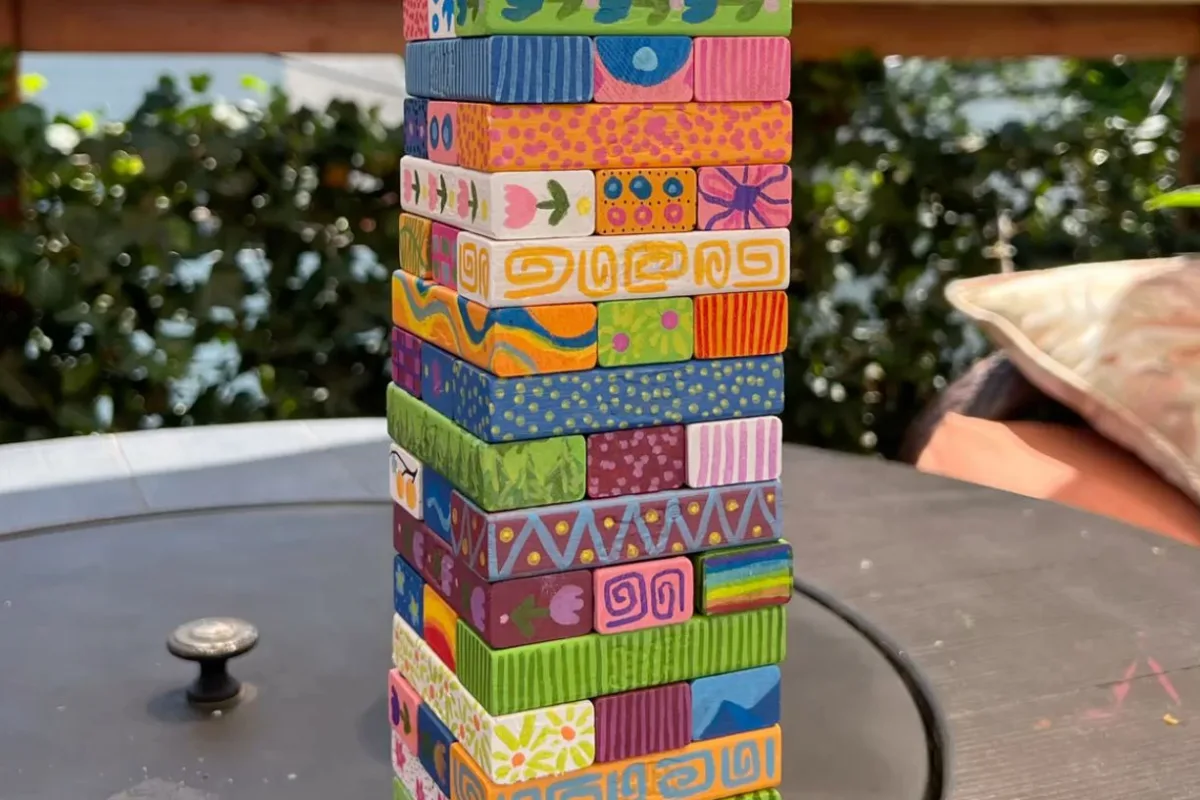
Stop wasting money on flimsy store-bought Jenga sets that warp after one humid weekend. I've built and tested over a dozen DIY versions, and these 7 hacks will give you a sturdy, beautiful game that survives summer after summer.
Advertisements1
- Use poplar or maple, not pine—it lasts longer and resists dents.
- Cut all blocks to exactly 10.5 x 2.5 x 0.75 inches for a stable tower.
- Finish with tung oil, not polyurethane, to prevent warping.
- Store blocks in a padded 5-gallon bucket to avoid chips.
- Always play on a hard, level surface like a plywood board.
- Re-oil your set once a year to keep it in top shape.
Hack 1: Choose the Right Wood (Hint: Not Pine)
Most DIY tutorials tell you to grab cheap pine 2x4s from the big box store. That's a mistake. Pine is soft and knots easily, so your blocks will dent, splinter, and stick together after a few games. Instead, use kiln-dried poplar or maple. Poplar is affordable, machines well, and holds up to repeated stacking. Maple is denser and lasts even longer but costs about 30% more. For a standard 54-block set, you'll need eight 2x4s cut into 10.5-inch lengths. That gives you 1.5-inch thick blocks, which is the sweet spot for stability and playability. Why it works: harder woods resist compression and moisture, so your tower won't wobble or jam. Common mistake: buying pressure-treated lumber. It's toxic and heavy, and the chemicals can leach onto your hands.
Hack 2: Cut Blocks to Precise Dimensions
Jenga is a game of millimeters. If your blocks vary by even 1/16 inch, the tower will lean and collapse prematurely. Cut all blocks to exactly 10.5 inches long, 2.5 inches wide, and 0.75 inches thick. That's a 3:1 length-to-width ratio, which is standard. Use a stop block on your miter saw to ensure every cut is identical. Why it works: consistent dimensions mean each block fits the same way, so the tower stays plumb. Common mistake: rushing the cuts. I've seen people use a circular saw freehand and end up with blocks that look like they were chewed by a beaver. Take the extra 20 minutes to set up a stop block.
Hack 3: Sand and Finish for Outdoor Durability
Raw wood absorbs moisture and swells. That's death for a Jenga set. After sanding, apply two coats of a penetrating oil finish like tung oil or Danish oil. These soak into the wood and repel water without leaving a film that can peel. Let each coat dry for 24 hours, then buff with a cloth. Why it works: oil finishes protect from the inside out, so the wood doesn't warp when humidity spikes. Common mistake: using polyurethane. It sits on the surface and will crack when the wood expands and contracts. Plus, it makes blocks feel plastic and sticky.
Hack 4: Add a Carrying Case from a 5-Gallon Bucket
You need a way to store and transport 54 blocks. A 5-gallon bucket is perfect. Line it with a cheap towel or foam padding to prevent dings. Cut a pool noodle to fit around the inside rim as a bumper. Why it works: the bucket is weather-resistant, has a handle, and doubles as a seat. Common mistake: tossing blocks loose into a bag. They'll knock against each other and chip. I've seen sets ruined after one trip to the beach.
Hack 5: Mark the Blocks for Easy Setup
Use a pencil to draw a small line on one end of each block, indicating the 'top' when stacked. This helps you rebuild the tower consistently. Why it works: minor variations in thickness mean some blocks are slightly thicker on one end. Keeping orientation consistent reduces wobble. Common mistake: using a permanent marker that bleeds through the finish. Pencil erases if you change your mind.
Hack 6: Play on a Stable, Level Surface
Even a perfect set will fail on grass or uneven concrete. Set up on a wooden deck, a large tile, or a dedicated plywood board. I use a 2×2-foot piece of 3/4-inch plywood as a portable base. Why it works: a flat, rigid surface prevents the tower from sinking or tilting. Common mistake: playing on a picnic table with a slight slope. The tower will lean and fall before you even start.
Hack 7: Maintain Your Set for Years of Use
After each use, wipe blocks with a dry cloth to remove moisture and dirt. Once a season, reapply a thin coat of oil. Store in a cool, dry place—not a hot garage. Why it works: consistent care prevents cracking and warping. Common mistake: leaving blocks outside overnight. Dew will soak in and ruin the finish. I've rescued sets that were left out, but they never play the same.
The Hacks, Step by Step
- 1Gather Materials
Buy eight 2x4s of poplar or maple, a bottle of tung oil, 120 and 220-grit sandpaper, and a 5-gallon bucket. Total cost: about $60. - 2Cut Blocks to Size
Set a stop block on your miter saw at 10.5 inches. Cut all 54 blocks. Consistency is critical. - 3Sand All Surfaces
Sand each block with 120-grit, then 220-grit. Round the edges slightly to prevent splinters. - 4Apply Oil Finish
Wipe on a thin coat of tung oil. Let dry 24 hours. Apply a second coat. Buff with a cloth. - 5Mark and Store
Draw a pencil line on one end of each block. Line a bucket with a towel and store blocks inside. - 6Set Up for Play
Place a plywood board on a level surface. Stack blocks in alternating layers, three per layer.
The difference between a DIY Jenga set that lasts one summer and one that lasts ten is in the wood choice and the finish—not the fancy cuts.
Frequently Asked Questions
What kind of wood is best for DIY Jenga?
Poplar or maple. Poplar is affordable and durable; maple is denser and lasts even longer. Avoid pine and pressure-treated wood.
How many blocks do I need for a Jenga set?
54 blocks. That's 18 layers of 3 blocks each. You'll need about eight 2x4s to cut them.
Can I leave my DIY Jenga outside?
No. Even with an oil finish, prolonged exposure to moisture will warp the wood. Store it indoors or in a sealed container.
What's the best finish for outdoor Jenga?
Tung oil or Danish oil. They penetrate the wood and repel water without cracking. Avoid polyurethane, which sits on the surface and peels.
How do I keep my Jenga tower from falling over?
Play on a hard, level surface like a plywood board. Also, ensure all blocks are cut to identical dimensions and oriented consistently.


