

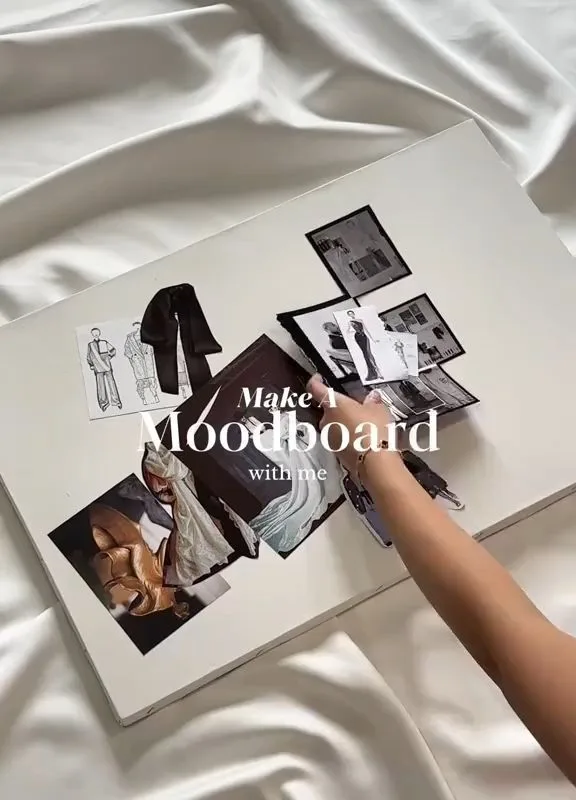
My daughter's bedroom wall went from blank to brilliant in one Saturday afternoon with a cork board, a glue stick, and a paint chip fan deck from the hardware store. Here are seven hacks that turn trendy colors and decor themes into a mood board your teen will actually use, not just admire for a week. Each one is specific, cheap, and doable before dinner.
Advertisements1
- The 60-30-10 color ratio prevents the "everything I love but nothing matches" trap.
- Real room photos reveal a theme faster than aesthetic labels like "coastal" or "dopamine."
- Physical texture swatches make trendy palettes feel expensive for under a dollar.
- A swap pocket turns a static collage into a living design tool.
- The grayscale photo test catches palette problems in ten seconds.
- A $50 priced shopping list is what turns a mood board into an actual room.
Hack 1: Start With a 60-30-10 Color Split, Not a Vibe
Before anyone touches a magazine, grab a paint fan deck (free at most hardware stores) and pull three chips: one dominant color at roughly 60% of the board, one secondary at 30%, and one accent at 10%. This is the classic interior design ratio, and it stops the "everything I love but nothing matches" problem cold.
For a trendy teen palette, try sage green (60), warm cream (30), and burnt orange (10) — that trio reads as "2024 Pinterest" without looking dated next year. Or go lavender (60), soft gray (30), and chrome silver (10) for a softer Y2K nod.
One mistake I see constantly: teens pick five equally loud colors and the board becomes visual noise. If your teen insists on a bold favorite, let it be the 10% accent. It'll pop harder there anyway.
Hack 2: Use the Three-Layer Rule for Depth
A mood board that's all flat magazine clippings feels like a school project. Build in three layers: a base (large paint chips, fabric swatches, or a big printed photo), a middle (smaller images, stickers, washi tape strips), and a top layer (3D objects — a keychain, a dried flower, a ribbon scrap).
This mirrors how designers build real rooms: big furniture, medium textiles, small accessories. Your teen's eye learns the same skill without realizing it.
Common mistake: gluing everything down immediately. Lay out all three layers first, snap a phone photo, then commit. I've watched my own kid rearrange a board four times before gluing — and the fourth version was always the best.
Hack 3: Steal From Real Rooms, Not Just Aesthetics
Trendy color palettes are everywhere, but the boards that actually help teens decorate come from real room photos. Have them screenshot 8-10 bedroom images from Pinterest or Instagram that they genuinely love, then circle what repeats: is it arched mirrors? Boucle textures? Peel-and-stick wallpaper?
That repetition is the real theme. A board full of "coastal grandma" and "dopamine decor" pins tells you nothing. A board where six out of eight photos have warm wood tones and linen curtains tells you exactly what to buy.
Mistake to avoid: saving images for the aesthetic alone. If your teen wouldn't actually want that lamp in their room, it doesn't belong on the board.
Hack 4: Add a Texture and Material Swatch Corner
Color gets all the attention, but texture is what makes a trendy palette feel expensive. Set aside one corner of the board for physical texture: a square of faux fur, a piece of denim, a scrap of velvet ribbon, a bit of cork. Hardware stores and fabric stores often give away remnants for free or under a dollar.
This is where teens discover that "sage green" can mean matte painted wall, glossy ceramic, or nubby knit — three totally different feelings from one color. It's a designer trick called material storytelling, and it costs almost nothing.
Watch out for: overloading the texture corner until it looks like a craft bin exploded. Three to five swatches, max.
Hack 5: Make It a Living Board With a Pocket System
The best mood boards change as trends shift. Add a small envelope or pocket to the corner of the board (a trimmed manila envelope glued on works great) to hold new paint chips, fabric scraps, and printed images that haven't earned a spot yet.
Every two weeks, your teen can swap one element in and one out. This keeps the board relevant without starting over — and it teaches that decorating is iterative, not one-and-done.
Common mistake: treating the board as a permanent art piece. If it never changes, it stops being a tool and becomes wallpaper.
Hack 6: Translate the Board Into a $50 Shopping List
A mood board with no plan is just a collage. Once the palette and theme are set, sit down together and write a shopping list with actual prices: one paint sample pot ($5), a thrifted frame ($3), a set of fairy lights ($12), a printed poster ($15), a throw pillow cover ($10). That's $45 and it changes a room.
This step is where teens learn that trendy colors don't require a full redo. One accent wall, one textile, one light source — that's usually 80% of the visual impact.
Mistake to avoid: buying everything at once. Buy one item per paycheck or allowance cycle. It builds anticipation and prevents the "I hate it now" regret spiral.
Hack 7: Photograph It and Check It in Black and White
Here's a trick from graphic designers: snap a photo of the finished board and convert it to black and white. If the board still has clear contrast and balance in grayscale, the color palette is solid. If it turns into a muddy gray blob, the colors are too similar in value.
This takes ten seconds on any phone and catches problems the eye misses because color is so distracting. My daughter's first board failed this test — everything was mid-tone pastel — and adding one dark navy element fixed it instantly.
Common mistake: skipping this step because the board "looks fine." It usually looks fine. Grayscale tells the truth.
The Hacks, Step by Step
- 1Grab a free paint fan deck
Pick up a fan deck at any hardware store paint counter. Pull three chips using the 60-30-10 ratio so the palette has a clear hierarchy from day one. - 2Collect 8-10 real room photos
Screenshot bedroom images your teen actually loves, then circle what repeats across them. The repetition reveals the true theme faster than any aesthetic label. - 3Lay out three layers before gluing
Arrange base, middle, and top layers on the board first. Photograph the layout, adjust, then commit with glue so nothing gets stuck in the wrong spot. - 4Add a texture corner
Glue down three to five physical swatches — faux fur, denim, velvet, cork. Texture is what makes a trendy color palette feel designed instead of flat. - 5Build a swap pocket
Attach a small envelope to hold new clippings and chips. Swap one element every two weeks to keep the board current without starting over. - 6Write a priced shopping list
Turn the board into five to seven specific items with real prices totaling around $50. Buy one per allowance cycle to avoid regret purchases. - 7Run the grayscale test
Photograph the finished board and convert it to black and white. If contrast holds up, the palette works; if it's muddy, add one darker value.
A mood board isn't decoration — it's a decision-making tool that happens to look good on the wall.
Frequently Asked Questions
What colors are trending for teen bedrooms right now?
Sage green with warm cream and burnt orange is the dominant trendy trio, followed by lavender and chrome for a softer Y2K look. Both work because they follow the 60-30-10 ratio rather than competing equally.
How much should a teen mood board cost to make?
Under $10 if you use free paint chips, printed photos, and found objects, or about $15 with a cork board and washi tape. The real budget matters later, when you translate the board into a $50 room refresh list.
What's the difference between a mood board and a collage?
A mood board has a defined color ratio, layered materials, and a shopping list attached; a collage is just images arranged to look pretty. The pocket system and priced list are what make it functional.
How often should a teen update their mood board?
Every two weeks, swapping one element in and one out using the pocket system. This keeps it aligned with shifting trends without the cost or effort of a full redo.
Can a mood board help with a small bedroom?
Yes — it's actually more useful in small rooms because every purchase has to count. Photograph the board in grayscale to confirm contrast, then buy one statement piece rather than five small ones.


