

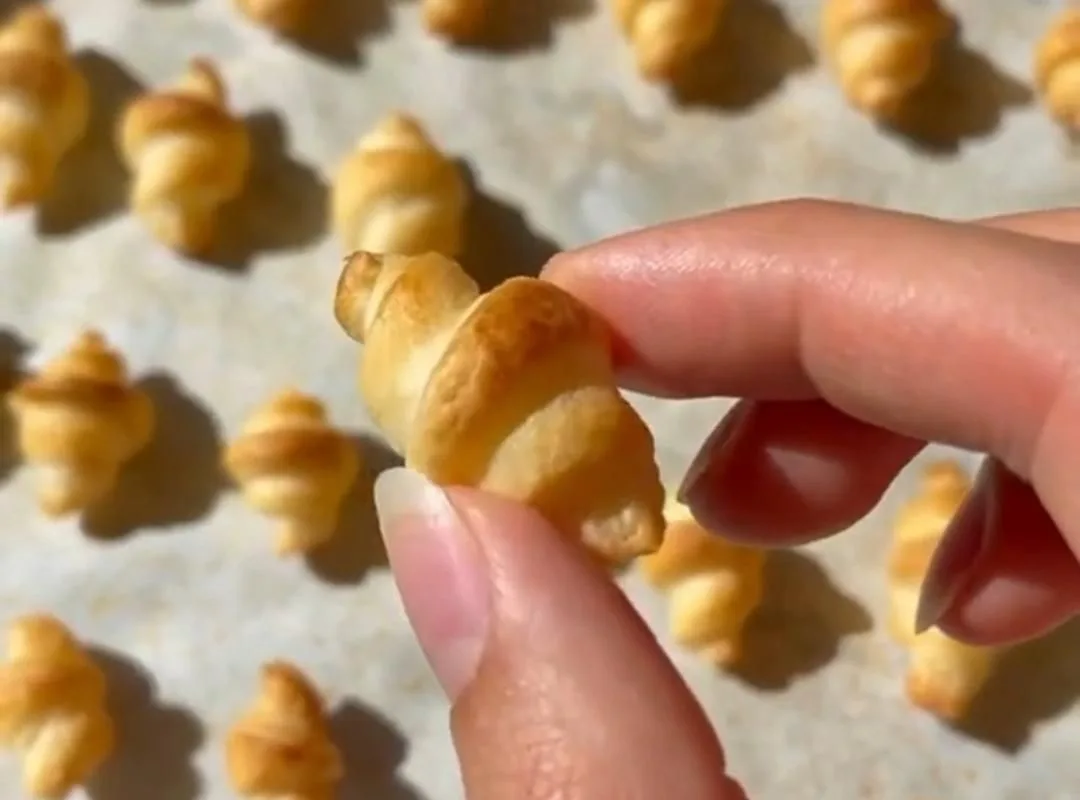
Mini croissants are the little golden pastries that make any morning feel like a slow weekend in Paris. I started making them on Sunday mornings because my kids would wake up asking for 'the tiny ones' before I even had coffee.
Advertisements1
Here's the honest truth: real laminated croissant dough takes days. My mini version uses a quick fold-and-chill method that gets you buttery layers in under an hour of hands-on work. You still get that shatter-crisp shell and soft, honeycombed inside.
I've burned my share of batches, so this recipe includes the exact temperatures and visual cues that saved me. Grab your butter and let's roll.
Why You'll Love This Recipe
About the Ingredients
2 1/4 cups (280g) all-purpose flour, plus extra for dusting
All-purpose gives a tender crumb without being tough. Bread flour works too but makes them a bit chewier, so stick with AP if you can.
1 tablespoon (12g) granulated sugar
Just enough to feed the yeast and add a hint of sweetness. Honey works as a swap but darkens the crust faster.
1 teaspoon (6g) fine sea salt
Salt balances the butter and strengthens the dough. If using table salt, use 3/4 teaspoon since the crystals are finer.
2 1/4 teaspoons (7g) instant yeast
Instant yeast skips the proofing step, which is why this recipe is fast. Active dry works if you bloom it in the warm milk for 5 minutes first.
3/4 cup (180ml) whole milk, warmed to 100°F (38°C)
Warm, not hot, or you'll kill the yeast. Oat milk works for a dairy-free version but gives a slightly less rich flavor.
1 cup (227g) cold unsalted butter, divided
Keep 3/4 cup cold for the butter block and melt the rest for brushing. European-style butter has more fat and laminates beautifully.
1 large egg, beaten, for egg wash
Egg wash gives that glossy bakery shine. For a lighter finish, whisk the egg with 1 tablespoon of milk.
2 tablespoons (25g) granulated sugar, for sprinkling (optional)
Optional but lovely on the tops. Cinnamon sugar or pearl sugar both work great here.
Tips & Tricks
Keep Everything Cold
Warm butter melts into the dough instead of creating layers, so chill your bowl and hands if your kitchen is hot.
Don't Overwork the Dough
Stop mixing as soon as it comes together, or gluten develops and the croissants turn bready.
Measure Flour by Weight
Scooping straight from the bag can add 20% extra flour and dry out the dough. Use a scale if you have one.
Chill Before Baking
Ten minutes in the fridge before the oven keeps the butter from leaking out during the first rise.
Pro Tips
Step-by-Step Instructions
1. Warm the Milk
Heat the milk to 100°F (38°C) – it should feel like a warm bath on your wrist, not hot. Pour it into a large bowl and whisk in the yeast and 1 tablespoon of sugar. Let it sit 5 minutes until foamy.
2. Mix the Dough
Add the flour and salt and stir with a wooden spoon until a shaggy dough forms. Knead on a floured counter for 3 minutes until smooth but still soft. The dough should spring back gently when poked.
3. Grate in Cold Butter
Grate 3/4 cup (170g) of frozen butter into the dough. Fold it in with a spatula just until streaks of butter remain – those streaks become your layers. Do not knead it in fully.
4. Chill and Roll
Wrap the dough and chill 20 minutes. Roll it into a 12×16-inch (30x40cm) rectangle on a floured surface. Fold the rectangle into thirds like a letter, then roll again to 12×16 inches and fold once more.
5. Cut and Shape
Roll the folded dough into a 10×20-inch (25x50cm) rectangle and cut into 12 long triangles. Roll each triangle from the wide end to the tip and curve the ends inward to form a crescent. Place on a parchment-lined baking sheet 2 inches apart.
6. Proof the Croissants
Cover loosely and let rise in a warm spot for 25 minutes until puffy and about 1 1/2 times their size. They should look slightly jiggly when you nudge the pan.
7. Brush and Bake
Preheat the oven to 400°F (200°C). Brush each croissant with egg wash and sprinkle with sugar if using. Bake 15 to 18 minutes until deep golden brown and the internal temperature reads 200°F (93°C).
8. Cool and Serve
Let them rest on the pan 5 minutes, then move to a rack. They will sound hollow when tapped on the bottom. Serve warm with jam or honey.
Delicious Variations
Chocolate Mini Croissants
Tuck a small piece of dark chocolate at the wide end before rolling for a melty center.
Almond Cream Version
Spread 1 teaspoon of almond frangipane on each triangle and top with sliced almonds before baking.
Savory Ham and Cheese
Skip the sugar sprinkle and add a sliver of ham and Gruyere for a brunch-worthy bite.
How to Store Mini Croissant 🥐 | Food Cravings😋| Food Ideas | Food Recipes
Refrigerator
Store baked croissants in an airtight container at room temperature for 2 days, or refrigerate up to 4 days in a sealed bag.
Freezer
Freeze baked croissants in a zip-top bag for up to 2 months. Unbaked shaped croissants can also be frozen after shaping and thawed overnight in the fridge.
Reheating
Reheat at 300°F (150°C) for 5 to 7 minutes to crisp the outside again. A toaster oven works even better than a microwave, which makes them chewy.
Frequently Asked Questions
Q: Can I make mini croissants without yeast?
Yes, you can use 1 tablespoon of baking powder instead, but the texture will be more like a biscuit than a flaky croissant. The rise comes from steam and chemical leavening rather than yeast fermentation, so chill the dough well before baking.
Q: Why did my butter leak out during baking?
Your butter was too warm or the dough wasn't chilled enough before baking. Pop the shaped croissants in the fridge for 10 to 15 minutes and make sure your oven is fully preheated to 400°F (200°C) so the layers set fast.
Q: How do I know when mini croissants are done?
They should be deep golden brown on top and sound hollow when tapped on the bottom, about 15 to 18 minutes at 400°F (200°C). The internal temperature should hit 200°F (93°C) for a fully baked center.
Q: Can I prepare the dough the night before?
Absolutely, and it actually improves the flavor. Wrap the folded dough tightly and refrigerate up to 24 hours, then shape and proof in the morning. Cold dough is also easier to roll and cut.
Q: What's the best butter for croissants?
European-style or cultured butter with at least 82% fat gives the flakiest layers. Regular American butter at 80% fat works fine, but avoid margarine or spreadable butters because they melt too fast.
I hope these mini croissants become your new weekend ritual. Bake a batch this week and tell me how they turned out – and if you try the chocolate version, save me one. Small steps, big change.

Mini Croissant 🥐 | Food Cravings😋| Food Ideas | Food Recipes
Mini Croissants are buttery, flaky, and baked in 50 minutes, giving you warm homemade pastries without the all-day French bakery fuss.
🧂 Ingredients
- 2 1/4 cups (280g) all-purpose flour, plus extra for dusting
- 1 tablespoon (12g) granulated sugar
- 1 teaspoon (6g) fine sea salt
- 2 1/4 teaspoons (7g) instant yeast
- 3/4 cup (180ml) whole milk, warmed to 100°F (38°C)
- 1 cup (227g) cold unsalted butter, divided
- 1 large egg, beaten, for egg wash
- 2 tablespoons (25g) granulated sugar, for sprinkling (optional)
📋 Instructions
- 1Warm the Milk — Heat the milk to 100°F (38°C) – it should feel like a warm bath on your wrist, not hot. Pour it into a large bowl and whisk in the yeast and 1 tablespoon of sugar. Let it sit 5 minutes until foamy.
- 2Mix the Dough — Add the flour and salt and stir with a wooden spoon until a shaggy dough forms. Knead on a floured counter for 3 minutes until smooth but still soft. The dough should spring back gently when poked.
- 3Grate in Cold Butter — Grate 3/4 cup (170g) of frozen butter into the dough. Fold it in with a spatula just until streaks of butter remain – those streaks become your layers. Do not knead it in fully.
- 4Chill and Roll — Wrap the dough and chill 20 minutes. Roll it into a 12×16-inch (30x40cm) rectangle on a floured surface. Fold the rectangle into thirds like a letter, then roll again to 12×16 inches and fold once more.
- 5Cut and Shape — Roll the folded dough into a 10×20-inch (25x50cm) rectangle and cut into 12 long triangles. Roll each triangle from the wide end to the tip and curve the ends inward to form a crescent. Place on a parchment-lined baking sheet 2 inches apart.
- 6Proof the Croissants — Cover loosely and let rise in a warm spot for 25 minutes until puffy and about 1 1/2 times their size. They should look slightly jiggly when you nudge the pan.
- 7Brush and Bake — Preheat the oven to 400°F (200°C). Brush each croissant with egg wash and sprinkle with sugar if using. Bake 15 to 18 minutes until deep golden brown and the internal temperature reads 200°F (93°C).
- 8Cool and Serve — Let them rest on the pan 5 minutes, then move to a rack. They will sound hollow when tapped on the bottom. Serve warm with jam or honey.

Maya writes about sustainable living and zero-waste practices, focusing on small, actionable changes for everyday routines. She draws from her own experiments in urban gardening and DIY household swaps.


