

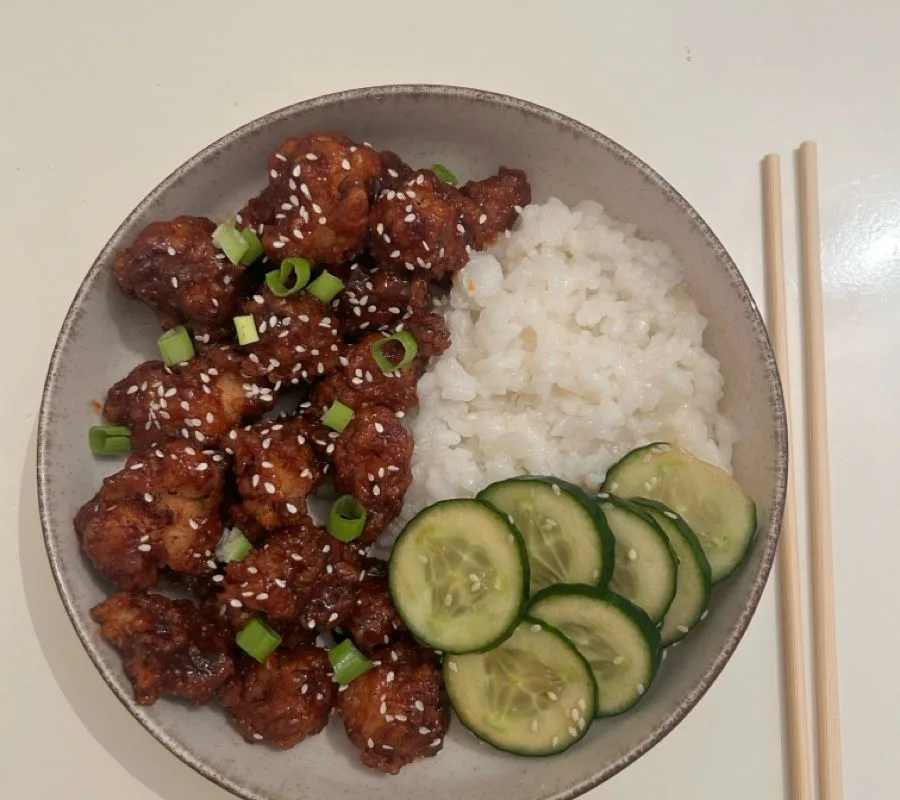
Most home cooks trying Korean fried chicken run into the same problem: the crust turns soft and greasy within minutes of leaving the oil. The cause is almost always a single fry, too much moisture on the chicken, or a sauce applied too early. Dakgangjeong is unforgiving that way, but the fix is mechanical, not mysterious.
Advertisements1
This version uses a cornstarch-and-flour coating, a two-stage fry at 340F (170C) then 375F (190C), and a glaze built on soy, honey, gochujang, and rice syrup that clings instead of pooling. The double fry drives off surface moisture so the shell stays audible for a good twenty minutes.
Quick win: pat the chicken bone-dry and let the coated pieces rest ten minutes before they touch oil. That single pause prevents the coating from sliding off and gives you a head start on crispness.
Why You'll Love This Recipe
About the Ingredients
2 lb (900g) boneless chicken thighs, cut into 1 1/2-inch pieces
Thighs stay juicy through the double fry; breast dries out fast. If using breast, brine it in 2 cups cold salted water for 20 minutes first.
1 tsp kosher salt
Fine sea salt works at half the volume. Avoid table salt, which is far denser and will oversalt the marinade.
1/2 tsp freshly ground black pepper
White pepper is a fine substitute and blends more invisibly into the coating.
1 tbsp grated fresh ginger
Jarred grated ginger is acceptable but tastes flatter. Buy a knob and freeze the rest for later.
1/2 cup (60g) cornstarch
Potato starch is the closest traditional substitute and fries even crisper. Do not swap in tapioca starch, which browns too fast.
1/4 cup (30g) all-purpose flour
Cake flour makes a more delicate shell. Skip breadcrumbs entirely; they burn at this oil temperature.
1/2 cup (120ml) neutral oil for shallow frying, plus 1 tbsp for the sauce
Canola, peanut, or refined sunflower all hold up. Never use unrefined olive oil at 375F (190C).
3 tbsp soy sauce
Use regular soy sauce, not dark soy, which turns the glaze muddy. Tamari works for gluten-free.
3 tbsp honey
Rice syrup is the traditional choice and gives a glossier finish; brown sugar plus 1 tbsp water is the emergency substitute.
2 tbsp gochujang
Gochujang varies wildly in heat. Taste yours first; a mild brand may need an extra half tablespoon.
1 tbsp rice vinegar
Apple cider vinegar is a fine stand-in. Do not use balsamic, which is too sweet and dark.
4 cloves garlic, minced, plus 2 tbsp toasted sesame seeds and 2 sliced scallions
Pre-minced garlic loses aroma fast. Buy whole heads and mince to order for the sharpest flavor.
Tips & Tricks
Dry the chicken thoroughly
Surface moisture is the number one cause of a soft crust. Pat with paper towels and let the pieces air-dry on a rack for 10 minutes before coating.
Fry twice, never once
The first fry at 340F (170C) cooks the meat through; the second at 375F (190C) drives off residual steam. Skipping the second fry guarantees a soggy shell.
Sauce off the heat
Toss the chicken in the glaze with the burner off or over the lowest flame. Boiling the sauce on the chicken softens the crust within a minute.
Pro Tips
Step-by-Step Instructions
1. Marinate the chicken
Toss the chicken pieces with the salt, pepper, and grated ginger in a bowl and let sit 10 minutes at room temperature. This short rest seasons the meat and pulls surface moisture out, which you will blot away before coating.
2. Build the coating
Whisk the cornstarch and flour together in a wide bowl. Dredge each piece, pressing firmly so the coating adheres, then shake off the excess. Let the coated pieces rest on a wire rack for 10 minutes so the starch hydrates into the meat.
3. Heat the oil
Pour the neutral oil into a heavy 10-inch pot or deep skillet to a depth of about 1 inch and heat to 340F (170C). Clip on a thermometer and hold that temperature; a piece of chicken dropped in should sizzle steadily, not violently.
4. First fry
Fry the chicken in batches of six to eight pieces for 6 to 7 minutes, turning once, until pale gold and cooked through to 165F (74C) at the center. Transfer to a rack, not paper towels, so steam escapes instead of condensing.
5. Raise the heat
Bring the oil up to 375F (190C). This takes about 3 minutes; watch the thermometer rather than the clock, since oil temperature climbs unevenly in a small pot.
6. Second fry
Return the chicken in batches and fry 2 to 3 minutes until deep golden brown with visibly bubbling edges. The pieces should sound hollow and feel rigid when tapped with tongs. Drain on a clean rack.
7. Make the glaze
In a wide skillet over medium heat, warm the 1 tbsp oil and cook the garlic 30 seconds until fragrant but not browned. Add the soy sauce, honey, gochujang, and rice vinegar and simmer 2 minutes until the sauce coats the back of a spoon.
8. Toss and finish
Remove the skillet from the heat, add the chicken, and toss quickly to coat. Scatter with toasted sesame seeds and sliced scallions and serve immediately while the crust is still crisp.
Delicious Variations
Yangnyeom Style
Double the gochujang and add 1 tbsp ketchup for the classic sweet-hot red glaze.
Soy Garlic (Ganjang)
Drop the gochujang entirely and add 4 extra garlic cloves plus 1 tsp sesame oil for a milder, glossier finish.
Air Fryer Version
Spray the coated chicken with oil and cook at 400F (205C) for 18 minutes, flipping halfway, then toss in the same glaze.
How to Store Korean Fried Chicken (Dakgangjeong)
Refrigerator
Store glazed chicken in an airtight container for up to 3 days. Keep the sauce and chicken separate if you can, since the coating softens faster when sitting in glaze.
Freezer
Freeze fried, unglazed chicken on a sheet pan for 1 hour, then transfer to a bag for up to 2 months. Glazed chicken does not freeze well.
Reheating
Reheat unglazed chicken in a 400F (205C) oven for 8 minutes or an air fryer at 375F (190C) for 5 minutes. Glazed leftovers are best revived in the air fryer, not the microwave.
Frequently Asked Questions
Q: What is the difference between dakgangjeong and Korean fried chicken?
Dakgangjeong is the specific sweet-and-sticky glazed style of Korean fried chicken, while the broader term covers soy garlic and other variants. Both use a double-fry method, but dakgangjeong is defined by its soy-honey-gochujang sauce.
Q: Why is my Korean fried chicken not crispy?
The most common cause is insufficient drying before coating or skipping the second fry. Moisture on the surface turns to steam inside the coating, and that steam softens the shell from the inside out.
Q: Can I make dakgangjeong ahead of time?
Yes, fry the chicken through the first stage up to 4 hours ahead and refrigerate it uncovered on a rack. Complete the second fry and glaze right before serving for the best texture.
Q: What can I use instead of gochujang?
Mix 1 tbsp miso paste with 1 tsp chili flakes and a pinch of sugar as a reasonable substitute. It will be less sweet and more fermented in flavor, so taste and adjust the honey.
Q: Is dakgangjeong very spicy?
It is usually mildly spicy, not aggressively hot, because the gochujang is balanced by honey and soy. Heat level depends entirely on the brand of gochujang you buy.
Try this once with a thermometer and you will never guess at oil temperature again. Cook it, note what worked, and adjust the glaze to your own taste rather than trusting a fixed ratio. Stay focused, stay light.

Korean Fried Chicken (Dakgangjeong)
Korean fried chicken (dakgangjeong) delivers shatteringly crisp double-fried bites in a sticky garlic-soy glaze you can make at home in under an hour.
🧂 Ingredients
- 2 lb (900g) boneless chicken thighs, cut into 1 1/2-inch pieces
- 1 tsp kosher salt
- 1/2 tsp freshly ground black pepper
- 1 tbsp grated fresh ginger
- 1/2 cup (60g) cornstarch
- 1/4 cup (30g) all-purpose flour
- 1/2 cup (120ml) neutral oil for shallow frying, plus 1 tbsp for the sauce
- 3 tbsp soy sauce
- 3 tbsp honey
- 2 tbsp gochujang
- 1 tbsp rice vinegar
- 4 cloves garlic, minced, plus 2 tbsp toasted sesame seeds and 2 sliced scallions
📋 Instructions
- 1Marinate the chicken — Toss the chicken pieces with the salt, pepper, and grated ginger in a bowl and let sit 10 minutes at room temperature. This short rest seasons the meat and pulls surface moisture out, which you will blot away before coating.
- 2Build the coating — Whisk the cornstarch and flour together in a wide bowl. Dredge each piece, pressing firmly so the coating adheres, then shake off the excess. Let the coated pieces rest on a wire rack for 10 minutes so the starch hydrates into the meat.
- 3Heat the oil — Pour the neutral oil into a heavy 10-inch pot or deep skillet to a depth of about 1 inch and heat to 340F (170C). Clip on a thermometer and hold that temperature; a piece of chicken dropped in should sizzle steadily, not violently.
- 4First fry — Fry the chicken in batches of six to eight pieces for 6 to 7 minutes, turning once, until pale gold and cooked through to 165F (74C) at the center. Transfer to a rack, not paper towels, so steam escapes instead of condensing.
- 5Raise the heat — Bring the oil up to 375F (190C). This takes about 3 minutes; watch the thermometer rather than the clock, since oil temperature climbs unevenly in a small pot.
- 6Second fry — Return the chicken in batches and fry 2 to 3 minutes until deep golden brown with visibly bubbling edges. The pieces should sound hollow and feel rigid when tapped with tongs. Drain on a clean rack.
- 7Make the glaze — In a wide skillet over medium heat, warm the 1 tbsp oil and cook the garlic 30 seconds until fragrant but not browned. Add the soy sauce, honey, gochujang, and rice vinegar and simmer 2 minutes until the sauce coats the back of a spoon.
- 8Toss and finish — Remove the skillet from the heat, add the chicken, and toss quickly to coat. Scatter with toasted sesame seeds and sliced scallions and serve immediately while the crust is still crisp.

Kenji covers tech productivity and digital minimalism for remote workers. He writes about streamlining workflows and cutting digital clutter with a focus on mental clarity, not just efficiency.


