

The first time I made Japanese Gyudon Recipe at home, I stood over the skillet watching thin ribbons of beef curl into a glossy, sweet-savory glaze, and I felt my shoulders drop. Gyudon, which simply means beef bowl, is the kind of meal that asks very little of you and gives back so much. If your week has felt loud, this gentle simmering pot might be exactly the quiet you need.
Advertisements1
Gyudon is built on just a few humble things: thinly sliced beef, sweet onion, a soy-mirin-sake broth, and a warm bowl of rice. In Japan it is fast food and home cooking at once, served in bustling chains and tiny family kitchens alike. The magic is in the balance, a little sweet, a little salty, deeply savory, and it comes together faster than you would believe.
Have you ever noticed how the smell of onions softening in a pan can change the whole mood of a room? Let that be your invitation tonight. We will keep the steps simple and the flavors honest, and I will walk beside you the whole way.
Why You'll Love This Recipe
About the Ingredients
1 lb (450g) thinly sliced beef (ribeye or sirloin), cut into 2-inch pieces
Ask your butcher to slice it paper-thin on a deli slicer, or freeze the beef 30 minutes and slice it yourself. Chuck or pre-sliced hot pot beef works as a substitute.
1 large yellow onion (about 10 oz / 280g), thinly sliced into half-moons
Yellow or sweet onion both work; sweet onion gives a milder, softer result. Avoid red onion here, as it turns the sauce an odd color.
3/4 cup (180ml) water
Use low-sodium or plain water; if you keep dashi, swap half the water for dashi for a deeper umami note.
1/3 cup (80ml) soy sauce
Kikkoman or any Japanese-style soy sauce is ideal. Tamari is a good gluten-free substitute, though slightly less salty.
3 tbsp (45ml) mirin
Mirin adds sweetness and shine; do not confuse it with rice vinegar. A dry sherry with a pinch of sugar is a workable substitute.
2 tbsp (30ml) sake
Cooking sake tenderizes the beef and rounds the sauce. Dry white wine or a splash of water plus a teaspoon of sugar can stand in.
1 tbsp (13g) granulated sugar
Brown sugar adds a faint caramel note if you prefer. Taste the sauce before adding more, as mirin is already sweet.
1 tsp freshly grated ginger (optional)
Grated ginger brightens the broth; a teaspoon of grated garlic is a fine swap if you love a punchier bowl.
4 cups (about 600g) cooked short-grain white rice, hot
Short-grain or sushi rice clings and soaks best. Jasmine rice works in a pinch but will be less sticky.
2 scallions, thinly sliced, plus beni shoga (pickled red ginger) to serve
Scallions add freshness; toasted sesame seeds or a soft egg yolk are lovely substitutes for garnish.
Tips & Tricks
Slice Beef Partly Frozen
Chilling the beef for 30 minutes firms it up so you can cut paper-thin slices that cook in seconds without turning tough.
Do Not Boil the Beef
Keep the sauce at a gentle simmer, not a rolling boil, so the meat stays silky and does not seize up.
Skim the Foam
As the beef simmers, skim off the gray foam that rises to keep the broth clear and clean tasting.
Taste Before Serving
Soy sauces vary wildly in salt, so taste the sauce and adjust with a splash of water or a pinch of sugar.
Pro Tips
Step-by-Step Instructions
1. Slice and Soak
If your beef is not pre-sliced, freeze it 30 minutes, then slice it paper-thin against the grain into 2-inch pieces. This brief chill is the trick to neat, tender ribbons.
2. Simmer the Onions
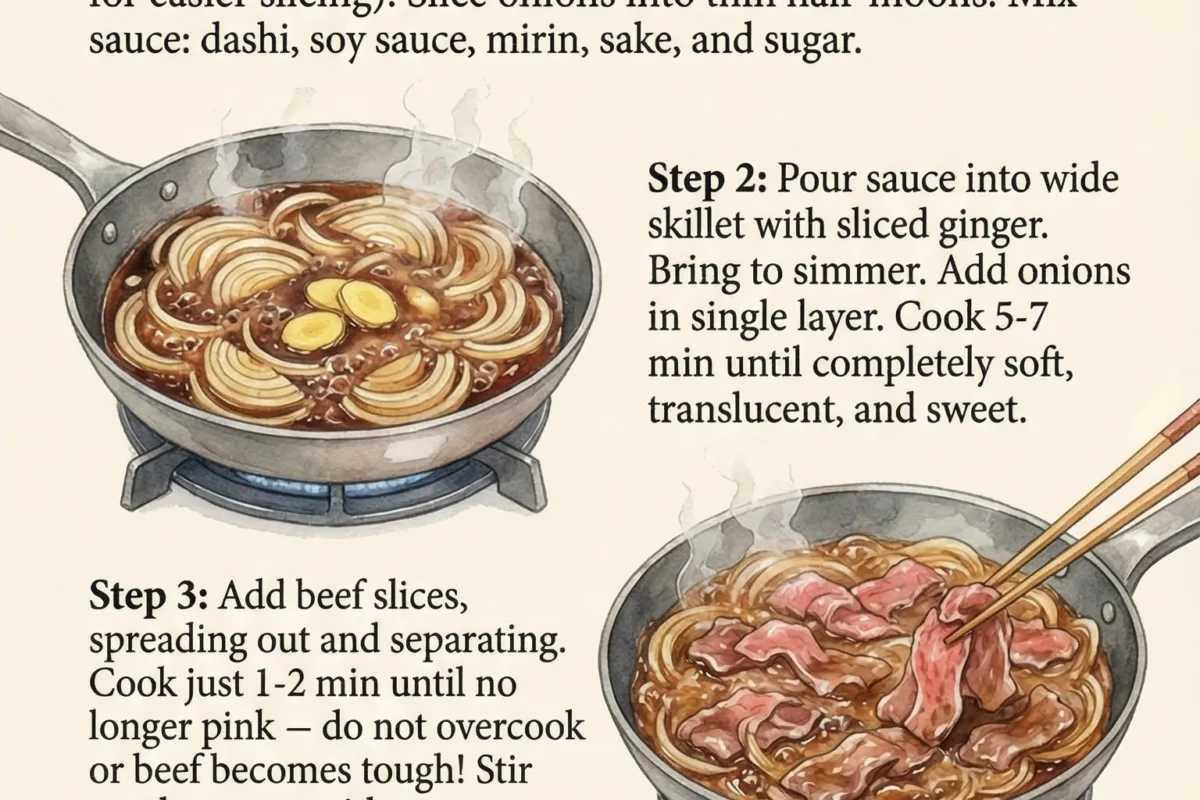
In a wide skillet over medium heat (about 350F / 175C), combine the water, soy sauce, mirin, sake, sugar, and ginger, then add the onions. Simmer 5 to 6 minutes until the onions are translucent and the liquid smells sweet, with gentle bubbling at the edges.
3. Add the Beef
Lay the beef slices in a single layer over the onions and press them gently into the sauce. Cook 3 to 4 minutes, turning once, until the beef is just barely cooked through and no pink remains, about 160F (71C) at the center.
4. Skim and Glaze
Skim off any gray foam, then raise the heat slightly to medium-high (about 400F / 205C) and simmer 2 to 3 minutes more. The sauce should reduce to a glossy glaze that coats the back of a spoon.
5. Build the Bowls
Divide the hot rice among four deep bowls and spoon the beef and onions generously over the top. Ladle a little extra sauce over each bowl so the rice soaks it up.
6. Garnish and Serve
Top with scallions and a small pile of beni shoga, and serve immediately while everything is steaming. This is the moment to pause, breathe in the aroma, and take your first warm bite.
Delicious Variations
Spicy Gyudon
Stir a teaspoon of gochujang or chili bean paste into the sauce for a gentle, warming kick.
Mushroom Gyudon
Add sliced shiitake or enoki mushrooms with the onions for an earthy, meat-light version.
Egg-Topped Gyudon
Crack a soft-cooked egg or raw pasteurized egg yolk over the hot beef and let it melt into the rice.
How to Store Japanese Gyudon Recipe
Refrigerator
Store the beef and onions with their sauce in an airtight container for up to 3 days. Keep the rice separate so it does not turn soggy.
Freezer
Freeze the cooled beef mixture without rice in a freezer-safe container for up to 2 months. Thaw overnight in the refrigerator before reheating.
Reheating
Warm gently in a skillet over medium-low heat (about 300F / 150C) with a splash of water until steaming, about 3 to 4 minutes. Avoid the microwave on high, which toughens the beef.
Frequently Asked Questions
Q: What cut of beef is best for gyudon?
Ribeye or sirloin sliced paper-thin is the best choice because it stays tender during the quick simmer. If you cannot find pre-sliced beef, freeze a whole steak for 30 minutes and slice it thinly against the grain yourself.
Q: Can I make gyudon without sake or mirin?
Yes, you can replace the sake with dry white wine or a splash of water plus a pinch of sugar, and swap mirin for a tablespoon of honey or sugar with a few drops of rice vinegar. The flavor will be slightly different but still delicious and balanced.
Q: Is gyudon healthy?
Gyudon can be a balanced meal, offering protein from the beef and carbohydrates from the rice, though it is fairly high in sodium from the soy sauce. Using low-sodium soy sauce and adding a side of steamed greens keeps it lighter.
Q: How do I keep the beef from getting tough?
Slice the beef paper-thin and cook it only until it just loses its pink color, about 3 to 4 minutes. Keeping the sauce at a gentle simmer rather than a hard boil is the key to silky, tender meat.
Q: What do I serve with gyudon?
Gyudon is traditionally served with beni shoga pickled ginger and a bowl of miso soup on the side. A simple cucumber salad or steamed edamame rounds out the meal nicely.
I hope this Japanese Gyudon Recipe becomes one of those dinners you reach for on tired evenings, when you want something warm and honest without a lot of fuss. Make it once, then let it become yours, a little more ginger here, a softer egg there. I would love to hear how your bowl turned out, so leave a comment and tell me what you changed. With kindness, Sofia

Japanese Gyudon Recipe
Japanese Gyudon Recipe makes a savory-sweet beef and onion bowl over steamed rice in about 30 minutes, a comforting one-pan dinner you will crave.
🧂 Ingredients
- 1 lb (450g) thinly sliced beef (ribeye or sirloin), cut into 2-inch pieces
- 1 large yellow onion (about 10 oz / 280g), thinly sliced into half-moons
- 3/4 cup (180ml) water
- 1/3 cup (80ml) soy sauce
- 3 tbsp (45ml) mirin
- 2 tbsp (30ml) sake
- 1 tbsp (13g) granulated sugar
- 1 tsp freshly grated ginger (optional)
- 4 cups (about 600g) cooked short-grain white rice, hot
- 2 scallions, thinly sliced, plus beni shoga (pickled red ginger) to serve
📋 Instructions
- 1Slice and Soak — If your beef is not pre-sliced, freeze it 30 minutes, then slice it paper-thin against the grain into 2-inch pieces. This brief chill is the trick to neat, tender ribbons.
- 2Simmer the Onions — In a wide skillet over medium heat (about 350F / 175C), combine the water, soy sauce, mirin, sake, sugar, and ginger, then add the onions. Simmer 5 to 6 minutes until the onions are translucent and the liquid smells sweet, with gentle bubbling at the edges.
- 3Add the Beef — Lay the beef slices in a single layer over the onions and press them gently into the sauce. Cook 3 to 4 minutes, turning once, until the beef is just barely cooked through and no pink remains, about 160F (71C) at the center.
- 4Skim and Glaze — Skim off any gray foam, then raise the heat slightly to medium-high (about 400F / 205C) and simmer 2 to 3 minutes more. The sauce should reduce to a glossy glaze that coats the back of a spoon.
- 5Build the Bowls — Divide the hot rice among four deep bowls and spoon the beef and onions generously over the top. Ladle a little extra sauce over each bowl so the rice soaks it up.
- 6Garnish and Serve — Top with scallions and a small pile of beni shoga, and serve immediately while everything is steaming. This is the moment to pause, breathe in the aroma, and take your first warm bite.

Sofia writes about mindful living and personal wellness, exploring habits that nurture mental and physical health. She shares gentle, realistic suggestions for creating calm in a busy world.


