

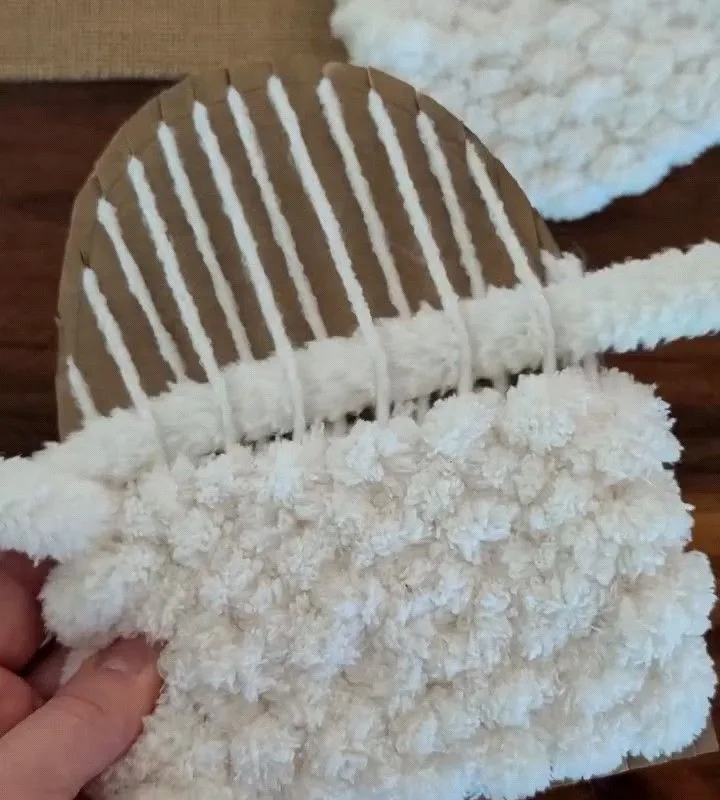
You can make a sturdy cardboard loom in under 15 minutes with materials you already have. This guide gives you exact measurements, weaving steps, and Halloween-specific designs that actually work.
Advertisements1
- A 6" x 9" cardboard loom with 1/4-inch notches gives you 24 warp threads and takes 10-15 minutes to build.
- Use worsted-weight acrylic yarn for best results; slippery yarns like cotton won't stay in the notches.
- Warp tension should be snug but not tight enough to bow the cardboard—aim for straight, not guitar-string tight.
- For a 6" x 9" weaving, expect to weave about 36 rows, taking roughly 36 minutes of active weaving.
- Common mistakes: warping too tightly, pulling weft edges too tight, and using thin cereal-box cardboard.
- Halloween projects: ghost coaster, pumpkin ornament, spider web, and candy corn—each takes 1-2 hours.
Why Cardboard Looms Work (and When They Don't)
A cardboard loom works because the tension is low and the weave is simple. For a 6" x 9" piece of corrugated cardboard, you can cut 1/8-inch notches every 1/4 inch along the top and bottom edges. That gives you 24 warp threads if you space them 1/4 inch apart. The cardboard's thickness (typically 1/8 to 3/16 inch) provides enough rigidity for small projects like coasters, bookmarks, or Halloween ornaments. But if you plan to weave anything larger than 8" x 10", the cardboard will bow under tension. For those, switch to a wooden frame or a picture frame with nails.
– Cardboard looms are ideal for: small tapestries, coasters, ornaments, and test swatches.
– Not ideal for: rugs, large wall hangings, or anything requiring high warp tension.
– Cost: $0 if you recycle a shipping box. A wooden loom costs $20-$40.
– Time: 10-15 minutes to build, 1-3 hours to weave a 6" x 9" piece.
One common mistake: using thin cereal-box cardboard. It warps and the notches tear. Use double-wall corrugated cardboard from a shipping box instead.
Choosing the Right Yarn and Warp Spacing for Halloween Projects
For Halloween projects, you want yarn that contrasts with orange and black. Worsted-weight acrylic yarn (like Red Heart Super Saver) works well because it's cheap and comes in neon green, purple, and glow-in-the-dark varieties. For a 6" x 9" loom with 1/4-inch spacing, you'll need about 12 yards of warp thread (24 threads x 18 inches each = 432 inches = 12 yards). For weft, a 6" x 9" piece uses roughly 20-30 yards of yarn, depending on how tightly you pack the rows.
– Warp spacing: 1/4 inch for worsted weight, 1/8 inch for fine yarn (but you'll need a thinner needle).
– Halloween color palette: black, orange, purple, neon green, and glow-in-the-dark white.
– Sample calculation: If you want a 6" wide piece with 1/4-inch spacing, you need 6 / 0.25 = 24 warp threads.
Mistake to avoid: using slippery yarn like cotton or silk. It slides out of the notches. Acrylic or wool has more grip.
How to Warp a Cardboard Loom in 5 Minutes
Warping is the foundation. Cut a piece of cardboard to your desired size (e.g., 7" x 10" for a 6" x 9" weaving area). Mark notches every 1/4 inch along the top and bottom edges, leaving a 1/2-inch margin on each side. Cut the notches about 1/4 inch deep. Then, tie a slip knot at the bottom-left notch, and run the yarn up to the top-left notch, around the back, and down to the next bottom notch. Continue until all notches are filled. Tie off at the bottom-right notch.
– Use a ruler and pencil to mark notches precisely. Eyeballing leads to uneven weaving.
– Keep tension consistent: pull each warp thread snug, but not tight enough to bend the cardboard.
– Secure the warp tail with a piece of tape on the back to prevent it from slipping.
Common mistake: warping too tightly. This bows the cardboard and makes it hard to pass the weft through. Aim for a tension where the warp threads are straight but not guitar-string tight.
Weaving Techniques for Halloween Designs: Plain Weave, Rya, and Soumak
Plain weave is your base: pass the weft over one warp, under the next, and repeat. For Halloween, use black weft on orange warp for a classic look. To add texture, try rya knots for a fuzzy ghost or soumak for a braided edge. Rya: cut 6-inch strands, fold in half, and loop around a warp thread. Soumak: wrap the weft around two warp threads before going back. These techniques add dimension.
– Plain weave: 1 row per 1/4 inch for a tight fabric.
– Rya knots: use 3-4 strands per knot for a bushy effect.
– Soumak: creates a raised, rope-like line—perfect for a spider web.
Sample: For a 6" x 9" piece, you'll weave about 36 rows (9 inches / 0.25 inch per row). If each row takes 1 minute, that's 36 minutes of weaving.
Mistake: pulling the weft too tight at the edges. This causes the weaving to cinch in. Leave a small loop at the edge (called a bubble) to allow for take-up.
Finishing Your Weaving: Removing from the Loom and Securing Ends
When you've woven to the top, cut the warp threads at the back of the loom, leaving 6-inch tails. Tie the warp threads in pairs with a square knot. For a clean edge, you can also weave the tails back into the piece using a tapestry needle. If you want a hanging loop, leave two warp threads at the top and tie them together.
– Cut warp tails: 6 inches is enough to tie and weave in.
– Square knot: right over left, then left over right. Pull tight.
– Weave in tails: use a needle to go under 2-3 warp threads on the back.
Mistake: tying knots too close to the edge. This can cause the weaving to pucker. Leave a little slack before knotting.
Halloween Loom Project Ideas with Step-by-Step Plans
1. Ghost coaster: 4" x 4" loom, white warp and weft, two black button eyes. 2. Pumpkin ornament: 3" x 3" loom, orange warp, black weft for the face. 3. Spider web: 6" x 6" loom, black warp, silver weft in a soumak pattern. 4. Candy corn: 2" x 4" loom, yellow, orange, and white stripes. Each project takes 1-2 hours.
– Ghost coaster: weave plain, then embroider eyes with black yarn.
– Pumpkin: weave a square, then use a needle to add a black triangle nose and jagged mouth.
– Spider web: start from center, weave outward in a spiral using soumak.
Mistake: not planning the color changes. Measure where you want the stripes before you start weaving.
The Hacks, Step by Step
- 1Cut and notch the cardboard
Cut a piece of corrugated cardboard to 7" x 10". Mark notches every 1/4 inch along the top and bottom edges, leaving 1/2 inch margins. Cut notches 1/4 inch deep with scissors or a craft knife. This creates 24 warp slots for a 6-inch-wide weaving area. - 2Warp the loom
Tie a slip knot at the bottom-left notch. Run yarn up to the top-left notch, around the back, and down to the next bottom notch. Repeat across all notches. Keep tension snug but not tight. Tie off at the bottom-right notch and tape the tail to the back. - 3Weave the first rows
Thread a tapestry needle with your weft yarn. Pass it over the first warp, under the second, and repeat. Leave a 2-inch tail at the start. For the second row, reverse the pattern (under, over). Push each row up with a fork to keep it tight. - 4Add Halloween colors and textures
Change colors by leaving a 2-inch tail and starting a new yarn. Use rya knots for a fluffy ghost or soumak for a spider web. Plan color changes before weaving to avoid uneven stripes. - 5Finish the weaving
When you reach the top, cut the warp threads at the back, leaving 6-inch tails. Tie pairs of warp threads with square knots. Weave in any loose tails with a needle. Trim excess yarn.
The difference between a frustrating cardboard loom and a reliable one is 1/4-inch notches and double-wall corrugated cardboard—not skill.
Frequently Asked Questions
What kind of cardboard is best for a loom?
Double-wall corrugated cardboard from a shipping box is best because it's rigid and holds notches without tearing. Single-wall or cereal-box cardboard warps under tension and won't last.
How much yarn do I need for a 6×9 inch weaving?
You need about 12 yards for warp and 20-30 yards for weft, depending on how tightly you pack the rows. Buy one skein of worsted-weight yarn (approximately 200 yards) to have plenty for multiple projects.
Can I use a cardboard loom for a large rug?
No, cardboard looms are not suitable for large rugs because the cardboard will bow and break under the tension. For rugs larger than 8" x 10", use a wooden frame or a commercial loom.
How do I keep the edges of my weaving straight?
Leave a small loop of weft at each edge (called a bubble) before pulling tight. This allows for take-up and prevents the weaving from cinching in. Also, maintain consistent warp tension.
What are some easy Halloween weaving projects for beginners?
Start with a ghost coaster (4" x 4", white yarn, black button eyes) or a candy corn ornament (2" x 4", yellow, orange, and white stripes). These take 1-2 hours and use simple plain weave.


