

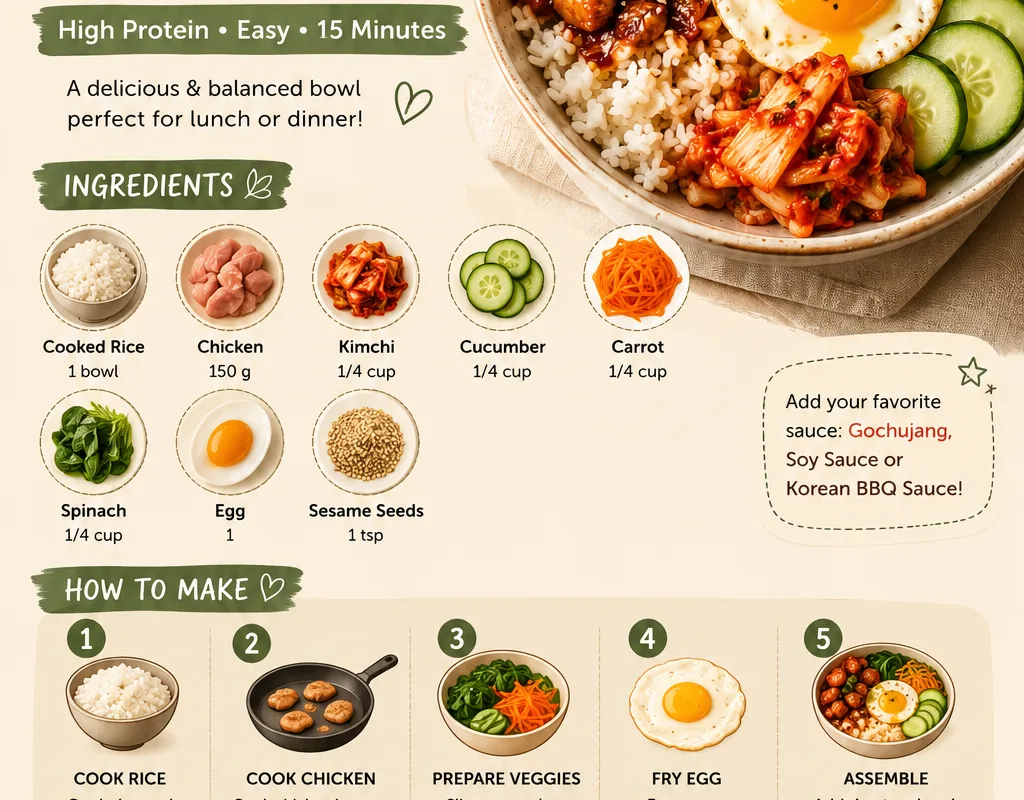
I used to think a Korean rice bowl was something you only ordered at a restaurant with twelve little dishes crowding the table. Then I realized the whole thing is basically a stir-fry, a pot of rice, and a sauce that does 90% of the heavy lifting. That's it.
Advertisements1
Here's the part that surprised me: this bowl lands around 34 grams of protein per serving without any protein powder, any weird swaps, or a trip to a specialty market. Ground beef, eggs, rice, and gochujang. Four things I already had.
Think of the sauce like a login token. Get it right once and everything downstream just works. Get it wrong and you're stuck debugging a bland dinner. So we'll build the sauce first, taste it, then cook. Prep is 15 minutes, the pan work is 35, and you'll feed six people.
Why You'll Love This Recipe
About the Ingredients
2 cups (400 g) short-grain white rice, rinsed until the water runs clear
Short-grain clumps slightly, which is exactly what you want under a saucy topping. Jasmine or basmati work fine but stay looser. Buying tip: if the bag says 'sushi rice,' that's short-grain and it's perfect here.
1 lb (454 g) lean ground beef (90/10)
90/10 gives you enough fat to brown properly without a greasy bowl. Ground turkey or crumbled firm tofu both substitute cleanly; if using turkey, add 1 extra tablespoon of oil.
3 tbsp gochujang (Korean fermented chili paste)
This is the backbone of the bowl, so buy a tub, not a squeeze bottle, for deeper fermented flavor. If you can't find it, mix 2 tbsp miso paste with 1 tbsp sriracha and 1 tsp honey.
2 tbsp low-sodium soy sauce
Low-sodium lets you control the salt, since gochujang is already salty. Tamari makes it gluten-free; coconut aminos work but taste sweeter, so cut the honey to 1 tsp.
1 tbsp toasted sesame oil
Toasted, not regular, sesame oil is the difference between nutty and nothing. Buy it in a small bottle, since it goes stale within about six months.
1 tbsp honey
Honey balances the chili heat and helps the sauce glaze the beef instead of pooling. Brown sugar or maple syrup both work one-for-one.
3 cloves garlic, minced (about 1 tbsp)
Fresh garlic beats jarred here; jarred tastes flat and slightly metallic once cooked. If you're in a hurry, 1 tsp garlic powder is an acceptable fallback.
1 tbsp freshly grated ginger
Grate it on a Microplane so it melts into the sauce rather than leaving fibrous chunks. Frozen ginger grates even easier and keeps for months.
2 medium carrots, julienned (about 1 1/2 cups)
Julienned carrots soften in three minutes and keep some snap. A bag of pre-shredded carrot matchsticks saves eight minutes of knife work.
5 oz (142 g) baby spinach
Baby spinach wilts down to almost nothing, so don't panic at the volume. Frozen chopped spinach works if you squeeze out the water first.
6 large eggs
We're frying these sunny-side up so the yolk runs into the rice. If you want them jammy instead, boil 7 minutes, then ice bath.
3 scallions, thinly sliced, plus 1 tbsp toasted sesame seeds for serving
Slice on a hard bias for looks, but any slice works. Toasted sesame seeds are worth buying pre-toasted; raw ones taste chalky.
Tips & Tricks
- Rinse the rice until the water is clear or you'll get glue. Starchy rice turns this bowl into porridge, and no amount of sauce fixes that. Thirty seconds under cold water does it.
- Brown the beef in a single layer and don't stir for the first three minutes. Crowding the pan steams the meat gray instead of browning it, and browning is where the flavor lives.
- Taste the sauce before it hits the pan. Gochujang brands vary wildly in heat and sweetness, so adjust honey or soy now, not after everything is mixed.
- Cook the eggs last and plate immediately. A yolk that sits for five minutes turns chalky, and the whole point is a runny yolk mixing into the rice.
Pro Tips
Step-by-Step Instructions
1. Rinse and start the rice
Rinse 2 cups of rice under cold water until it runs clear, about 30 seconds of agitation. Add it to a pot with 2 1/2 cups water, bring to a boil over high heat, then cover and drop to the lowest setting for 18 minutes. Pull it off the heat and let it sit covered for 5 more.
2. Whisk the sauce
In a small bowl, whisk 3 tbsp gochujang, 2 tbsp soy sauce, 1 tbsp sesame oil, 1 tbsp honey, the garlic, and the ginger until smooth. Taste it. It should be salty, sweet, and warmly spicy, not face-melting.
3. Brown the beef
Heat a large skillet over medium-high, about 400F (204C), and add the beef in one layer. Leave it alone for 3 minutes, then break it up and cook 4 to 5 minutes more until no pink remains and the edges are deeply browned. Spoon off excess fat.
4. Glaze the beef
Pour the sauce over the beef and stir constantly for 2 minutes. It should bubble at the edges and coat the meat in a glossy, sticky layer. If it looks thin, give it one more minute; if it looks dry, splash in 1 tbsp water.
5. Cook the carrots
Push the beef to one side, add the carrots to the empty space, and cook over medium-high heat for 3 minutes, stirring just the carrots. They're done when they bend slightly but still snap when bitten.
6. Wilt the spinach
Add the spinach in two handfuls, stirring until each batch collapses, about 2 minutes total. Everything should be dark green and glossy, not watery. If liquid pools, cook 1 minute longer to evaporate it.
7. Fry the eggs
In a separate nonstick pan over medium heat, about 325F (163C), add a thin film of oil and crack in the eggs. Cook 3 to 4 minutes until the whites are fully set and opaque with lacy golden edges, and the yolks still jiggle. The white should read 160F (71C) if you check with a thermometer.
8. Build the bowls
Fluff the rice with a fork, divide it among 6 bowls, and top with the beef mixture, one egg each, scallions, and sesame seeds. Serve immediately while the yolk is still runny.
Delicious Variations
Chicken Version
Swap the beef for 1 lb ground chicken thigh and add 1 tbsp oil to the pan, since thigh meat is leaner than 90/10 beef.
Vegetarian Tofu Bowl
Use 14 oz extra-firm tofu, pressed 15 minutes and crumbled, and add 1 tbsp soy sauce to compensate for tofu's blandness.
Spicy Cucumber Crunch
Skip the spinach and add 1 sliced cucumber tossed with 1 tsp rice vinegar and 1 tsp chili flakes for a cold, crunchy contrast.
How to Store Healthy Korean Rice Bowl 🍚 Easy High Protein Meal
Refrigerator
Store the beef mixture and rice separately in airtight containers for up to 4 days. Keep the eggs and scallions separate; assembled bowls get soggy fast.
Freezer
Freeze the beef mixture alone for up to 2 months in a freezer bag, pressed flat. Rice freezes well too; eggs do not, so cook those fresh.
Reheating
Reheat the beef and rice in a covered skillet over medium heat for 4 to 5 minutes, or microwave in 45-second bursts. Fry a fresh egg to top it.
Frequently Asked Questions
Q: What is a Korean rice bowl called?
It's most commonly called a bibimbap when vegetables and meat are arranged over rice, though this simplified version is closer to a deopbap, which just means 'topped rice.' Either name works, and nobody at your table will correct you.
Q: Is gochujang very spicy?
Gochujang is moderately spicy, usually milder than sriracha but with more sweetness and fermented depth. Most brands sit around 2,000 to 4,000 Scoville units, so 3 tablespoons across 6 servings is a gentle warmth rather than a burn.
Q: Can I make this Korean rice bowl ahead of time?
Yes, cook the beef mixture and rice up to 4 days ahead and store them separately in the fridge. Fry the eggs fresh the day you eat, because reheated fried eggs turn rubbery and the yolk loses its runny texture.
Q: How do I make this bowl gluten-free?
Swap the soy sauce for tamari or coconut aminos, and check your gochujang label since many brands contain wheat. Most gochujang is gluten-containing, so a certified gluten-free version is worth seeking out.
Q: What can I use instead of ground beef?
Ground turkey, ground chicken thigh, or crumbled extra-firm tofu all work one-for-one. If you use a leaner protein, add an extra tablespoon of oil to the pan so the sauce still glazes properly.
If you make this, I want to know whether you went beef or tofu, because those two versions taste wildly different and I keep flip-flopping on which I prefer. Drop a comment, and if you're the type who photographs dinner, tag me. I read every one.

Healthy Korean Rice Bowl 🍚 Easy High Protein Meal
Healthy Korean Rice Bowl: a 30-minute high-protein dinner with gochujang beef, crisp veggies, and a jammy egg over warm rice.
🧂 Ingredients
- 2 cups (400 g) short-grain white rice, rinsed until the water runs clear
- 1 lb (454 g) lean ground beef (90/10)
- 3 tbsp gochujang (Korean fermented chili paste)
- 2 tbsp low-sodium soy sauce
- 1 tbsp toasted sesame oil
- 1 tbsp honey
- 3 cloves garlic, minced (about 1 tbsp)
- 1 tbsp freshly grated ginger
- 2 medium carrots, julienned (about 1 1/2 cups)
- 5 oz (142 g) baby spinach
- 6 large eggs
- 3 scallions, thinly sliced, plus 1 tbsp toasted sesame seeds for serving
📋 Instructions
- 1Rinse and start the rice — Rinse 2 cups of rice under cold water until it runs clear, about 30 seconds of agitation. Add it to a pot with 2 1/2 cups water, bring to a boil over high heat, then cover and drop to the lowest setting for 18 minutes. Pull it off the heat and let it sit covered for 5 more.
- 2Whisk the sauce — In a small bowl, whisk 3 tbsp gochujang, 2 tbsp soy sauce, 1 tbsp sesame oil, 1 tbsp honey, the garlic, and the ginger until smooth. Taste it. It should be salty, sweet, and warmly spicy, not face-melting.
- 3Brown the beef — Heat a large skillet over medium-high, about 400F (204C), and add the beef in one layer. Leave it alone for 3 minutes, then break it up and cook 4 to 5 minutes more until no pink remains and the edges are deeply browned. Spoon off excess fat.
- 4Glaze the beef — Pour the sauce over the beef and stir constantly for 2 minutes. It should bubble at the edges and coat the meat in a glossy, sticky layer. If it looks thin, give it one more minute; if it looks dry, splash in 1 tbsp water.
- 5Cook the carrots — Push the beef to one side, add the carrots to the empty space, and cook over medium-high heat for 3 minutes, stirring just the carrots. They're done when they bend slightly but still snap when bitten.
- 6Wilt the spinach — Add the spinach in two handfuls, stirring until each batch collapses, about 2 minutes total. Everything should be dark green and glossy, not watery. If liquid pools, cook 1 minute longer to evaporate it.
- 7Fry the eggs — In a separate nonstick pan over medium heat, about 325F (163C), add a thin film of oil and crack in the eggs. Cook 3 to 4 minutes until the whites are fully set and opaque with lacy golden edges, and the yolks still jiggle. The white should read 160F (71C) if you check with a thermometer.
- 8Build the bowls — Fluff the rice with a fork, divide it among 6 bowls, and top with the beef mixture, one egg each, scallions, and sesame seeds. Serve immediately while the yolk is still runny.

Liam covers technology and digital privacy, with a focus on helping everyday people protect their data online. He breaks down complex tech concepts into easy-to-understand advice and reviews privacy tools from a user’s perspective.


