

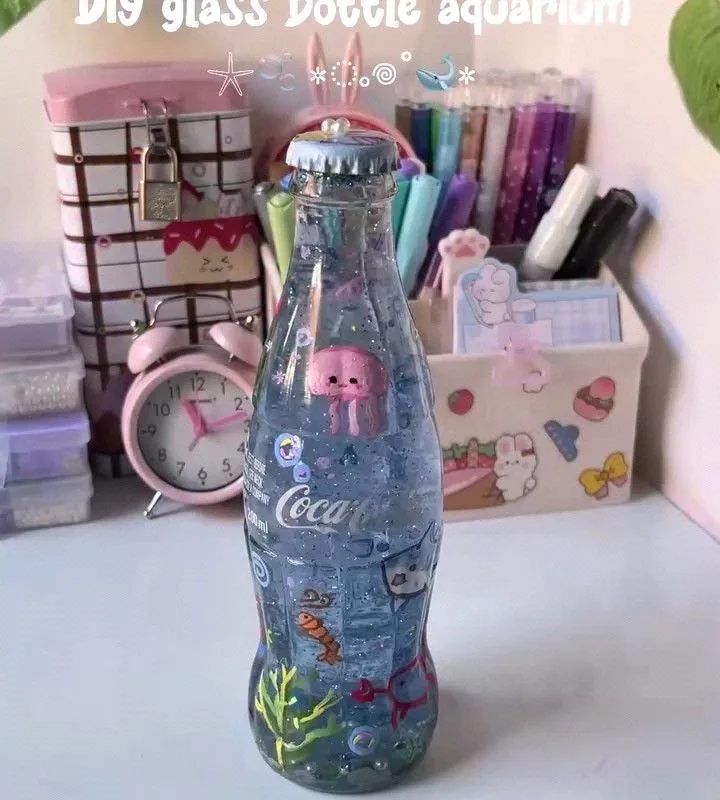
A glass bottle aquarium is the cheapest way to watch a real ecosystem cycle in front of you — and the fastest way to kill livestock if you skip the math. These seven hacks come from building six bottle setups between 1.5 L and 12 L, including the two that crashed because I ignored the numbers below.
Advertisements1
- Stock 1 cherry shrimp per liter of usable water — a 1.5 L bottle supports one shrimp and two snails, nothing more.
- Cycle for a full 4 weeks until ammonia and nitrite read 0 ppm; adding livestock early pushes ammonia to 8 ppm and kills shrimp.
- Run a 6-hour photoperiod with a 5 W LED at 15 cm — 12 hours guarantees algae and cyanobacteria.
- Change 30% weekly with a 10 ml syringe and temperature-match within 1 °C to avoid failed molts.
- One floating plant harvested every two weeks is your cheapest, most reliable nitrogen export.
- Log parameters every 3 days for the first month; clear water can still hide 1 ppm ammonia.
Hack 1: Size the bottle before you pick the livestock
A 1.5 L bottle holds roughly 1.2 L of usable water after substrate and headspace. That is not a crab tank — it is a snail-and-shrimp tank. The working rule I use is 1 cherry shrimp (Neocaridina davidi) per liter of usable water, so a 1.5 L bottle gets one shrimp plus two ramshorn snails.
– Measure usable water, not bottle volume: fill the bottle, add substrate, then pour the water out and measure it in a jug.
– A 12 L carboy at 10 L usable supports 8–10 shrimp, a nerite snail, and nothing else.
– Crabs and octopuses need 40 L+ and a chiller; a bottle is a display for micro-fauna, not cephalopods.
Why it works: bioload scales with water volume, and ammonia accumulates faster in small volumes because there is less dilution. A single shrimp in 1.2 L produces about 0.05 g of waste per week — enough to push ammonia to 0.5 ppm in an unfiltered bottle within days.
Hack 2: Build a two-stage cycle with a 4-week clock
Skip the "let it sit for a day" advice. Ammonia in a new bottle spikes to 2–4 ppm within 72 hours if you add anything alive. Cycle it first with a pinch of fish food or 2 drops of pure ammonia (no surfactants).
– Week 1–2: ammonia 2 ppm, nitrite 0, nitrate 0. Add a pinch of food every 3 days.
– Week 3: nitrite climbs to 1–2 ppm — this is normal, do not panic-dump the water.
– Week 4: ammonia and nitrite read 0, nitrate reads 5–20 ppm. The bottle is ready.
Why it works: Nitrosomonas and Nitrospira bacteria colonize the substrate and bottle walls, and they need a steady ammonia source to multiply. Starving them with daily water changes resets the clock every time. The mistake: cycling with a live animal "to speed it up" — that is how you get a dead shrimp and an ammonia reading of 8 ppm.
Hack 3: Use a 3 cm substrate sandwich, not gravel alone
Layer 1 cm of organic potting soil (sifted, no fertilizer pellets) under 2 cm of coarse sand or crushed lava rock. Cap it fully — any exposed soil clouds the water for days.
– Soil provides iron and buffering for plants; sand locks it down and gives shrimp grip.
– Rinse the sand in a bucket until the runoff runs clear — usually 6–8 rinses.
– Slope the substrate 3 cm at the back, 2 cm at the front so you can see the shrimp.
Why it works: root-feeding plants like Cryptocoryne and Vallisneria need a nutrient-dense layer, and the sand cap prevents anaerobic pockets from releasing hydrogen sulfide. The mistake: using aquarium soil marketed for high-tech tanks in a 1.5 L bottle — it leaches ammonia for weeks and overwhelms your cycle.
Hack 4: Light the bottle for 6 hours, not 12
A 5 W LED desk lamp 15 cm from the bottle gives roughly 40–60 PAR at the substrate — enough for low-light plants. Set it on a timer for 6 hours, split into two 3-hour blocks if algae appears.
– 6 hours: healthy growth, minimal algae.
– 8–10 hours: green spot algae on the glass within 10 days.
– 12+ hours: cyanobacteria mats and cloudy water.
Why it works: plants and algae compete for the same light, but plants need a dark period to respire and process nutrients. Short photoperiods favor slower, sturdier growth. The mistake: putting the bottle on a sunny windowsill — direct sun delivers 500–1,000+ PAR and cooks a 1.2 L system in an afternoon.
Hack 5: Do 30% water changes with a 10 ml syringe
In a 1.2 L bottle, a 30% change is 360 ml — measure it, do not eyeball it. Use a 10 ml syringe with airline tubing to siphon without disturbing the substrate.
– Frequency: once weekly for the first month, then every 10–14 days once nitrate stays under 20 ppm.
– Temperature-match the replacement water within 1 °C; shrimp molt and die at 2–3 °C swings.
– Dechlorinate with 1 drop of conditioner per 4 L — a whole capful in 360 ml is 10x overdosed.
Why it works: small volumes have almost no buffering capacity, so a 30% change removes accumulated nitrate and dissolved organics without resetting the bacteria. The mistake: 100% water changes "to clean it" — that strips the water chemistry and triggers failed molts in shrimp within 48 hours.
Hack 6: Add one floating plant as your nitrogen export
A single Salvinia or frogbit rosette doubles in mass every 7–10 days in a cycled bottle, absorbing nitrate as it grows. Harvest half the floaters every two weeks and you export the nitrogen permanently.
– 1 rosette at week 0 → roughly 4 rosettes at week 3 → harvest back to 2.
– Floating plants also shade the lower water column, cutting algae.
– Keep the bottle 20% open at the top; floaters rot in a sealed lid with no gas exchange.
Why it works: fast-growing floaters outcompete algae for nitrogen and phosphate, and removing plant mass physically removes the nutrients from the system. The mistake: letting floaters cover 100% of the surface — oxygen exchange drops, and you get a dead zone at the bottom within a week.
Hack 7: Keep a log, not a vibe
Write down pH, ammonia, nitrite, nitrate, and temperature every 3 days for the first month. A strip test costs about $0.30 per test; a dead shrimp costs $3–$5 and the lesson costs more.
– Track: date, temp (°C), ammonia (ppm), nitrite (ppm), nitrate (ppm), notes.
– A pH drop from 7.4 to 6.6 in 48 hours signals a crashed cycle — do a 30% change and re-test.
– After 3 months, you will see your bottle's rhythm and can drop to weekly checks.
Why it works: small systems fail fast and quietly. Numbers catch a problem 2–3 days before the shrimp do. The mistake: trusting "the water looks clear" — clear water with 1 ppm ammonia looks identical to clear water with 0 ppm.
The Hacks, Step by Step
- 1Measure usable water volume
Fill the bottle with substrate in place, pour the water into a jug, and record the liters. Stock to that number, not the bottle's label. - 2Cycle for 4 weeks with an ammonia source
Add a pinch of fish food or 2 drops of pure ammonia every 3 days until ammonia and nitrite both read 0 and nitrate reads 5–20 ppm. - 3Layer soil and sand
1 cm organic potting soil under 2 cm rinsed coarse sand, sloped 3 cm at the back to 2 cm at the front. - 4Set a 6-hour light timer
Position a 5 W LED 15 cm from the bottle and run it 6 hours daily, split into two 3-hour blocks if algae appears. - 5Add one floating plant
Drop in a single Salvinia or frogbit rosette and harvest half the growth every two weeks to export nitrogen. - 6Start weekly 30% water changes
Siphon 360 ml from a 1.2 L system with a 10 ml syringe and airline tubing, temperature-matched within 1 °C. - 7Log parameters every 3 days
Record temperature, ammonia, nitrite, nitrate, and pH for the first month, then weekly once readings stabilize.
A glass bottle aquarium fails on volume math, not on effort — measure usable liters, stock to that number, and the ecosystem does the rest.
Frequently Asked Questions
Can I keep an octopus or crab in a glass bottle aquarium?
No — octopuses need 40 L+ with a chiller and a sealed lid, and most crabs need 20 L+ with a land area. A bottle is for micro-fauna like cherry shrimp, ramshorn snails, and low-light plants.
How long does a glass bottle aquarium take to cycle?
About 4 weeks with a steady ammonia source. Ammonia peaks in week 1–2, nitrite climbs in week 3, and both read 0 with nitrate at 5–20 ppm by week 4.
Do I need a filter in a bottle aquarium?
Not necessarily if you stock lightly and do weekly 30% water changes. A 1.2 L bottle with one shrimp and floating plants stays stable without a filter, but anything larger or more stocked needs an air-driven sponge filter.
Why is my bottle aquarium water cloudy?
Usually a bacterial bloom from overfeeding or an uncycled tank. Stop feeding for 3 days, do a 30% water change, and test ammonia — if it reads above 0.5 ppm, the cycle has not finished.
What plants survive in a small glass bottle aquarium?
Cryptocoryne wendtii, Vallisneria, Java moss, and floating Salvinia or frogbit all tolerate low light and small volumes. Avoid high-tech carpet plants that need CO2 and strong lighting.


