

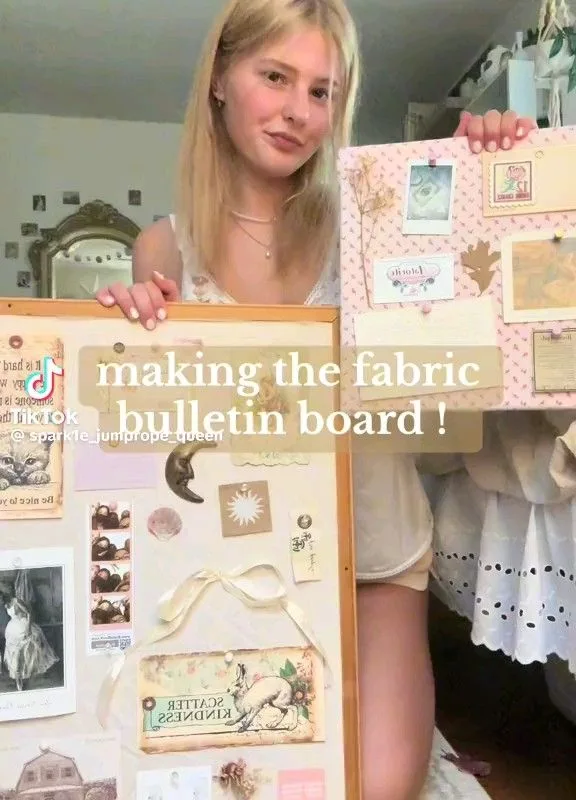
Transform a plain corkboard into a designer-worthy fabric bulletin board with these 7 practical hacks. You'll learn how to choose the right fabric, avoid common mistakes, and create a durable, beautiful piece for your home or office.
Advertisements1
- Choose medium-weight, non-stretchy fabric like canvas or linen for durability and easy pinning.
- Always seal the corkboard with Mod Podge before applying fabric to prevent shifting and bumps.
- Pull fabric taut but not too tight, and staple every 2 inches for a secure, smooth finish.
- Add a frame or ribbon grid to make your board both stylish and functional.
- Mount your board with heavy-duty hardware into studs to avoid accidents.
- Refresh your board with new fabric or ribbon to match seasonal decor.
Hack 1: Choose the Right Fabric for Durability and Style
Not all fabrics are created equal when it comes to bulletin boards. You want a fabric that's durable enough to withstand pushpins and thumbtacks, but also easy to work with. Look for medium-weight fabrics like cotton canvas, linen, or upholstery fabric. These hold their shape well and don't fray easily. For a board that gets heavy use, choose a fabric with a tight weave—it will hide pin holes better and last longer. If you're covering a large board, consider a fabric with a subtle pattern to hide any imperfections. Avoid lightweight fabrics like silk or chiffon; they tear easily and show every pin hole. Also, steer clear of stretchy fabrics like jersey knit—they're a nightmare to keep smooth. A great choice is a cotton duck canvas in a color that complements your room. For example, I used a navy blue canvas for a client's home office, and it looked professional and held up beautifully.
Hack 2: Prep Your Corkboard for a Flawless Finish
Before you even think about fabric, you need to prep your corkboard. Most store-bought corkboards have a thin layer of cork that can be uneven or have gaps. Start by sanding the surface lightly with fine-grit sandpaper to smooth any rough spots. Wipe it down with a damp cloth to remove dust. If your corkboard has a frame, you might want to remove it for a cleaner look, or keep it for a traditional style. Next, apply a coat of Mod Podge or a similar decoupage medium to the cork surface. This seals the cork and gives the fabric something to grip. Let it dry completely. This step is crucial because it prevents the fabric from shifting and ensures a smooth, professional finish. I once skipped this step and ended up with a bumpy board that drove me crazy. Trust me, the extra 10 minutes is worth it.
Hack 3: Master the Art of Wrapping and Securing Fabric
Wrapping fabric around a bulletin board is like wrapping a present—but with more precision. Cut your fabric at least 4 inches larger than the board on all sides. Lay the fabric face down on a clean surface, then place the board face down on top. Starting from the center of one side, pull the fabric taut and staple it to the back of the board using a staple gun. Work your way to the corners, pulling firmly but not so tight that you distort the fabric. For corners, fold the fabric like you're wrapping a gift: tuck in the excess and staple. Use plenty of staples—every 2 inches is good. This ensures the fabric stays put. For a polished look, you can cover the back with a piece of felt or paper to hide the staples. I recommend using a pneumatic staple gun if you have one; it's faster and easier on your hands.
Hack 4: Add a Decorative Frame for Extra Polish
A frame can elevate your fabric bulletin board from homemade to high-end. You can use an existing frame, or make one from wood trim. For a simple DIY frame, measure your board and cut four pieces of wood trim to size, mitering the corners for a clean look. Paint or stain the trim to match your decor. Attach the frame to the front of the board using wood glue and finishing nails, or use a staple gun from the back. If you prefer a no-sew option, you can use decorative tape or ribbon around the edges. Another idea: use a picture frame without glass—just remove the backing and insert your fabric-covered corkboard. This gives you a ready-made frame with minimal effort. I found a vintage frame at a thrift store for $5 and it made my board look like a custom piece.
Hack 5: Use Ribbon or Twine for a Functional Grid
Adding a ribbon or twine grid not only looks stylish but also helps you organize your pins. Choose a ribbon that's about 1/2 inch wide—satin or grosgrain works well. Lay out your ribbon in a grid pattern (diamond or square) across the fabric, and secure the ends to the back of the board with staples or hot glue. Where the ribbons intersect, you can add a decorative button or a dab of hot glue to hold them in place. This grid creates designated spots for notes, photos, or reminders. It's especially useful for a family command center or a mood board. For a rustic look, use jute twine. I used a black and white striped ribbon for a client's kitchen board, and it added a chic French bistro vibe.
Hack 6: Mount Your Board Safely and Securely
A fabric bulletin board can be heavy, especially if you used a solid wood frame. You need to mount it securely to avoid accidents. Use heavy-duty picture hangers or French cleats, and make sure you hit a stud or use wall anchors rated for the weight. For lightweight boards, adhesive strips might work, but they can fail over time. I always recommend using screws into studs for anything larger than 2 feet by 3 feet. If you're renting and can't make holes, use removable adhesive hooks that are rated for at least twice the weight of the board. Before hanging, measure twice and use a level to ensure it's straight. A crooked board will bug you every time you look at it.
Hack 7: Maintain and Refresh Your Board Over Time
Your fabric bulletin board will collect dust and pin holes over time. To keep it looking fresh, vacuum it gently with a brush attachment every few weeks. If you notice sagging, you can re-staple the fabric from the back. For stubborn wrinkles, use a steamer or a iron on low heat—but be careful not to melt synthetic fabrics. If the fabric becomes too damaged, you can easily re-cover it with new fabric. Just remove the old fabric, and follow the same steps. This is a great way to update your decor without buying a new board. I change my board's fabric seasonally—it's a quick way to refresh a room.
The Hacks, Step by Step
- 1Gather Your Materials
You'll need: a corkboard, fabric (medium-weight, non-stretchy), staple gun, staples, scissors, measuring tape, Mod Podge, foam brush, and optional frame/ribbon. Why: Having everything ready prevents mid-project trips to the store. - 2Prep the Corkboard
Sand lightly, wipe clean, and seal with Mod Podge. Let dry. Why: This creates a smooth, non-shifting surface for the fabric. - 3Cut and Wrap Fabric
Cut fabric 4 inches larger than board on all sides. Lay face down, center board on top. Pull taut and staple from center outward. Why: Ensures even tension and no wrinkles. - 4Secure Corners Neatly
Fold corners like a gift, tuck excess, and staple. Why: Gives a professional finish and prevents bulk. - 5Add Frame or Ribbon (Optional)
Attach a frame or create a ribbon grid for style and function. Why: Elevates the look and helps organize. - 6Mount Securely
Use heavy-duty hangers or anchors into studs. Why: Prevents the board from falling and causing damage. - 7Maintain Regularly
Vacuum gently, re-staple if sagging, and re-cover when needed. Why: Keeps your board looking fresh for years.
The secret to a professional-looking fabric bulletin board is in the prep—seal the cork, pull the fabric taut, and staple like you mean it.
Frequently Asked Questions
What kind of fabric is best for a bulletin board?
Medium-weight, tightly woven fabrics like cotton canvas, linen, or upholstery fabric work best because they're durable and hide pin holes well.
How do I prevent the fabric from sagging on my bulletin board?
Pull the fabric taut when stapling and use a staple gun to secure it every 2 inches. Sealing the cork first also helps prevent shifting.
Can I use a hot glue gun instead of a staple gun?
Yes, but hot glue can be messy and may not hold as securely. A staple gun is more reliable for a long-lasting finish.
How do I hang a heavy fabric bulletin board?
Use heavy-duty picture hangers or French cleats, and always screw into wall studs or use wall anchors rated for the weight.
How can I update my fabric bulletin board without redoing the whole thing?
You can simply remove the old fabric and staple on a new piece. Adding a ribbon grid or a new frame is also a quick refresh.


