

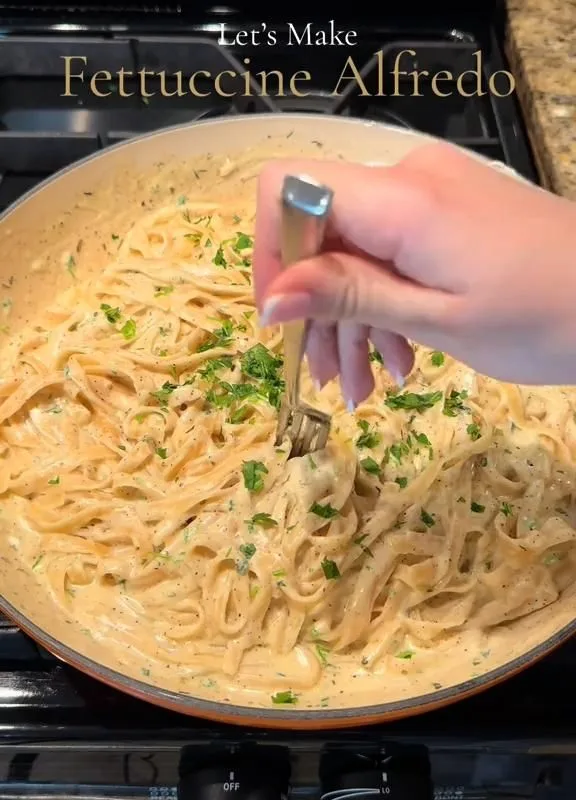
I still remember the first time I made Fettuccine Alfredo from scratch. My kids hovered by the stove, sniffing the air like little bloodhounds, and my youngest asked if we were having 'fancy restaurant food' on a Tuesday. That moment sold me on this recipe forever.
Advertisements1
Here's the truth: real Alfredo doesn't come from a jar. It's butter, cream, garlic, and a mountain of freshly grated Parmesan coming together in one pan while the pasta cooks. That's it. Simple ingredients, big payoff.
The trick is timing and gentle heat. If you keep the sauce warm but never boiling once the cheese goes in, you get that glossy, cling-to-every-strand sauce instead of a greasy puddle. You've got this.
Why You'll Love This Recipe
About the Ingredients
12 oz (340g) dried fettuccine
Dried fettuccine holds up best here, but fresh fettuccine works too, just cook it 2 to 3 minutes instead of following the box.
6 tablespoons (85g) unsalted butter
Use real butter, not margarine, for the flavor base. Salted butter works if you cut the added salt in the sauce to a pinch.
1 cup (240ml) heavy cream
Heavy cream is what makes the sauce silky. Half-and-half will work in a pinch, but simmer it 2 minutes longer to thicken.
2 cloves garlic, finely grated
Fresh garlic beats the jarred stuff every time. A microplane turns it into a paste that melts right into the butter.
1 1/2 cups (150g) freshly grated Parmesan
Grate it yourself from a block; pre-shredded cheese is coated in starch and clumps. Pecorino Romano is a sharper swap if you like a punchier sauce.
1/2 teaspoon fine sea salt
Add less than you think, since Parmesan is salty. Taste the sauce before adding more.
1/4 teaspoon freshly cracked black pepper
Crack it fresh for real aroma. White pepper is a nice swap if you want the sauce to stay pure white.
2 tablespoons chopped fresh parsley
Flat-leaf parsley adds a fresh finish. Basil or chives work as a swap if that's what you have.
1/2 cup (50g) reserved pasta water
Don't dump it! This starchy water loosens the sauce so it clings instead of breaking.
Tips & Tricks
Keep the heat gentle
Once the Parmesan goes in, drop the heat to low. Boiling cheese sauces break and turn grainy.
Reserve pasta water first
Scoop out a cup before draining, because you can't get it back once the sink swallows it.
Grate your own cheese
Freshly grated Parmesan melts smoothly, while pre-shredded cheese leaves a gritty texture.
Toss, don't stir
Toss the pasta with tongs in the pan so the sauce coats every strand evenly.
Pro Tips
Step-by-Step Instructions
1. Boil the pasta
Bring a large pot of water to a rolling boil at 212°F (100°C), salt it generously, and cook the fettuccine 1 minute shy of the package time, about 10 minutes, until it bends but still has a firm bite. Scoop out 1/2 cup of pasta water and set it aside before draining.
2. Melt the butter
In a wide skillet over medium-low heat, about 300°F (150°C), melt the butter with the grated garlic for 1 to 2 minutes until fragrant and foaming at the edges, but not browned.
3. Add the cream
Pour in the heavy cream and bring it to a gentle simmer, small bubbles at the rim only, and cook 3 to 4 minutes until it coats the back of a spoon.
4. Whisk in the cheese
Drop the heat to low, about 200°F (95°C), and whisk in the Parmesan one handful at a time, waiting for each to melt before adding the next, until the sauce is smooth and glossy.
5. Season the sauce
Stir in the salt and black pepper, then taste. It should be rich and savory with a little bite from the pepper.
6. Toss pasta and sauce
Add the drained fettuccine to the pan and toss with tongs for 1 to 2 minutes until every strand is coated, splashing in reserved pasta water a tablespoon at a time if it looks thick.
7. Finish and serve
Scatter the parsley over the top and serve right away in warm bowls, because Alfredo thickens quickly as it cools.
Delicious Variations
Chicken Alfredo
Sear sliced chicken breast at 375°F (190°C) for 4 minutes per side until it hits 165°F (74°C) internally, then slice and fold it in at the end.
Shrimp Alfredo
Sauté shrimp in the butter for 2 minutes per side until pink and opaque, then remove and stir them back in just before serving.
Veggie Alfredo
Toss in steamed broccoli florets or blistered cherry tomatoes for color and a little freshness.
How to Store Fettuccine Alfredo
Refrigerator
Store leftovers in an airtight container for up to 3 days. The sauce will thicken when cold, which is normal.
Freezer
Freezing isn't ideal because cream sauces separate, but you can freeze it up to 1 month and reheat gently with a splash of milk.
Reheating
Reheat in a skillet over low heat, about 200°F (95°C), with 1 to 2 tablespoons of milk or water, stirring until creamy again.
Frequently Asked Questions
Q: Why did my Alfredo sauce break or turn grainy?
Your sauce got too hot after the cheese went in. Keep the heat on low once the Parmesan is added, and whisk constantly so the cheese melts into the cream instead of clumping. If it does break, whisk in a splash of warm cream off the heat to bring it back.
Q: Can I make Fettuccine Alfredo without heavy cream?
Yes, you can use whole milk thickened with a tablespoon of butter and a little pasta water. The sauce will be lighter and less rich, so add the Parmesan slowly and expect a thinner consistency. Half-and-half is the closest swap if you have it.
Q: What's the best cheese for Alfredo sauce?
Freshly grated Parmigiano-Reggiano is the classic choice for its nutty, salty flavor. Pecorino Romano is a sharper, saltier swap, and a mix of the two gives you the best of both. Avoid pre-shredded cheese, which contains anti-caking starch that makes the sauce gritty.
Q: How do I keep Alfredo from drying out when reheating?
Reheat it low and slow with a splash of milk or water. A skillet over low heat works better than the microwave because you can stir and loosen the sauce as it warms. Add liquid a tablespoon at a time until it's creamy again.
Q: How many servings does this recipe make?
This makes 6 generous servings, or 4 very hungry ones. If you're feeding a crowd, it doubles easily, just use a wider pan so the sauce has room to emulsify.
Give this Fettuccine Alfredo a try this week and let the empty plates do the talking. Snap a photo and tell me how it turned out, because I love hearing what happens in your kitchen. Here's to small steps, big impact.

Fettuccine Alfredo
This creamy Fettuccine Alfredo is silky, rich, and ready in about 30 minutes, made with real butter and Parmesan for a restaurant-worthy dinner at home.
🧂 Ingredients
- 12 oz (340g) dried fettuccine
- 6 tablespoons (85g) unsalted butter
- 1 cup (240ml) heavy cream
- 2 cloves garlic, finely grated
- 1 1/2 cups (150g) freshly grated Parmesan
- 1/2 teaspoon fine sea salt
- 1/4 teaspoon freshly cracked black pepper
- 2 tablespoons chopped fresh parsley
- 1/2 cup (50g) reserved pasta water
📋 Instructions
- 1Boil the pasta — Bring a large pot of water to a rolling boil at 212°F (100°C), salt it generously, and cook the fettuccine 1 minute shy of the package time, about 10 minutes, until it bends but still has a firm bite. Scoop out 1/2 cup of pasta water and set it aside before draining.
- 2Melt the butter — In a wide skillet over medium-low heat, about 300°F (150°C), melt the butter with the grated garlic for 1 to 2 minutes until fragrant and foaming at the edges, but not browned.
- 3Add the cream — Pour in the heavy cream and bring it to a gentle simmer, small bubbles at the rim only, and cook 3 to 4 minutes until it coats the back of a spoon.
- 4Whisk in the cheese — Drop the heat to low, about 200°F (95°C), and whisk in the Parmesan one handful at a time, waiting for each to melt before adding the next, until the sauce is smooth and glossy.
- 5Season the sauce — Stir in the salt and black pepper, then taste. It should be rich and savory with a little bite from the pepper.
- 6Toss pasta and sauce — Add the drained fettuccine to the pan and toss with tongs for 1 to 2 minutes until every strand is coated, splashing in reserved pasta water a tablespoon at a time if it looks thick.
- 7Finish and serve — Scatter the parsley over the top and serve right away in warm bowls, because Alfredo thickens quickly as it cools.

Maya writes about sustainable living and zero-waste swaps for everyday families. She focuses on small, budget-friendly changes that actually stick, tested in her own chaotic kitchen.


