

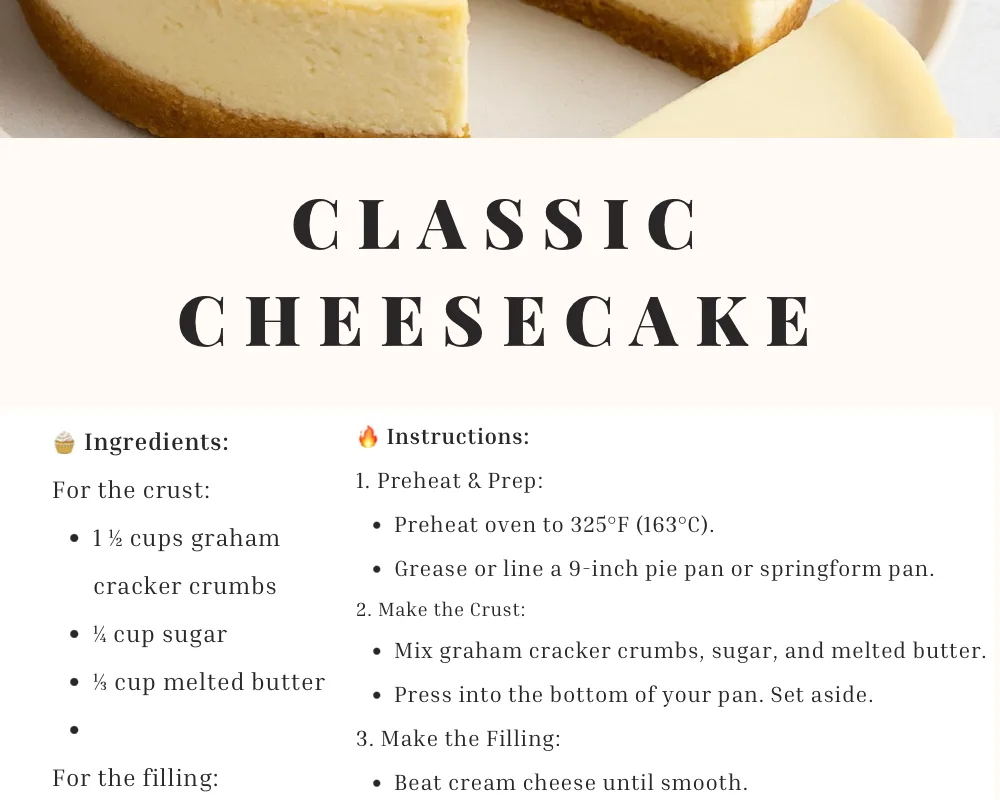
The first cheesecake I ever made cracked down the middle like a dried riverbed, and I served it anyway with a shrug and a mountain of whipped cream. That failure taught me more than any fancy baking class, and it's exactly why this recipe exists.
Advertisements1
Think of a cheesecake like a slow-loading website: rush the process and everything breaks. Keep the oven gentle, let the batter come to room temperature, and the whole thing loads smooth and flawless.
This easy classic cheesecake recipe is the version I hand to every nervous beginner. It's creamy, rich, and forgiving, with a buttery graham cracker crust that holds up to any topping you throw at it.
Why You'll Love This Recipe
About the Ingredients
2 cups (200g) graham cracker crumbs (about 14 full sheets)
Pulse whole sheets in a food processor for the freshest flavor. Short on grahams? Golden Oreos or digestive biscuits swap in one-for-one.
6 tablespoons (85g) unsalted butter, melted
Melt it fully and let it cool slightly so it doesn't seize the crumbs. Salted butter works too—just skip the added salt below.
3 tablespoons (38g) granulated sugar
Just enough to sweeten the crust without making it candy-like. Light brown sugar adds a subtle caramel note if you prefer.
4 packages (8 oz / 226g each) full-fat cream cheese, room temperature
Full-fat is non-negotiable for the creamy texture; low-fat turns grainy and weepy. Leave it out 2 hours before mixing.
1 1/4 cups (250g) granulated sugar
Standard white sugar keeps the flavor clean. Don't reduce it—sugar also helps the cheesecake set properly.
3 large eggs, room temperature
Cold eggs shock the batter and cause lumps, so pull them out early. Large eggs only; jumbo will make the filling too wet.
1/2 cup (120g) full-fat sour cream, room temperature
This is the secret to that tangy, silky finish. Plain full-fat Greek yogurt is a solid substitute in a pinch.
1 teaspoon vanilla extract
Pure vanilla beats imitation every time. A scrape of vanilla bean paste gives you those pretty specks.
1 tablespoon fresh lemon juice
Brightens the whole filling and balances the richness. Bottled lemon juice works but tastes flatter.
1/4 teaspoon fine salt
A pinch of salt makes the sweetness pop. Use fine sea salt, not coarse kosher, so it dissolves evenly.
Tips & Tricks
Room Temperature Everything
Cold cream cheese and eggs create lumps that never smooth out, so set them out 2 hours ahead.
Mix on Low Speed
Beating air into the batter puffs it up, then it collapses and cracks—keep the mixer on low and stop once it's smooth.
Don't Overbake
The center should still wobble like set Jell-O when you nudge the pan; it firms up as it cools.
Cool Gradually
Crack the oven door and let the cheesecake sit inside for an hour—sudden temperature drops are the number one cause of cracks.
Pro Tips
Step-by-Step Instructions
1. Prep the Oven and Pan
Preheat your oven to 325°F (163°C) and position a rack in the lower-middle position. Lightly grease a 9-inch springform pan and wrap the outside with foil if it leaks.
2. Make the Crust
Stir the graham crumbs, 3 tablespoons sugar, and melted butter until it looks like wet sand. Press firmly into the pan bottom and 1 inch up the sides, then bake at 325°F (163°C) for 8 minutes until it smells toasty and looks set—not dark brown.
3. Beat the Cream Cheese
In a large bowl, beat the room-temperature cream cheese and 1 1/4 cups sugar on low speed for 2 minutes until completely smooth, scraping the bowl once. There should be zero lumps at this stage.
4. Add Eggs and Flavorings
Beat in the eggs one at a time on low, then the sour cream, vanilla, lemon juice, and salt. Stop mixing the second the batter looks uniform—overmixing pumps in air that causes cracks.
5. Bake Low and Slow
Pour the batter over the crust and smooth the top. Bake at 325°F (163°C) for 35 to 45 minutes, until the edges are set and slightly puffed and the center wobbles gently when nudged—an instant-read thermometer in the center should read 150°F (66°C).
6. Cool Gradually
Turn off the oven, crack the door open a few inches, and leave the cheesecake inside for 1 hour. This slow cooldown is your insurance policy against cracks.
7. Chill Overnight
Run a thin knife around the edge to loosen it, then refrigerate uncovered for 6 hours or overnight until fully cold and firm. Release the springform ring just before slicing.
8. Slice and Serve
Dip a sharp knife in hot water, wipe it dry, and slice cleanly through the cold cheesecake. Serve plain or with your favorite topping.
Delicious Variations
Berry Swirl Cheesecake
Swirl 1/3 cup raspberry or strawberry preserves through the batter before baking for a jammy ribbon.
Chocolate Lover's Cheesecake
Add 4 oz (113g) melted dark chocolate to the filling and swap the graham crust for crushed chocolate cookies.
Lemon Blueberry Cheesecake
Fold 1 tablespoon lemon zest into the batter and top the chilled cake with fresh blueberry compote.
How to Store Easy Classic Cheesecake Recipe – Creamy, Rich & Perfect for Beginners
Refrigerator
Cover tightly with plastic wrap or foil and refrigerate for up to 5 days. Keep it cold until serving so the filling stays firm.
Freezer
Wrap whole or individual slices in plastic wrap, then foil, and freeze for up to 2 months. Thaw overnight in the refrigerator before serving.
Reheating
Don't reheat cheesecake—serve it cold or barely cool. Let frozen slices thaw in the fridge for 6 to 8 hours for the best texture.
Frequently Asked Questions
Q: Why did my cheesecake crack in the middle?
Cracks almost always come from overbaking or cooling too fast. Bake until the center still wobbles slightly and cool it gradually in the cracked-open oven to prevent that fissure.
Q: Do I really need a water bath for cheesecake?
No, this recipe is designed without one and still comes out creamy. A water bath adds insulation, but the low oven temperature and slow cooldown here do the same job with far less hassle.
Q: How do I know when cheesecake is done baking?
The edges should look set and slightly puffed while the center jiggles like set Jell-O. An instant-read thermometer in the center should read about 150°F (66°C).
Q: Can I make this cheesecake ahead of time?
Yes, and you honestly should—it needs at least 6 hours of chilling anyway. Make it up to 3 days ahead, keep it covered in the fridge, and add toppings right before serving.
Q: Why is my cheesecake batter lumpy?
Lumpy batter means your cream cheese was still cold when you started mixing. Let the cream cheese and eggs sit out for 2 hours, then beat on low speed until perfectly smooth.
Give this easy classic cheesecake recipe a shot this weekend, and don't panic if your first one looks less than perfect—it'll still taste incredible. Snap a photo, tell me how it went, and share it with someone who needs dessert. Stay safe out there, Liam

Easy Classic Cheesecake Recipe – Creamy, Rich & Perfect for Beginners
This easy classic cheesecake recipe delivers a creamy, rich slice with a buttery graham crust—no water bath, no cracks, perfect for beginners.
🧂 Ingredients
- 2 cups (200g) graham cracker crumbs (about 14 full sheets)
- 6 tablespoons (85g) unsalted butter, melted
- 3 tablespoons (38g) granulated sugar
- 4 packages (8 oz / 226g each) full-fat cream cheese, room temperature
- 1 1/4 cups (250g) granulated sugar
- 3 large eggs, room temperature
- 1/2 cup (120g) full-fat sour cream, room temperature
- 1 teaspoon vanilla extract
- 1 tablespoon fresh lemon juice
- 1/4 teaspoon fine salt
📋 Instructions
- 1Prep the Oven and Pan — Preheat your oven to 325°F (163°C) and position a rack in the lower-middle position. Lightly grease a 9-inch springform pan and wrap the outside with foil if it leaks.
- 2Make the Crust — Stir the graham crumbs, 3 tablespoons sugar, and melted butter until it looks like wet sand. Press firmly into the pan bottom and 1 inch up the sides, then bake at 325°F (163°C) for 8 minutes until it smells toasty and looks set—not dark brown.
- 3Beat the Cream Cheese — In a large bowl, beat the room-temperature cream cheese and 1 1/4 cups sugar on low speed for 2 minutes until completely smooth, scraping the bowl once. There should be zero lumps at this stage.
- 4Add Eggs and Flavorings — Beat in the eggs one at a time on low, then the sour cream, vanilla, lemon juice, and salt. Stop mixing the second the batter looks uniform—overmixing pumps in air that causes cracks.
- 5Bake Low and Slow — Pour the batter over the crust and smooth the top. Bake at 325°F (163°C) for 35 to 45 minutes, until the edges are set and slightly puffed and the center wobbles gently when nudged—an instant-read thermometer in the center should read 150°F (66°C).
- 6Cool Gradually — Turn off the oven, crack the door open a few inches, and leave the cheesecake inside for 1 hour. This slow cooldown is your insurance policy against cracks.
- 7Chill Overnight — Run a thin knife around the edge to loosen it, then refrigerate uncovered for 6 hours or overnight until fully cold and firm. Release the springform ring just before slicing.
- 8Slice and Serve — Dip a sharp knife in hot water, wipe it dry, and slice cleanly through the cold cheesecake. Serve plain or with your favorite topping.

Liam covers technology and digital privacy, with a focus on helping everyday people protect their data online. He breaks down complex tech concepts into easy-to-understand advice and reviews privacy tools from a user’s perspective.


